Who are these galettes for?

People with coeliac disease in a shared household

When shopping, a rice-based recipe alone isn’t enough to confirm that a crispbread is suitable for a strict gluten-free diet. The product you choose must be labelled “gluten-free”; any other potential allergens need to be checked separately.

Fans of gluten-free toast

For a breakfast that needs no batter preparation, crispbreads make a ready-to-top base. Carrefour, for example, lists Bjorg 4-grain gluten-free crispbreads for this purpose.

Shoppers looking for a savoury breakfast to top

Fresh buckwheat galettes let you put together a topped plate rather than serving crisp toast. Auchan lists Crêperie de Guerlédan gluten-free galettes in a pack of four.

What should you check before buying?

If you need to avoid gluten strictly, first check that the pack carries the relevant label. Then choose a format to suit the meal you have in mind, and compare useful information across products intended for the same purpose.

What to check Look for Who it matters to
Gluten-free labelling The “gluten-free” label on the specific product you’re buying; check for any other allergens relevant to your household. In a household affected by coeliac disease, a list of ingredients with no obvious wheat isn’t enough to choose a crispbread. Around 42% of consumers prioritise explicit confirmation that a product is gluten-free.
Breakfast format Crispbreads to top or fresh galettes to fill; the number of pieces you need for everyone. For quick toast, a crispbread format matters more; for a prepared savoury meal, a fresh galette is a better fit. Ease of serving is said to be the main consideration for around 25% of consumers.
Availability Whether the product is available at your chosen shop or for grocery collection, and, if needed, another gluten-free option. If you shop before the weekend, being able to find a suitable option again means you won’t have to rely on a one-off sale. This is said to be a priority for around 17% of consumers.
Nutritional information Nutritional values per 100 g for crispbreads intended for the same purpose; the portion you’ll actually serve. Once they’ve found products suitable for avoiding gluten, some consumers want to compare things such as salt or sugar content rather than relying on a logo alone. Around 16% would make this comparison their main priority.

Common mix-ups to avoid

  • Assuming the Nutri-Score proves a product is gluten-free

    The DGCCRF describes the Nutri-Score as a voluntary label; it doesn’t replace the “gluten-free” label. It also explains that nutritional declarations are compulsory for most prepacked foods.

    Check for the “gluten-free” label first, then compare nutritional values per 100 g. If the pack displays a Nutri-Score, use it as extra information, but don’t take it as an indication of gluten content.

  • Assuming every product called a “galette” is gluten-free

    The name is also used for biscuits that contain wheat. St Michel lists wheat flour among the ingredients in its organic butter galettes.

    Check the product name, ingredients and “gluten-free” label on the specific product, rather than relying on the word “galette” alone.

  • Forgetting about other allergens

    A gluten-free crispbread may contain sesame or carry a warning about traces of other allergens. Carrefour lists sesame and possible traces of soya for Ma Vie Sans Gluten Camargue rice crispbreads with ancient grains.

    If you have another allergy, read the ingredients and any trace warnings on the pack of the product you’re serving.

  • Relying on a one-off selection

    Lidl France says its gluten-free products aren’t part of its permanent range and are available during occasional promotions.

    Before your weekend shop, check whether the product you want is available at your local store or for grocery collection. If necessary, find another option that serves the same purpose.

Brands and retailers to know

Bjorg

Gluten-free crispbreads that can make a handy base for toppings, depending on the recipe you choose.

  • Carrefour lists Bjorg 4-grain gluten-free crispbreads for breakfast toast.
  • The AFDIAG certification mentioned by Auchan applies to the maize, amaranth and linseed product, not to all Bjorg crispbreads. Check the allergens in each recipe.

Ma Vie Sans Gluten

A Camargue rice crispbread with ancient grains that Carrefour describes as “guaranteed gluten-free”.

  • Its crisp texture makes it a handy base for breakfast toppings.
  • Carrefour’s product information lists sesame and possible traces of soya for this product.

Crêperie de Guerlédan

Fresh buckwheat galettes to top for a prepared savoury breakfast, rather than crisp toast.

  • Auchan lists a gluten-free pack of four galettes made with buckwheat flour, water and salt.
  • As these are fresh, check the use-by date and storage instructions on the pack.

Gerblé

Gluten-free crispbreads and other products to consider if you don’t specifically need a galette for your meal.

  • Gerblé’s gluten-free range includes Crac’Form crispbreads.
  • A crispbread isn’t the same as a rice, maize or buckwheat galette. Choose the product that suits the format you want, and check its labelling.

Lidl

A retailer worth checking for occasional gluten-free finds, rather than a permanent range you can rely on.

  • Lidl France says it runs occasional promotions on gluten-free products.
  • This doesn’t confirm that a specific galette is available, or that it’s in your chosen store.

A crispbread to consider on Joybuy

This selection features Bjorg 4-grain crispbreads to use as a base for breakfast toppings. If you need to avoid gluten strictly, check that the pack you receive carries the “gluten-free” label before serving.
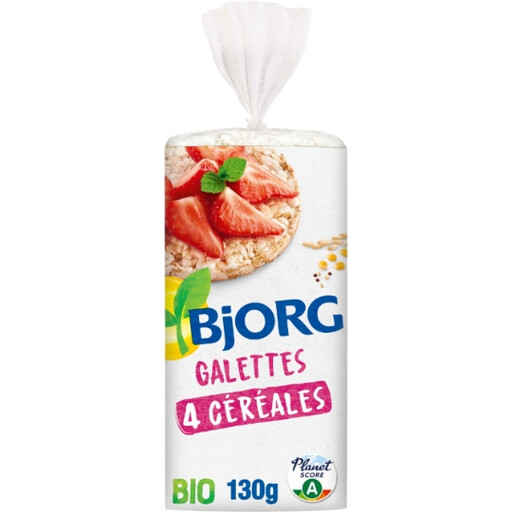
Bjorg 4-grain crispbreads, 130 g pack

Bjorg 4-grain crispbreads 130 g

For crunchy breakfast toast. Carrefour describes this rice, maize, buckwheat and quinoa product as gluten-free; check the label and allergens on the pack you receive.

View on Joybuy

Frequently asked questions

Is the Nutri-Score compulsory on gluten-free crispbreads?

No. In France, the DGCCRF says the Nutri-Score is voluntary. Nutritional declarations are compulsory for most prepacked foods and include values per 100 g, among other information. Neither replaces the “gluten-free” label.

What label should someone with coeliac disease look for?

Look for the explicit “gluten-free” label on the crispbreads you buy. Under European Regulation 828/2014, this label can be used only for foods with a gluten content of no more than 20 mg/kg. The French Health Insurance service reminds people with coeliac disease that they need to follow a strict gluten-free diet.

Are rice or buckwheat galettes always gluten-free?

No. The name of the grain, or the apparent absence of wheat from the ingredients, doesn’t on its own confirm that a galette is suitable for a strict gluten-free diet. Check the “gluten-free” label on the product you’ve chosen, then check its ingredients and allergens.

Should you check for other allergens in these galettes?

Yes, if there are other allergens that affect your household. Information varies by recipe: Carrefour lists sesame and possible traces of soya on Ma Vie Sans Gluten Camargue rice crispbreads with ancient grains. Check the pack of the product you’re serving.

How should you store crispbreads after opening?

Follow the instructions on the pack. For its Bjorg maize, amaranth and linseed crispbreads, Auchan recommends storing them in a cool, dry place. Joybuy’s product information for Bjorg rice and sesame crispbreads says to reseal the pack securely and keep it dry after opening.