A student with coeliac disease setting up home
You’re looking for a product with clear ‘gluten-free’ labelling on the packaging. The fact that it’s coconut-based or plant-based doesn’t, on its own, mean it meets this requirement.


If you need to avoid gluten strictly, first look for the words ‘gluten-free’ on the packaging of the product you choose, then check its ingredients and allergen information. For a curry or sauce, look at coconut milk for cooking; for breakfast or a drink, consider coconut-based drinks. Don’t assume these two types of product will work in the same way in a recipe.
You’re looking for a product with clear ‘gluten-free’ labelling on the packaging. The fact that it’s coconut-based or plant-based doesn’t, on its own, mean it meets this requirement.
For a curry, soup, sauce or dessert, you need to distinguish between coconut milk for cooking and a coconut drink: their ingredients and uses may not be the same.
You’re considering a carton for breakfast, coffee or cereal. Its size should suit how quickly you’ll use it, as well as the storage instructions once it’s open.
First, check for ‘gluten-free’ labelling if you need it, then decide whether you want a product for cooking or drinking. Pack size and storage matter too when you’re setting up a kitchen for one.
| What to consider | What to check | Who is it for? |
|---|---|---|
| Gluten-free labelling | Look for ‘gluten-free’ on the packaging of the exact product you’re buying, then check its ingredients and allergen information. Under Commission Implementing Regulation (EU) No 828/2014, this claim means the food sold to the final consumer contains no more than 20 mg/kg of gluten. | If you have coeliac disease, you can’t assume a product is suitable just because it says ‘coconut’. For around 36% of consumers, this would be their main priority. |
| Practical quantity | Compare pack sizes with the number of meals or drinks you realistically expect to make. | When you’re moving in, it’s better to choose an amount you can use rather than leave a carton half-finished. Around 29% of consumers would make managing their shopping a priority. |
| For cooking or drinking | Read the product description, coconut content and fat content, using the units shown for each product. | For a curry, you’ll want coconut milk for cooking; for cereal, a coconut drink serves a different purpose. Around 21% of consumers would prioritise choosing a product for the right use. |
| Storage | Check the storage instructions for after opening and choose a pack size that suits how often you’ll use it. | If you don’t eat regular meals, you’ll want to be able to finish the product within the time and conditions stated on its packaging. Around 14% of consumers would put this first. |
E.Leclerc and Carrefour product pages show different ingredients for ECO+ coconut milk for cooking and Alpro unsweetened coconut drink. The former contains 51.8% coconut extract and 14 g of fat per 100 ml; the latter contains 14.1% coconut milk and 1.2 g of fat per 100 g. The figures are not given in the same units.
Choose according to your recipe or whether you want a drink, then check the product description and nutritional values for the one you’ve selected.
These claims refer to different characteristics. A coconut drink isn’t automatically suitable for a gluten-free diet just because it contains no lactose.
If you have coeliac disease, look for the ‘gluten-free’ claim on the exact product and separately check its other relevant ingredients and allergens.
Lidl France says its gluten-free products are available as part of occasional offers and aren’t part of its permanent range.
If you need this labelling for your move-in shop, check the product and its availability before you set off.
The retailer offers coconut milk for cooking as well as plant-based coconut drinks. These are two distinct categories, so choose according to how you’ll use the product.
The brand is included here for its plant-based coconut drinks, which are intended to be enjoyed as a drink or added to cereal.
The retailer offers, among other things, small cartons of coconut milk for cooking.
Some product pages for coconut products display ‘gluten-free’ information for the specific product concerned.
The retailer offers Asia Green Garden coconut milk in a 400 ml pack.
The retailer may offer gluten-free products as part of occasional promotions.
This plant-based coconut and matcha drink is intended to be enjoyed as a drink, rather than used as coconut milk for sauces. If you need a gluten-free product, check the labelling on the packaging of the one you buy.
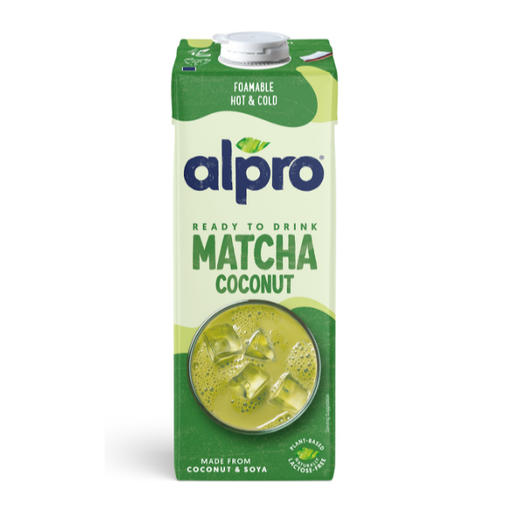 Image unavailable
Consider this if you’re looking for a plant-based coconut and matcha drink for everyday use, rather than coconut milk for cooking. This product comes in a 1 L pack and contains soya; check the packaging for ‘gluten-free’ labelling and storage instructions for after opening.
Under Commission Implementing Regulation (EU) No 828/2014, food sold to the final consumer with this claim must contain no more than 20 mg/kg of gluten. If you need to avoid gluten because of coeliac disease, check the claim on the packaging of the product you’re buying rather than relying on the word ‘coconut’ alone.
No: ‘plant-based’, ‘lactose-free’ and ‘gluten-free’ refer to different things. Auchan’s product page for the Alpro coconut, soya and matcha drink displays the claims ‘lactose-free’ and ‘gluten-free’ separately. Always check that the exact product meets your needs.
If you’re after a creamy texture, look for coconut milk for cooking, then check that its ingredients are right for your recipe. E.Leclerc’s product page for ECO+ coconut milk lists 51.8% coconut extract and 14 g of fat per 100 ml; don’t assume a coconut drink intended for drinking can be used in the same way. Check separately for ‘gluten-free’ labelling if you need it.
Follow the instructions on the packaging of the product you’ve bought. For example, Auchan’s product page for the Alpro coconut, soya and matcha drink says to refrigerate it between +1 °C and +7 °C and consume it within five days of opening. This guidance doesn’t apply to every coconut product.