If you have coeliac disease, choose a product labelled ‘gluten-free’ and take care to avoid cross-contamination when preparing it. If you’re also looking for protein after exercise, compare the nutritional values per serving. Culinary coconut milk can be used as a base for a snack, but it may not be a significant source of protein.
Who is this choice for?
People with coeliac disease who exercise
You’re looking for a coconut snack that’s suitable for a strict gluten-free diet. The label on the finished product matters just as much as taking care in the kitchen to prevent cross-contamination, as AFDIAG points out.
Consumers who keep an eye on protein
You enjoy coconut after exercise, but want to know exactly how much protein your serving provides. The nutritional information on E.Leclerc and Auchan product pages varies depending on whether you’re looking at culinary coconut milk or a plant-based dessert.
Consumers who prefer a ready-to-eat coconut snack
You’d rather have a plant-based dessert than make something at home. Check its gluten-free labelling, ingredients and nutritional information separately: coconut flavour doesn’t tell you how much protein it contains.
What should you check?
Start by checking that the exact product is labelled gluten-free. Then choose between a cooking ingredient and a ready-to-eat snack, depending on how much protein you want it to provide.
| Criterion |
What to check |
Who it’s for |
| Gluten-free suitability |
Check that the finished product’s packaging says ‘gluten-free’, and prepare it using clean surfaces and utensils. |
If I have coeliac disease, I want to choose a snack without relying on coconut as the only ingredient or risking contact with gluten in the kitchen. Nearly 46% of consumers would put this precaution first. |
| Protein per serving |
Check the protein per 100 g or 100 ml, then calculate how much your serving provides. Also identify which ingredient supplies the protein. |
After exercise, I want my snack to contribute to my protein intake, not just taste of coconut. Around 36% of consumers would prioritise this. |
| Format and ingredients |
Choose between coconut milk to add to a recipe and a ready-to-eat dessert. Compare sugars and fats per 100 g or 100 ml, as well as per serving. |
When I want something quick to eat, the format matters, but I also want to check the sugars and fats in my serving. Around 18% of consumers would make this their main priority. |
Common misconceptions to avoid
-
Assuming that ‘coconut-based’ means ‘gluten-free’
You can’t tell what’s in a finished product just from its main ingredient. In the European Union, ‘gluten-free’ means that the gluten content does not exceed 20 mg/kg, according to the regulation published by EUR-Lex.
If you have coeliac disease, check the label on the exact product you’re buying, and read it again if the recipe or format changes.
-
Confusing coconut milk with a high-protein snack
The E.Leclerc and Auchan product pages list 1.9 g of protein per 100 ml for Bio Village coconut milk and 1.1 g per 100 g for La Coop plain coconut dessert, respectively. These figures alone don’t tell you how much protein you’ll get from a full serving of your snack.
Compare the protein per serving and, if it’s a priority for you, consider another protein source that’s suitable for your gluten-free diet.
-
Overlooking other allergens in coconut desserts
The Les Petites Pousses coconut and blueberry dessert featured by Auchan contains almond protein. A gluten-free label doesn’t mean a product is also suitable for someone with a tree nut allergy.
Check the ingredients and allergen information for the exact product before choosing it.
-
Forgetting about cross-contamination at home
A product labelled gluten-free can still come into contact with gluten while you’re preparing it. AFDIAG recommends taking precautions in kitchens where foods with and without gluten are handled.
Clean your worktop and use clean or dedicated utensils when preparing your snack.
Brands and products to consider
These products are suited to different uses: culinary coconut milk can be added to a recipe, while a plant-based dessert is ready to eat. Always check the label on the product you choose.
Carrefour Sensation
Carrefour lists a 250 ml carton of culinary coconut milk made with 60% coconut extract and water.
- The product page says this product is ‘gluten-free’.
- Carrefour lists 18 g of fat per 100 ml, so bear in mind how much you add to your snack.
Bio Village (Marque Repère / E.Leclerc)
E.Leclerc lists a 200 ml carton of organic culinary coconut milk made with water and 47% coconut extract.
- Its product page lists 1.9 g of protein per 100 ml. Compare this with the amount you use in your recipe.
- It also lists 18 g of fat per 100 ml. If you’re choosing it for someone with coeliac disease, check that the packaging says gluten-free before buying.
La Coop
Auchan lists a 350 g plain plant-based coconut dessert, ready to eat, with ‘gluten-free’ and ‘no added sugars’ on its product page.
- The dessert format means there’s no need to prepare a recipe with coconut milk.
- The product page lists 1.1 g of protein and 10 g of fat per 100 g, so don’t assume it’s a particularly high-protein dessert.
Les Petites Pousses
Auchan lists an organic plant-based coconut and blueberry dessert. Its product page says ‘gluten-free’ and lists 4.5 g of protein per 100 g.
- This protein content makes it easy to compare the dessert with the other coconut products mentioned, taking your serving size into account.
- The recipe contains almond protein. The product page also lists 7.2 g of sugars and 7.2 g of fat per 100 g.
Joybuy products for this purpose
These two products offer different ways to enjoy coconut: a matcha drink to consider as part of your snack, and culinary coconut milk to add to a recipe. If you follow a strict gluten-free diet, check the current packaging before using either product.
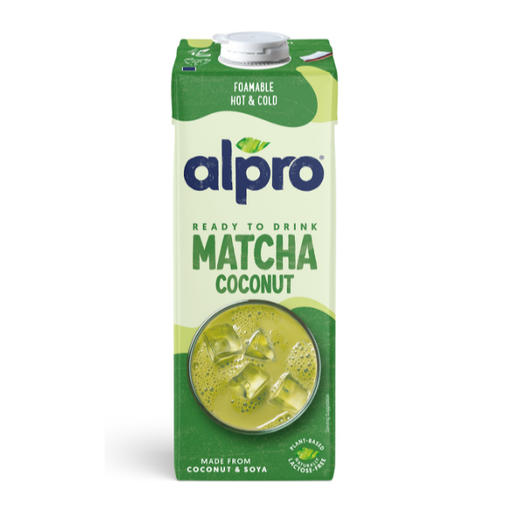 Image unavailable
ALPRO Matcha coconut 1 L
If you prefer a coconut and matcha drink to culinary coconut milk, check the packaging for gluten-free labelling and ingredients, and see how much protein your serving provides.
Pack size shown in the product name: 1 L.
View on Joybuy
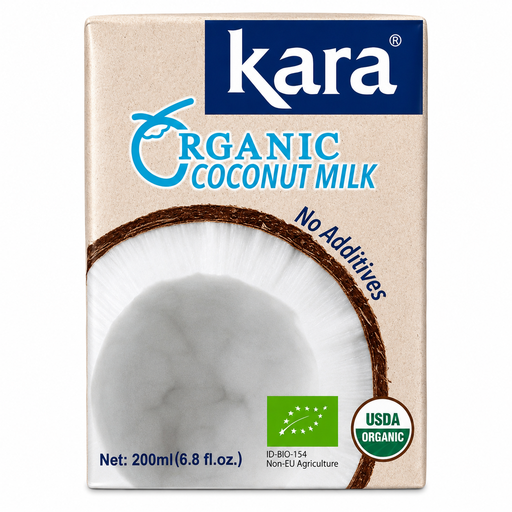 Image unavailable
Kara Organic Coconut Milk UHT, 17% fat, 200 ml
If you’re adding coconut milk to a snack after exercise, check the packaging for gluten-free labelling. If protein is a priority, plan to include another gluten-free protein source.
The product name specifies UHT processing, a 200 ml pack size and 17% fat.
View on Joybuy
Frequently asked questions
Is a ‘gluten-free’ label enough to choose a coconut product if you have coeliac disease?
It’s a useful guide to the product in question, but you should still read the label and take steps to prevent contamination during preparation. In the European Union, the regulation published by EUR-Lex reserves this claim for foods with a gluten content of no more than 20 mg/kg. The French National Health Insurance Fund (Assurance Maladie) also reminds people with coeliac disease that they must follow a strict diet.
Is culinary coconut milk enough if I want protein after exercise?
Don’t assume it is without checking your serving size: E.Leclerc’s product page for Bio Village coconut milk lists 1.9 g of protein per 100 ml. Compare this with the amount you’ll use and, if protein is your priority, choose the other ingredients in your snack accordingly.
How can I prevent cross-contamination when preparing a coconut snack?
Keep gluten-free ingredients separate from those that contain gluten, and use a clean worktop and utensils. AFDIAG recommends these precautions in kitchens where both types of food are prepared.
Is a gluten-free plant-based coconut dessert also suitable if you have a tree nut allergy?
Not necessarily: Auchan’s product page for the Les Petites Pousses coconut and blueberry dessert says it contains almond protein. Check the ingredients and allergen information for each product separately from its gluten-free labelling.


