Hosts welcoming a guest with coeliac disease
It’s important to think about both the biscuit and how it’s served. The packet for your guest should be labelled ‘gluten-free’; at the buffet, keep this option separate from foods containing gluten.


For a guest with coeliac disease, choose biscuits labelled ‘gluten-free’ and serve them separately from foods containing gluten. Individually wrapped portions make this easier. Nutri-Score is optional and can help you compare similar biscuits nutritionally, but it doesn’t tell you whether they contain gluten.
It’s important to think about both the biscuit and how it’s served. The packet for your guest should be labelled ‘gluten-free’; at the buffet, keep this option separate from foods containing gluten.
When guests are helping themselves, sealed packets or a clearly labelled dish with its own serving utensil can help prevent food from getting mixed up. The French Association of Gluten Intolerants (AFDIAG) recommends storing and preparing gluten-free foods separately.
Once you’ve identified biscuits that meet the gluten-free requirement, compare similar products using Nutri-Score if it appears on the packaging, or by checking the nutritional values per 100 g.
For a guest with coeliac disease, first check the biscuit’s labelling and how it will be served. European Regulation (EU) No 828/2014 reserves the ‘gluten-free’ claim for foods containing no more than 20 mg/kg of gluten in the product sold to the final consumer.
| Consideration | What to check | Who is this for? |
|---|---|---|
| Gluten and cross-contamination | The exact packet should say ‘gluten-free’; use a dedicated dish and serving utensil at the buffet. | If I’m hosting someone with coeliac disease, I want to choose a biscuit labelled gluten-free and make sure it doesn’t touch other foods. Around 33% of consumers would make this their top priority. |
| Serving format | The number of portions, how they’re packaged and whether you can keep the packaging next to the dish. | For a self-service buffet, I want an option that’s easy to identify and can be kept protected until serving. This format would be the top priority for around 25% of consumers. |
| Nutritional comparison | Nutri-Score, if displayed, or the sugar, saturated fat and salt content per 100 g when comparing similar biscuits. | After choosing biscuits labelled ‘gluten-free’, I want to compare their nutritional information without confusing this with their gluten content. Around 25% of consumers would make this their first point of comparison. |
| Product availability | Whether the chosen shop stocks the product, and the labelling on the packet you receive, even if you know the brand. | Before the christening, I want to be able to find the exact biscuit I’m planning to serve, rather than swap it for another without checking the packaging. Availability would be the top consideration for around 17% of consumers. |
The Directorate-General for Competition Policy, Consumer Affairs and Fraud Control (DGCCRF) explains that Nutri-Score is voluntary. It tells you about a product’s nutritional qualities, not whether it contains gluten.
Check for the ‘gluten-free’ claim for your guest with coeliac disease, arrange separate serving, then use the nutritional information to compare similar biscuits.
Biscuits bought with a ‘gluten-free’ claim can still come into contact with foods containing gluten while being served. AFDIAG recommends preventing cross-contamination by keeping foods separate.
Keep the packet sealed until you set out the buffet, and use a dedicated dish and utensil for this option.
A similar recipe doesn’t necessarily have the same labelling. Ingredients that seem naturally gluten-free aren’t enough on their own to establish the gluten content of the finished biscuit.
Check the product name and the ‘gluten-free’ claim on every product you actually buy.
A range promoted by a retailer doesn’t guarantee that every product is available in every store. E.Leclerc, for example, advises customers to check with their chosen store about certain products.
Confirm the product before the event and identify an alternative biscuit whose labelling you can check in advance.
Carrefour France includes shortbread-style biscuits and chocolate chip biscuits in its gluten-free selection, depending on the product.
Auchan France offers gluten-free shortbread-style biscuits and petit-beurre biscuits, among others. One petit-beurre product comes in four packets of four biscuits.
E.Leclerc’s range includes chocolate chip cookies and other biscuits labelled gluten-free.
These two LA VENEZIANE products are savoury mini grissini, not sweet biscuits for the buffet. Their product names say ‘gluten-free’; if you’re serving them to someone with coeliac disease, check this claim on the packet you actually buy and serve them separately.
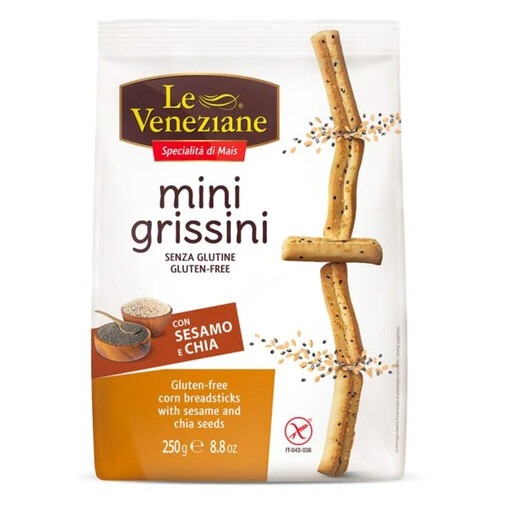 Image unavailable
Consider this if you’d like to add a savoury option to the buffet rather than a sweet biscuit. The product name says ‘gluten-free’ and specifies a 250 g pack; check the claim on the packaging you receive. As this product contains sesame, check the label if this ingredient is relevant to your guests. Check the packaging format before planning separate portions.
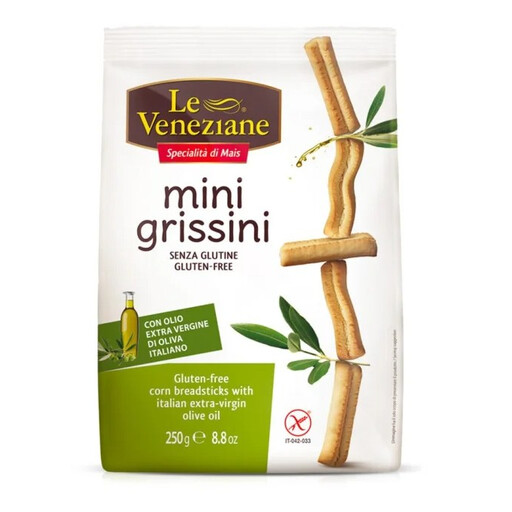 Image unavailable
This olive oil version serves the same purpose as a savoury accompaniment, but it won’t replace biscuits if that’s what you want to serve. The product name says ‘gluten-free’ and specifies a 250 g pack; check the claim on the packaging you receive, as well as the pack format. If you open the pack at the buffet, use a separate dish and serving utensil for it.
Under European Regulation (EU) No 828/2014, it means the food contains no more than 20 mg/kg of gluten when sold to the final consumer. For a guest with coeliac disease, check this claim on the packet you choose. The crossed grain symbol described by AFDIAG is an additional indicator, but its absence alone doesn’t invalidate the ‘gluten-free’ claim.
No. The DGCCRF says Nutri-Score is voluntary, while nutrition declarations are compulsory for most prepacked foods. If two similar biscuits don’t both display Nutri-Score, you can compare their nutritional information per 100 g.
Keep them separate until serving, then use a dedicated dish and utensil. This follows AFDIAG’s recommendation to keep foods separate to prevent cross-contamination. An individually wrapped portion can reduce handling, but it doesn’t remove the need for this precaution.
No. The ingredients list alone doesn’t establish the gluten content of the finished biscuit or rule out contamination during manufacture. For this purpose, look for the regulated ‘gluten-free’ claim on the exact product packaging.