People with coeliac disease who cook at home
When making hot drinks, sauces or desserts, you need to be able to check that the exact almond drink you buy is labelled ‘gluten-free’.


If you have coeliac disease, first choose an almond drink whose exact variant is labelled ‘gluten-free’: its plant-based ingredients alone don’t guarantee that it is. Then compare the sugar content, almond percentage and suggested uses for your hot drink, sauce or dessert. Finally, check the label and storage instructions on the carton you buy.
When making hot drinks, sauces or desserts, you need to be able to check that the exact almond drink you buy is labelled ‘gluten-free’.
You want to control the sweetness of a hot chocolate, porridge, custard or sauce yourself, without confusing this with checking whether it’s gluten-free.
You compare the stated almond content when choosing a recipe base, while checking separately for a ‘gluten-free’ label if you need one.
If you need a gluten-free product because of coeliac disease, start by filtering for products labelled ‘gluten-free’. You can then compare sugar content, almond percentage and suggested uses to find the right variant for your recipe.
| Criteria | What to check | Who is it for? |
|---|---|---|
| Gluten-free label | The exact variant must be labelled ‘gluten-free’, and you should check the allergens listed on its packaging. | If I’m cooking for someone with coeliac disease, I need to be able to identify the carton I’m using without any doubt. Around 46% of consumers put this check at the top of their list. |
| Sugars | Look for ‘no added sugars’ or ‘sugar-free’ wording, and check the ‘sugars’ line in the nutritional information. | For a hot chocolate or custard, I prefer to adjust the sweetness myself. This is the priority for around 27% of consumers. |
| Almond-based recipes | Check the stated almond percentage, the other ingredients and the suggested uses for that product. | When I want the almond flavour to come through in my recipe, I compare the ingredients rather than judging the taste by the percentage alone. Around 18% of consumers prioritise this when choosing a product for cooking. |
| Product availability | Check which variant the shop or seller is offering and whether it is labelled ‘gluten-free’, if you need it to be. | If my usual product is unavailable, I want to find another carton without assuming that a similar variant has the same label. This is the top priority for around 9% of consumers. |
For someone with coeliac disease, the fact that a drink is plant-based doesn’t replace a ‘gluten-free’ label on the exact product.
Check for this label on the variant you’re buying before comparing its other features.
Carrefour and E.Leclerc both state that their Carrefour Bio Intense and Bio Village Intense products contain 7% almonds. This figure alone doesn’t mean either product is suitable for someone who strictly needs to avoid gluten.
Treat the almond percentage as a recipe consideration that’s separate from the ‘gluten-free’ label.
These labels answer two different questions: the first is about the sugar content, while the second is about gluten.
Check the ‘gluten-free’ label, ingredients list and nutritional information separately.
A shop may offer a different variant, or a product may be sold by a partner seller. The label on the product actually delivered is what matters.
Before ordering, check the seller and the full product name. When it arrives, read the packaging again.
An almond drink that Carrefour describes as gluten-free, suitable for drinks and for sweet or savoury recipes.
An almond drink that Carrefour’s listing labels ‘gluten-free’ and ‘no added sugars’.
An organic almond drink that Carrefour describes on its product listing as gluten-free and with no added sugars.
A range of almond drinks that includes a Roasted Almond Unsweetened variant described by Carrefour.
Almond drinks from E.Leclerc, available in ‘no added sugars’ and ‘Intense’ variants.
This unsweetened product could be a good choice if you want to tailor a drink to your taste. If you have coeliac disease or are making a hot recipe, check the ‘gluten-free’ label and suggested uses on the carton you receive.
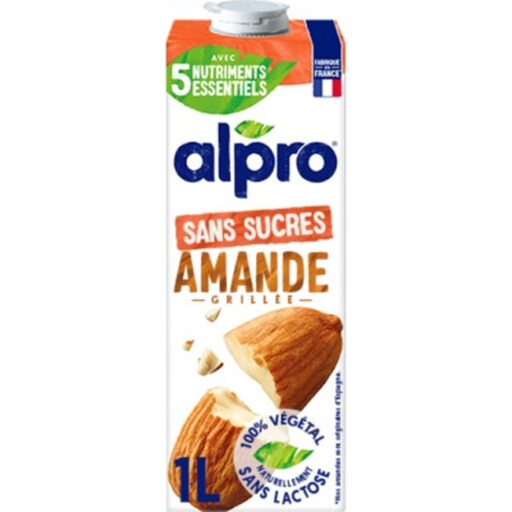 Image unavailable
If you want to tailor a drink to your taste, this unsweetened version is worth considering, provided the carton you receive is labelled ‘gluten-free’.
1 l UHT carton. Check the manufacturer’s instructions before using it in a hot drink or for cooking.
The product description warns that it may contain traces of other tree nuts. If this is a concern, check the allergens on the packaging.
No. If you need a gluten-free product, check that the exact one you’re buying is labelled ‘gluten-free’. The fact that a drink is plant-based or made with almonds doesn’t replace this check.
No. If you need to avoid gluten strictly, don’t rely on that alone. Look for a ‘gluten-free’ label on the exact product, and check its ingredients list and allergen information too.
If it must be gluten-free, start by checking for that label. Then choose based on how sweet you want your recipe to be and the suggested uses for the drink. Carrefour’s Probios listing suggests using it in hot dishes, sauces and desserts, while its La Mandorle listing mentions sweet and savoury recipes.
Follow the instructions on the packaging for your product. The listings for Probios and an Auchan almond drink say to keep them refrigerated and use within five days of opening.
No. It doesn’t replace checking the ingredients and allergen information. An almond drink contains almonds, so also check the packaging for any other tree nuts it may contain.