Before the age of 1, don’t choose an almond drink as a replacement for breast milk or infant formula: according to Anses, plant-based drinks do not meet infants’ needs. For an older child on a strict gluten-free diet, first check that the specific product you’re buying is labelled ‘gluten-free’. Then compare the sugars, ingredients and allergens, without assuming that these criteria alone mean a drink is suitable for their diet.
Who is this choice for?
Parents of a child over 1 with coeliac disease
If an almond drink is part of breakfast, the first thing to check is whether the specific product you’ve chosen is labelled ‘gluten-free’. The fact that it’s made with almonds doesn’t, on its own, mean it’s suitable for a strict gluten-free diet.
Parents of a baby under 1
The key is not to use it as a substitute: according to Anses, an almond-based plant drink does not meet an infant’s nutritional needs and is not a replacement for breast milk or suitable infant formula.
Parents comparing recipes for children over 1
When choosing a drink to serve with breakfast, look separately at the declared sugars, ingredients, any added calcium or vitamins, allergens and the ‘gluten-free’ claim, if needed.
What should you check?
Start with your child’s age: before the age of 1, comparing almond drinks shouldn’t lead you to replace their milk. For an older child, check whether it needs to be gluten-free before comparing recipes on the label.
| Criteria |
What to check |
Who this applies to |
| Child’s age |
Before the age of 1, don’t replace breast milk or infant formula with an almond drink. Anses says plant-based drinks do not meet infants’ needs. |
If my child is under 1, I shouldn’t use an almond drink as a substitute for their milk. Around 36% of consumers would put this age-related precaution first. |
| Gluten-free claim |
For a strict diet, look for ‘gluten-free’ on the packaging of the specific product you’re buying; don’t rely on the recipe name alone. In the European Union, Regulation (EU) No 828/2014 sets a maximum gluten content of 20 mg/kg for products carrying this claim. |
If my child follows a strict gluten-free diet, I need to check the claim on their drink. Around 36% of consumers would make this their priority. |
| Sugars and ingredients |
Compare sugar figures on a like-for-like basis, per 100 ml or per 100 g as shown on the label. Also check the ingredients, any added nutrients and allergens. |
For a child over 1, if I’m comparing drinks to serve with breakfast, I want to understand how the recipes differ without overlooking almonds as an allergen. Around 28% of consumers would prioritise this comparison. |
Common mix-ups to avoid
-
Confusing a plant-based drink with infant formula
For a child under 1, this isn’t simply a matter of choosing a different recipe: Anses says plant-based drinks do not meet infants’ nutritional needs.
Check your child’s age before comparing labels, and don’t replace breast milk or suitable infant formula with an almond drink.
-
Assuming ‘almond’ or ‘no added sugars’ means ‘gluten-free’
These claims relate to different things. For example, Bjorg says its classic almond drink may contain traces of gluten.
If your child follows a strict gluten-free diet, look for this claim on the specific product and pack size you’re buying, then check the packaging again if the recipe changes.
-
Choosing based on just one detail on the label
A ‘organic’ claim, information about sugars or the percentage of almonds doesn’t, on its own, tell you whether a product is gluten-free, what allergens it contains or what else is in it.
Compare nutritional values on the same basis, then check the ingredients, allergens and any added calcium or vitamins separately.
Brands to compare
Alpro
Worth considering if you’re looking for an almond drink whose French product listing carries both ‘gluten-free’ and ‘no added sugars’ claims.
- For the product listed on its French product page, Alpro declares 0 g of sugars and 120 mg of calcium per 100 ml, as well as vitamins D, B2 and B12.
- The stated recipe contains 2.3% almonds and may contain traces of other nuts. These details don’t make this drink a substitute for infant formula.
Ecomil
An organic option to compare if ‘gluten-free’ and ‘no added sugars’ are among your criteria.
- Ecomil’s product page for its organic, unsweetened almond drink states ‘gluten-free’, 6% almonds and 0.30 g of sugars per 100 g.
- The product page lists nuts, including almonds, as allergens. If you’re also comparing added nutrients, check the ingredients on the pack you choose.
Bjorg
Bjorg products show why it’s important to compare almond drinks variant by variant, particularly for sugars and gluten.
- Bjorg states that its organic, unsweetened almond drink contains less than 0.5 g of sugars per 100 ml.
- Its classic almond drink contains 4.0 g of sugars per 100 g and may contain traces of gluten. Don’t assume the information for one variant applies to another.
Almond drink available on Joybuy
This unsweetened almond drink could be considered as part of breakfast for a child over 1. If a strict gluten-free diet is required, check for the relevant claim on the packaging of the pack size you’re buying before choosing it.
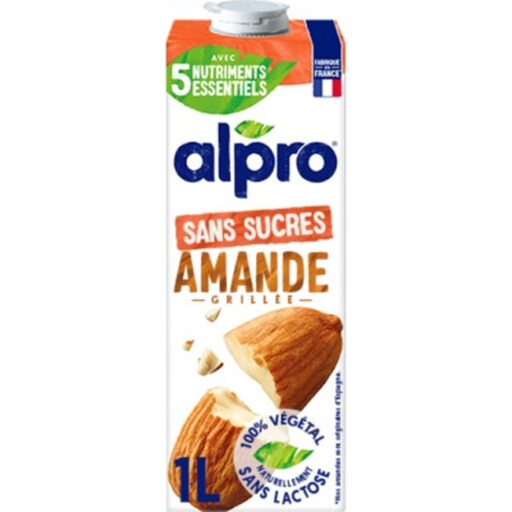 Image unavailable
Alpro Almond Unsweetened UHT 1 l
Could be served with breakfast after the age of 1, provided the pack you’re buying carries a ‘gluten-free’ claim and your child can have almonds.
UHT almond drink, Unsweetened variant, 1 l pack. It is not a replacement for breast milk or infant formula before the age of 1.
View on Joybuy
Frequently asked questions
Can an almond drink replace infant formula before the age of 1?
No. According to Anses, plant-based drinks do not meet infants’ nutritional needs. The French National Health Insurance recommends continuing with infant formula until the age of 1.
What does ‘gluten-free’ mean on an almond drink?
In the European Union, Regulation (EU) No 828/2014 defines ‘gluten-free’ as a gluten content of no more than 20 mg/kg. If your child has coeliac disease, check this claim on the specific product you’re buying.
Is an unsweetened almond drink always gluten-free?
No. These claims relate to different characteristics, so check for gluten separately from sugars. Nor should you assume a Bjorg product has the same status as another variant based on its label.
Does added calcium make an almond drink equivalent to infant formula?
Not for an infant: Anses says plant-based drinks are not suitable for meeting their needs. For a child over 1, any added calcium and vitamins are label details to consider as part of their diet. One nutrient alone isn’t enough to establish that a drink is equivalent to milk.
What should I do if my child has a diagnosed almond allergy?
Don’t choose an almond drink without advice from the healthcare professional looking after your child. The products mentioned here contain almonds; also check each pack for other allergens and any warnings about traces.


