
Livraison le jour même ou le lendemain

Qualité garantie

Débloquez vos offres de bienvenue: Livraison GRATUITE | Jusqu'à -80 % | 30 jours d'essai gratuits à JoyPlus
Téléchargez l'application
A repair that comes unstuck, a poster that leaves marks or a shelf that does not stay in place as expected: glues and adhesives are not interchangeable. The right choice depends on the material, the weight to be supported, how long the bond needs to last and the surrounding conditions.
An instant glue quickly joins small rigid parts, but it is not necessarily suitable for flexible surfaces, repeated movement or temperature changes. Conversely, a flexible glue may need more time before reaching its maximum strength.
The word « strong » on the packaging is therefore not enough. Check the type of materials, setting time and usage conditions specified by the manufacturer.
A no-more-nails adhesive may be suitable for wood, plaster, brick or stone, but some products require at least one of the surfaces to be porous. PE, PP and PTFE plastics are also excluded from many formulations.
A dusty, greasy, damp or uneven surface significantly reduces adhesion. Cleaning and drying the surface, then following the recommended preparation instructions, is just as important as choosing the product.
Adhesive pads, adhesive putty and fixing dots are handy for lightweight objects. However, their stated capacity depends on the surface, temperature, contact time and how the weight is distributed.
For a shelf, mirror or object exposed to vibration, a mounting adhesive or mechanical fixing will often be more suitable. For a poster, photo or temporary decoration, a repositionable solution helps prevent marks and unnecessary handling.
Distinguish between the initial grab, which temporarily holds the parts in place, and the final strength, achieved after the stated period. Some glues require the parts to be held together for a few seconds, while others only reach their load-bearing capacity after several hours.
For outdoor use, look for an explicit statement regarding moisture, ultraviolet rays and temperature fluctuations. Even a product marketed as an indoor and outdoor adhesive should only be used on the surfaces authorised in its instructions.
A fine nozzle is useful for a localised repair. A tube or cartridge is suitable for small surfaces, while a gun is required for certain mounting adhesive cartridges. Hot glue sticks must match the diameter of the gun, often 11 mm on standard models.
Also consider the pack size. A multipack of small sticks may be ideal for a classroom or office, whereas a tube containing just a few grams avoids having to store glue for too long when it may dry out after opening.
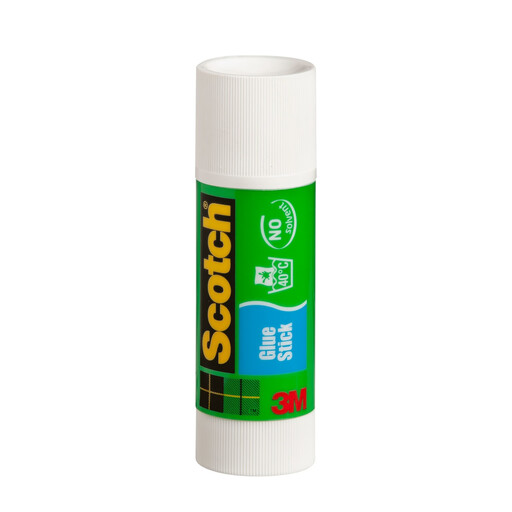
Why this choice suits this profile : Its 40 g format is ideal for everyday gluing, homework, cards and craft projects involving paper, card, photos or lightweight fabrics.
The stick helps prevent drips and makes it clear that this is for light craft projects rather than fixing items that need to support a load.
Formula described as washable with water and acid-free : apply directly, with no tools required.
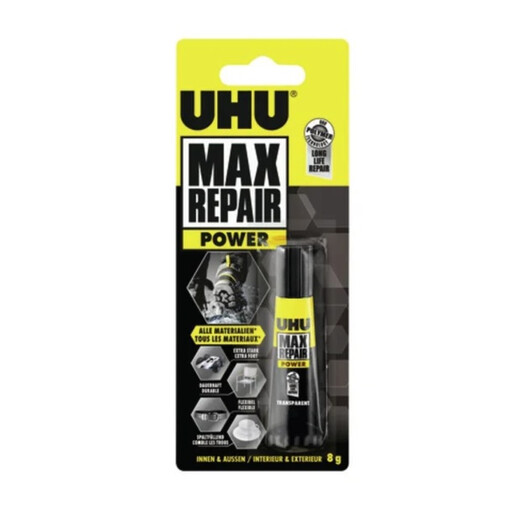
Why this choice suits this profile : This tube is designed for repairs that need to retain some flexibility, indoors or outdoors, on wood, metal, glass, rubber or certain plastics.
Its description mentions resistance to shocks, water and temperature changes : these claims should nevertheless be checked against the actual surface.
Solvent-free polymer formula, transparent once dry and adjustable for a few minutes.
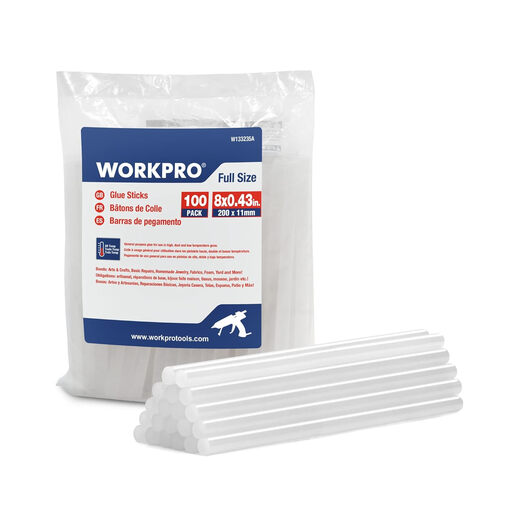
Why this choice suits this profile : This pack of 100 clear sticks is suitable for DIY workshops, schools, offices and repeated projects using a compatible 11 mm glue gun.
The 11 mm diameter is clearly stated : still check that it is compatible with your glue gun before buying.
200 mm EVA sticks, clear and designed for paper, card, wood, glass, metal and certain plastics.
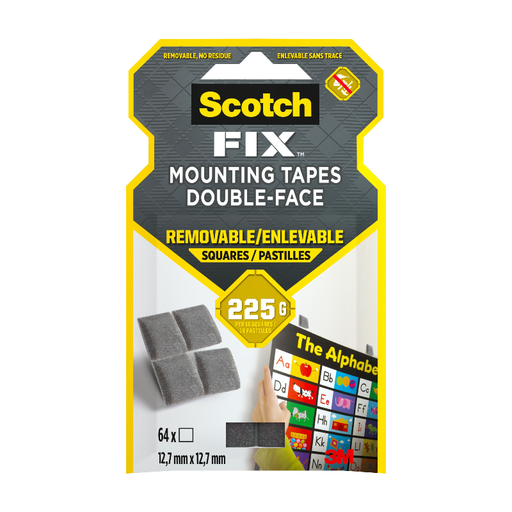
Why this choice suits this profile : These 64 pre-cut dots are suitable for photos, posters, drawings and lightweight decorations in a bedroom, classroom or office.
Its repositionable design is intended for very lightweight objects : it helps prevent mistaking an adhesive dot for a structural fixing.
Pre-cut format, no drilling required, repositionable and designed for indoor use on smooth surfaces.
We have put together a complete, real-time updated list of products that meet these strict selection criteria and European safety regulations.
Cyanoacrylates can bond skin and eyelids very quickly. Read the label and safety data sheet before use. Hot glue sticks also present a burn risk when melted.
A glue stick is generally suitable for paper, card, photos and light craft projects. It applies evenly and helps prevent drips. For temporary fixing, choose repositionable putty or dots.
No. Several glues explicitly exclude PE, PP and PTFE. Always check the list of compatible surfaces and carry out a preliminary test. The term « multi-purpose » does not remove the need to check the type of material.
Close the cap carefully after each use, wipe the nozzle and store the product in a cool, dry place away from sunlight and frost. For hot glue, store the sticks flat and check that they are compatible with your glue gun before use.