
Livraison le jour même ou le lendemain

Qualité garantie

Débloquez vos offres de bienvenue: Livraison GRATUITE | Jusqu'à -80 % | 30 jours d'essai gratuits à JoyPlus
Téléchargez l'application
A pantry lined with clear jars of pasta, lentils, or spices promises a kitchen that's as beautiful as it is functional. The glass storage jar has become a cornerstone of kitchen organization. Yet, buying them can quickly become a headache. Between unfulfilled promises of airtight seals and poor-quality materials, disappointment is often just around the corner. As a Product Expert at Joybuy, my mission is to help you navigate the marketing traps and make a truly informed choice.
Before you check out, watch out for these three common issues that can turn a good purchase into a real regret.
To ensure the longevity and effectiveness of your jars, focus on these three technical points.
The choice of glass is paramount. There are two main types of glass:
The effectiveness of an airtight glass jar depends entirely on its sealing system.
Before buying, assess the space you have available. Square or rectangular jars are easier to arrange and maximize space, unlike round jars. Choosing a set of glass jars from the same range ensures a beautiful visual harmony and perfect modularity. Also, remember to vary the capacities: small ones for a glass spice jar, medium ones for legumes, and large ones for flour or cereal.
Rather than searching for a one-size-fits-all jar, it's better to find the one that fits your specific use case. Here is our selection for different needs.
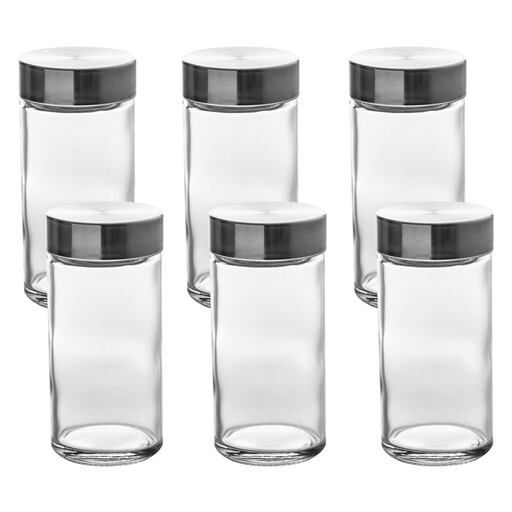
Why we love it: For those who finally want to harmonize their spice collection, this set is a simple, aesthetic, turnkey solution. Their small size is perfect for a dedicated drawer or shelf, and the transparent glass lets you identify the contents at a glance.
No more headaches from mismatched jars cluttering up your cupboards! This set offers an all-in-one solution for neat and functional storage, without having to hunt for individual jars.
The compact size (80 ml) and integrated sifter lids make this a system designed for the daily use of spices.
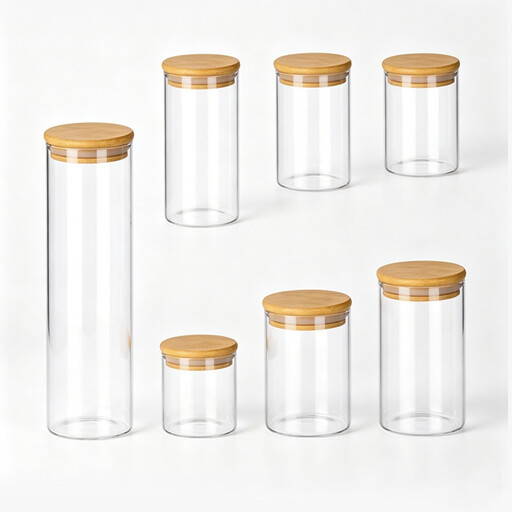
Why we love it: Perfect for those who regularly buy in bulk, this set covers all needs with its wide range of sizes (from 431 ml to 2178 ml). You can store everything from chia seeds to spaghetti. The silicone seal on the lids guarantees excellent preservation of dry foods.
This set directly addresses the problem of unreliable seals. Its push-on lid system with a gasket is designed to protect dry foods from moisture and pests, a crucial point for long-term storage.
The 7 different sizes allow you to create a complete and harmonious pantry organization system in one go. No more searching for different capacity containers here and there.
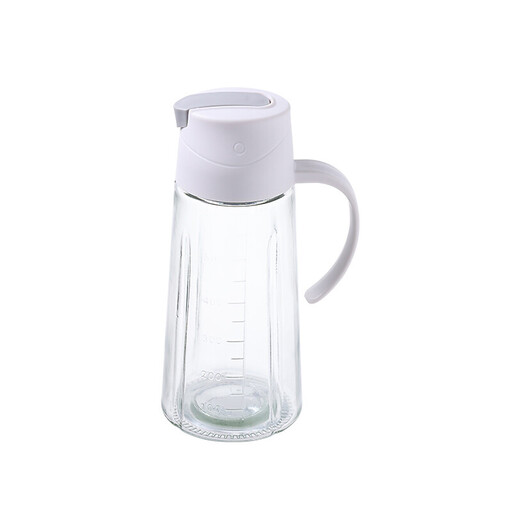
Why we love it: This **glass oil bottle** is designed for a very specific purpose: serving liquid condiments in the kitchen. Its clever design helps keep your countertop spotless while allowing you to dispense oil or vinegar with great precision.
Say goodbye to the classic oil bottle that drips and always ends up greasy! Its gravity-fed opening mechanism and anti-drip spout are the direct answer to this common daily annoyance.
The automatic opening and closing by simply tilting the bottle allows you to use it with one hand. A detail that makes all the difference when you're in the middle of preparing a dish.
Discover our complete selection of products that meet our demanding selection criteria and current safety standards.
For stubborn odors (garlic, coffee, spices…), a simple wash is rarely enough. The solution: fill the jar with a mixture of hot water and baking soda (one tablespoon per litre) or white vinegar. Let it sit for several hours, or even overnight, before rinsing thoroughly. Then let it air dry, without its lid.
Not necessarily, but it's a real guarantee of peace of mind. If your jars are only used for storing dry foods at room temperature, a good quality soda-lime glass will do the job. However, if you're looking for more versatility (fridge to dishwasher, storing soups…), the investment in borosilicate glass is fully justified for its durability and safety.
Yes, but with a few precautions. Choose a jar with a wide mouth and straight sides to prevent pressure from cracking it as the food expands. Most importantly, never fill it to the brim: leave at least 2 to 3 centimetres of empty space at the top. Finally, to avoid thermal shock, let the jar thaw slowly in the refrigerator rather than at room temperature.