
Livraison le jour même ou le lendemain

Qualité garantie

Débloquez vos offres de bienvenue: Livraison GRATUITE | Jusqu'à -80 % | 30 jours d'essai gratuits à JoyPlus
Téléchargez l'application
Opting for a glass food container seems like a straightforward and smart choice: a healthy, durable, and stylish material to preserve the freshness of your food. Yet, the market is flooded with models making varied claims, and it's easy to end up with a product that's unsuitable, fragile, or impractical for daily use. Before investing in a new set for your kitchen, it's essential to know how to sidestep marketing traps and focus on the features that truly matter.
Here are the most common mistakes that can turn a good investment into a regret:
To ensure your future glass kitchen storage is a durable and functional ally, here are the three points to check before you buy.
The fundamental difference lies in the glass composition.
The effectiveness of a glass storage jar rests entirely on its lid.
For a well-organised kitchen, the shape of your containers is paramount. Square or rectangular containers are far more space-efficient than round ones for optimising space in cupboards, the refrigerator, or the freezer. Also, check if models from the same range are designed to be stacked stably, with or without their lids.
Rather than an endless catalogue, here is our selection of models that meet specific needs, all evaluated against the quality and practicality criteria we've just detailed.

Why it's the perfect match: Ideal for preparing and transporting individual meals. Its 630ml size is perfect for a single portion, and its clip-on lid ensures a reliable seal for taking soup or a saucy dish to the office without risk of leaks.
Made from borosilicate glass, it transitions seamlessly from the freezer to the microwave. The robust four-clip locking system and silicone gasket prevent leaks, unlike low-end lids.
Total versatility: freezer, oven (without lid), microwave, and dishwasher safe. Its rectangular shape makes it easy to store in a bag or fridge.

Why it's the perfect match: For those who want a single dish to store leftovers, freeze portions, bake a small casserole, and reheat it. It's the Swiss Army knife of food storage, backed by a brand renowned for its quality glass.
This dish is made of pure borosilicate glass, specifically designed by Pyrex for oven use. It eliminates any risk related to thermal shock, unlike imitations made from standard glass.
Its stackable design optimises space. The non-porous glass doesn't absorb stains or odours, ensuring your potato gratin won't taste like yesterday's bolognese sauce.
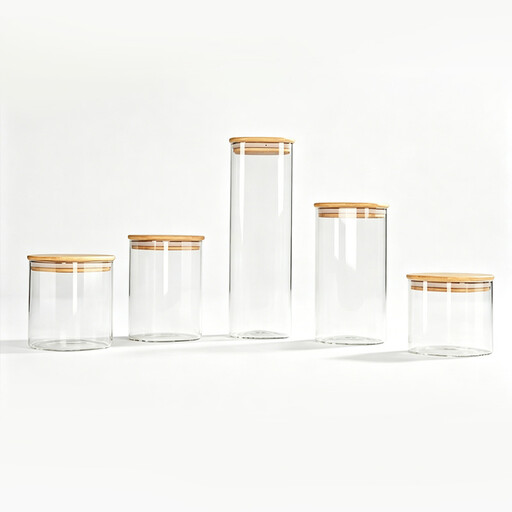
Why it's the perfect match: Perfect for those who buy in bulk and love a visually harmonious pantry. This set of five different sizes allows you to store cereals, pasta, legumes, or dried fruit while keeping everything in plain sight.
Unlike impractical designs, these jars are stackable for maximum space-saving. The lid with a silicone seal ensures proper storage for dry goods, avoiding the trap of non-airtight lids.
The set provides a complete and cohesive solution for organising your pantry. The clear glass allows you to identify the contents and remaining quantity at a glance.
For organising your condiments and spices, we've curated a selection of products that meet these same standards of quality and practicality.
No, this is a common mistake. Only containers explicitly marked as being made of borosilicate glass are designed to withstand the high temperatures of an oven and thermal shock. Using standard glass can cause it to shatter. It is imperative to always check the manufacturer's recommendations and never put a plastic or wooden lid in the oven.
For perfect hygiene, cleaning must be meticulous. The glass container can usually go in the dishwasher. However, it is recommended to wash the lid and its silicone gasket by hand. Remove the gasket from the lid to clean both parts separately with hot, soapy water. Ensure every component is completely dry before reassembling and closing the jar to prevent any mould growth.
They are very aesthetically pleasing for a glass spice jar or a storage jar on a shelf. However, they are primarily suitable for dry foods. They are generally not designed to be airtight and should not be put in the dishwasher, refrigerator, or freezer. Moisture can cause them to swell, warp, or even grow mould, thereby compromising food preservation. They should be chosen for their decorative appeal in a dry environment.