
Livraison le jour même ou le lendemain

Qualité garantie

Débloquez vos offres de bienvenue: Livraison GRATUITE | Jusqu'à -80 % | 30 jours d'essai gratuits à JoyPlus
Téléchargez l'application
The war on PFAS and other PTFE in our kitchens has begun. Faced with concerns about traditional non-stick coatings, more and more consumers are turning to healthier alternatives. Among them, the borosilicate glass pot is emerging as a premium choice. Inert, non-toxic, and transparent, this material has it all: it preserves the flavour of food and lets you monitor your cooking at a glance.
Follow our guide to find the glass casserole that will fit perfectly into your daily routine and cooking needs.
Before you make a purchase, let's review the key points to ensure your new cookware is perfectly suited to your kitchen and your habits.
This is the first step: your new pot must be compatible with your hob. Most borosilicate glass models are suitable for gas and electric hobs. However, for use on an induction hob, a special adapter disc is required.
Think versatility! An oven-safe casserole opens up a world of possibilities, like starting a dish on the hob and finishing it in the oven for a perfect gratin or a slow-simmered meal. Always check the maximum temperature the product can withstand, which is often around 180°C for this type of material.
This is often a key selling point: choosing a non-toxic material. Borosilicate glass checks all the boxes:
The size of your casserole should match your household size and cooking habits. A capacity of 2 to 2.5 litres is often sufficient for one or two people, or for preparing sauces and side dishes. For a family or if you enjoy cooking in large quantities (soups, stews, pasta), a capacity of over 4 litres will be much more convenient.
To help you decide, we've selected a few models that stand out for their features and practicality.
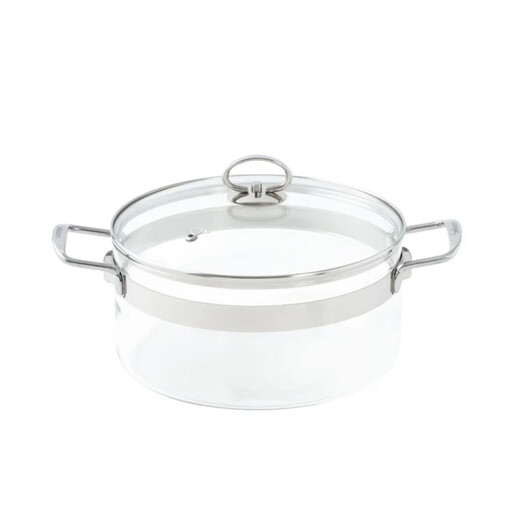
Key Feature
With its generous 4.2-litre capacity, this is the perfect partner for large family meals. The fully transparent body and lid offer perfect visual control over the cooking process—a real bonus for dishes that require close attention, like soups, stews, or cooking vegetables.
Pros
Who is it for?
Ideal for families of 3 to 5 and fans of batch cooking. It's a perfect piece of glass cookware for stews and large-volume recipes.
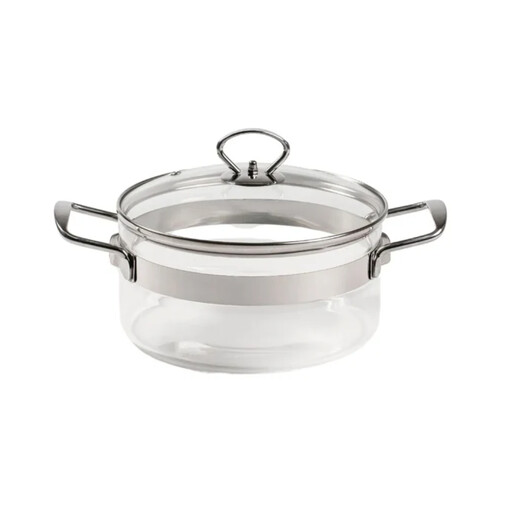
Key Feature
This more compact 2.5-litre model offers the same healthy cooking benefits in a more agile format. Its size makes it incredibly versatile for daily use, whether for reheating a dish, cooking grains, or preparing a sauce.
Pros
Who is it for?
Perfect for individuals, couples, or as a secondary glass pot for side dishes and sauces. Its compact size makes storage and handling easy.
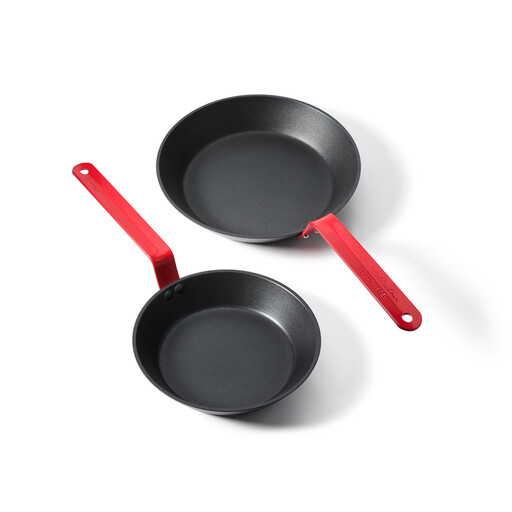
Key Feature
Because some foods, like fried eggs or pancakes, require a non-stick surface, this pan set is the ideal complement. They feature a Swiss ILAG coating that is guaranteed PFOA- and PFOS-free. Their thick stainless steel base ensures even heat distribution and compatibility with all hobs, including induction.
Pros
Who is it for?
For anyone who doesn't want to compromise between high-performance non-stick for delicate foods and the choice of safer materials.
Your culinary creativity deserves the best tools. To complete your cookware collection, feel free to explore our full selection of utensils, accessories, and equipment.
? Discover Our Full Selection for Ovens and Hobs
1. Can a glass pot be used on an induction hob?
No, a borosilicate glass pot is not directly compatible with induction, which requires a magnetic base to function. However, you can simply place an induction adapter disc (sold separately, like the MC60090 model for the products shown) between the hob and the pot to make it compatible.
2. What are the main advantages of cooking in a glass casserole?
There are several:
3. How do I care for a borosilicate glass casserole to make it last?
Maintenance is a breeze. Hand washing with warm, soapy water and a soft sponge is ideal for preserving its transparency. The key is to always let it cool down completely before cleaning to avoid thermal shock, which could weaken it. Even though borosilicate glass is durable, it's not unbreakable: handle it with care to avoid impacts.
By the Joybuy Product Recommendations Team