
Livraison le jour même ou le lendemain

Qualité garantie

Débloquez vos offres de bienvenue: Livraison GRATUITE | Jusqu'à -80 % | 30 jours d'essai gratuits à JoyPlus
Téléchargez l'application
Meal prepping, baking a casserole, storing leftovers… Juggling countless containers in the kitchen can quickly become a headache. What if a single dish could do it all? That's the promise of the glass oven dish with a lid: a versatile ally that goes from the oven to the table, then to the fridge, with complete ease.
This guide is here to help you find the perfect model. We'll review the key criteria and present our selection of the best products to streamline your kitchen organisation.
Before you commit, here are a few essential points to check to ensure your future glass dish ticks all the boxes.
The material is the most critical factor. Borosilicate glass is the champion of oven cooking. Its unique composition gives it exceptional resistance to thermal shock. In practical terms, it can handle extreme temperature changes effortlessly (within the manufacturer's specified limits, of course). This feature is crucial for a dish designed to go from the refrigerator to the oven. It's a guarantee of safety and durability for healthy cooking in glass.
A good glass dish with a lid should be a true Swiss Army knife for daily use. Check its compatibility with your appliances: oven (without the lid), microwave (without the lid), freezer, and dishwasher. The lid plays a vital role. For an effective glass oven storage container, opt for a lid with an airtight locking system, often featuring a silicone seal. This ensures optimal food preservation and leak-proof transport. Perfect for taking your lunch to the office.
The shape of your dish will depend on how you plan to use it. A rectangular glass baking dish is ideal for lasagnas, casseroles, or roasts, and its shape makes it easy to store in cupboards and the refrigerator. Round or square dishes, on the other hand, are perfect for cakes, quiches, or storing individual portions. Consider the capacity you need: a small size for solo meals, a large one for family dishes, or for preparing meals in advance (the famous batch cooking).
To guide you, we have selected a few models that stand out for their versatility and effectiveness.

Why It Stands Out
This Lock&Lock container is the epitome of versatility. Its high-quality borosilicate glass body is oven-safe, while its four-sided locking lid with a silicone seal ensures a completely foolproof seal. It's the ideal solution for cooking a single portion, storing it, and transporting it hassle-free.
Pros
Who Is It For? This model is perfect for individuals, students, or meal prep enthusiasts. Its compact size makes it an excellent lunch box for the office.
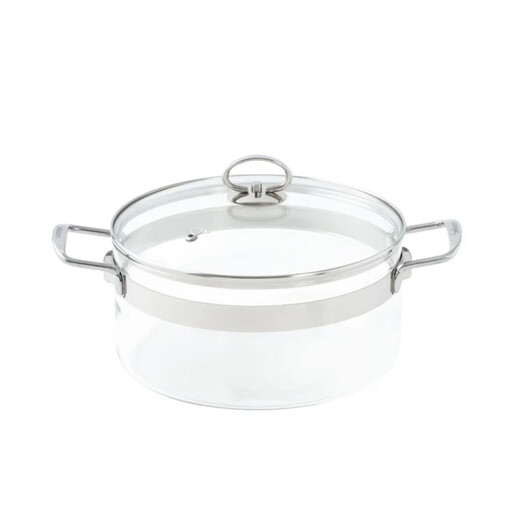
Why It Stands Out
More than just a dish, the Belissam by Mastrad is a true glass casserole. Its large 4.2-litre capacity makes it ideal for slow-cooked meals, soups, or vegetables. Being entirely transparent, including the lid, allows you to monitor cooking without lifting the lid, thus retaining all the heat. Designed for healthy cooking, it is made from inert glass with no coatings (PFAS and PTFE-free).
Pros
Who Is It For? This casserole dish is aimed at families and fans of hearty, slow-cooked meals who are looking for a large, healthy piece of cookware that can go from the hob to the oven, and then straight to the table.
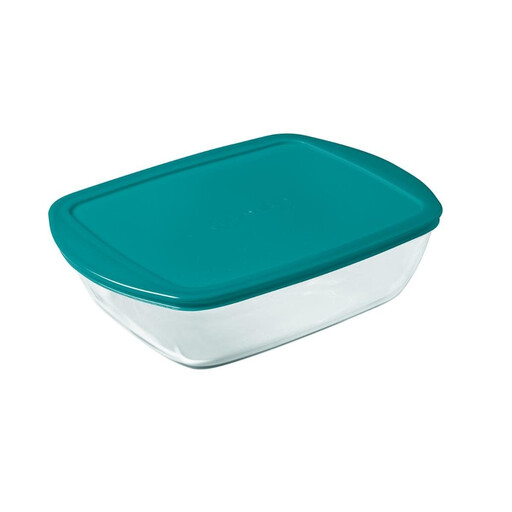
Why It Stands Out
This rectangular dish from PYREX is a tried-and-true staple in any kitchen. Its generous size is perfect for preparing casseroles, lasagnas, and other family meals. The heat-resistant glass body ensures even cooking, while its plastic lid allows you to store leftovers airtight in the fridge. Its stackable design optimises space in your cupboards and refrigerator.
Pros
Who Is It For? This is the ideal dish for families or anyone who loves to bake large-quantity oven meals. A reliable and practical tool for everyday use.
Didn't find your perfect match in this selection? Don't worry, every kitchen has its own needs. To discover the model that will perfectly fit your routine, explore our full category.
? Discover more glass oven pots and pans
1. Can you put the lid of a glass dish in the oven? As a general rule, no. The vast majority of lids are made of plastic (PP, etc.) and are not designed to withstand high oven temperatures. They could melt or release harmful substances. The lid is intended only for storage in the refrigerator/freezer or for transport. Always read the manufacturer's instructions carefully.
2. What is the difference between tempered glass and borosilicate glass? Tempered glass is treated to be more resistant to mechanical shocks. Borosilicate glass, on the other hand, is primarily known for its very high resistance to thermal shock (going from cold to hot). For a dish intended for the oven, borosilicate glass is often recommended because it handles these temperature variations better, thus reducing the risk of breakage.
3. How can you prevent a glass dish from cracking in the oven? The main risk is thermal shock. To avoid it, never move a dish directly from the freezer to a preheated oven. Let it return to room temperature for a few moments. Likewise, never place a hot dish from the oven onto a cold, wet surface (like a wet sink). Use a trivet. Finally, inspect your dish for any cracks before each use.