
Livraison le jour même ou le lendemain

Qualité garantie

Débloquez vos offres de bienvenue: Livraison GRATUITE | Jusqu'à -80 % | 30 jours d'essai gratuits à JoyPlus
Téléchargez l'application
Healthy, durable, and stylish, glass is making a major comeback in our kitchens. But with an overwhelming number of options on the market, how do you find your way? A dish that cracks straight out of the oven, jars that lose their airtight seal after just a few weeks... Who hasn't experienced these disappointments? Fortunately, these issues are far from inevitable.
As a product expert for the Joybuy editorial team, my mission is to help you see things more clearly. Let's forget the technical jargon and focus on what truly matters. Here’s how to avoid the 3 most common pitfalls and finally choose glass kitchenware that lives up to its promises.
Pitfall #1: The Myth of "Universal Glass" The "oven-safe" label can be incredibly misleading. No, not all glass is created equal. Standard soda-lime glass, perfect for a drinking glass, will never withstand significant thermal shock. A dish made from this material is likely to crack if you move it from the refrigerator to the oven.
Pitfall #2: The Lid, the Eternal Weak Link You invest in beautiful glass storage containers, but after a few runs through the dishwasher, the plastic lid warps, cracks, or the seal gives out. The result: your container loses its primary purpose of keeping food fresh.
Pitfall #3: The False Promise of Versatility A product is often marketed as the Swiss Army knife of your kitchen: freezer, oven, serving... In practice, significant limitations are often hidden in the fine print of the user manual: the lid isn't oven or microwave-safe, or the heat resistance is much lower than advertised, drastically reducing its usability.
To avoid these disappointments, a few key points are all you need to check before you buy. These details, which may seem technical, make all the difference between a durable product and a short-lived gadget.
This is THE non-negotiable criterion, especially for dishes intended for baking.
For glass storage containers and airtight glass jars, the locking system is just as important as the container itself.
A reputable manufacturer always provides clear instructions. Always look for information on thermal shock resistance. The golden rule: never take a glass dish from one temperature extreme to another (for example, from the freezer directly into a preheated oven). Always let it return to room temperature for a few minutes.
To help you see how these criteria apply in practice, here are a few options that meet specific needs.
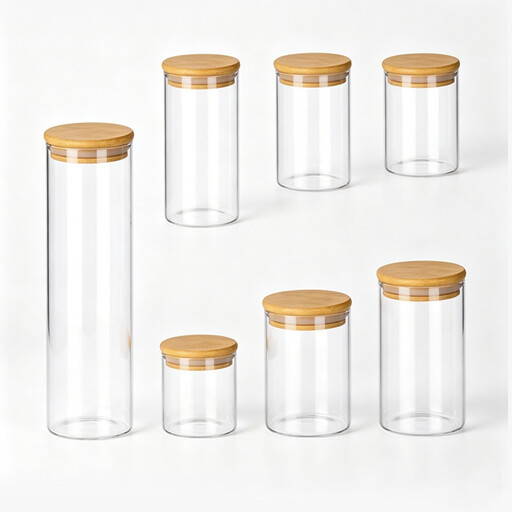
The concept: Bringing stylish order to your pantry. This set is perfect for storing dry goods (pasta, rice, legumes, cereals) and creating a shelf that is as organised as it is beautiful.
This product has a clear mission: storage. It isn't oversold as a cooking product, which avoids the pitfall of false versatility. Its promise is simple and delivered: to be an excellent set of airtight glass jars for bulk and dry foods.
The set of 7 different sizes adapts to all your needs for organising a multitude of ingredients. We especially love the wood-effect lids that add a warm and highly decorative touch.
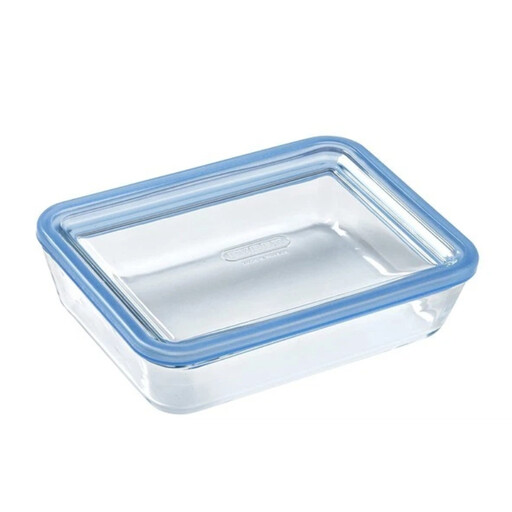
The concept: The perfect partner for meal preppers and healthy cooking enthusiasts. It allows you to cook a portion, store it in the fridge or freezer, and then reheat it—all in the same dish.
This dish is made of borosilicate glass, which immediately sidesteps the "universal glass" pitfall. Its high heat resistance is clearly stated, as are the precautions against thermal shock.
Its true versatility (oven, microwave, freezer, dishwasher) and pure glass composition make it a safe choice for healthy cooking. Bonus: its stackable shape optimises storage space in cupboards and the fridge.
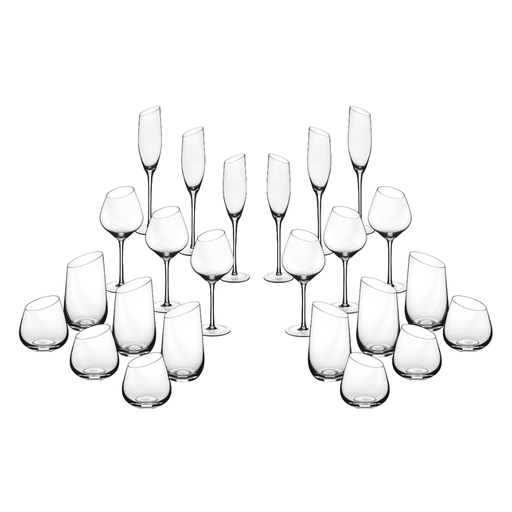
The concept: For everyone who loves to entertain and set a harmonious, modern table. This complete set offers a perfectly coordinated collection for all beverages, from water to champagne.
This lead-free crystalline glass set has one clear purpose: tableware. There's no ambiguity about its use, which protects it from the false versatility trap. Its composition is perfectly transparent.
A complete 24-piece set with 4 types of glasses for a consistently coordinated table. The crystalline glass is dishwasher-safe—the perfect blend of style and everyday practicality.
We have curated a complete range of products that meet our strictest quality and safety standards.
It all comes down to chemical composition and, therefore, resistance to thermal shock. Borosilicate glass contains boron trioxide, which allows it to withstand much greater temperature changes without cracking. Regular (soda-lime) glass is much more sensitive and can shatter if it goes from cold to hot too quickly. For cooking, borosilicate is therefore the safest and most recommended option.
No, that's a very bad idea! Placing a hot glass dish on a cold surface or directly in the refrigerator creates a violent thermal shock that can cause it to crack or even shatter. The golden rule: always let the dish cool to room temperature before refrigerating or washing it.
Most quality glass kitchenware is dishwasher-safe. However, to preserve the shine of crystalline glass or the integrity of wooden lids, gentle hand washing is still preferable. Absolutely avoid abrasive sponges that could scratch the surface. Finally, a good habit: regularly inspect your dishes for any cracks or chips. If you find any, it's safer to stop using them.