
Livraison le jour même ou le lendemain

Qualité garantie

Débloquez vos offres de bienvenue: Livraison GRATUITE | Jusqu'à -80 % | 30 jours d'essai gratuits à JoyPlus
Téléchargez l'application
Choosing glass to store your food is an excellent idea, both for your health and for your kitchen organisation. But be careful—the market is flooded with products that don't always live up to their claims. A lid that warps, glass that cracks at the first thermal shock, or a questionable seal can quickly turn a good investment into a disappointment. Before you fill your cupboards, let's review the pitfalls to avoid and the criteria that truly matter for making the right choice.
Too many buyers fall for slick marketing claims and end up with unsuitable products. Here are the warning signs you should never ignore.
To ensure your glass food container lives up to its promises, focus on these three key points before you check out.
The material is the heart of your jar. There are two main types of glass:
The effectiveness of a glass jar with a lid depends entirely on its locking system. There are three main types:
To optimise space and simplify access, the shape of your jars is crucial. Square or rectangular formats are much more space-efficient than round ones for making the most of shelf space in a cupboard or refrigerator. Opt for stackable models to create a visual and perfectly ordered pantry organisation system.
Instead of an endless list, we've selected products that meet specific needs. It's up to you to find the one that's made for your daily routine.
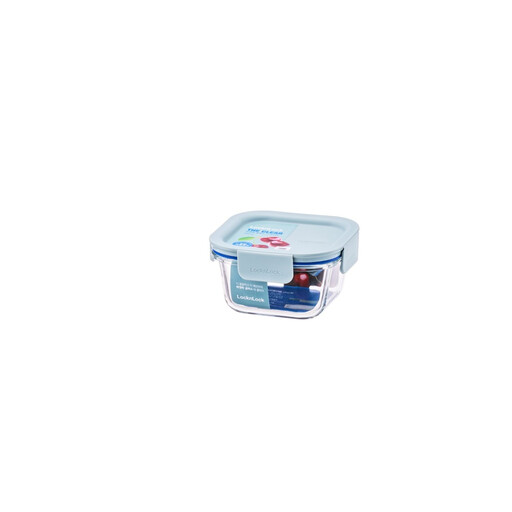
Why we love it: Perfect for batch cooking fans who prepare their meals in advance. This container goes effortlessly from the freezer to the microwave, then into the dishwasher. It simplifies life, from prep to plate.
Made from borosilicate glass, it eliminates any risk of thermal shock. Its lid with four sturdy clips guarantees a truly airtight seal, ideal for taking your lunch on the go.
Absolute versatility: freezer, oven (without lid), microwave, and dishwasher safe. Its square shape is designed for optimised storage.
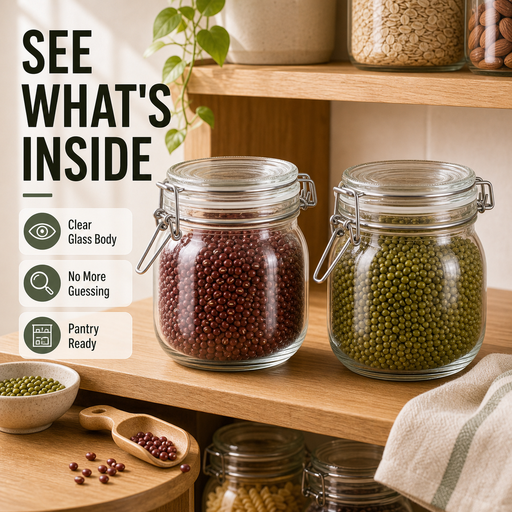
Why we love it: Essential for storing dry foods (legumes, grains, biscuits...). Its transparency lets you see the contents at a glance, and its locking system is designed for long-term storage, protected from moisture.
It avoids the "fake airtight" trap thanks to a food-grade silicone gasket and stainless steel locking clips that maintain constant, long-lasting pressure.
Its gasket is removable for a spotless clean, which prevents residue buildup. The borosilicate glass itself retains neither odours nor stains.
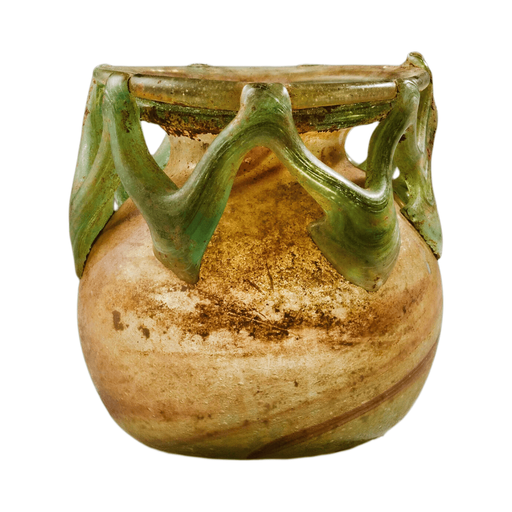
Why we love it: For those who believe that practical items should also be beautiful. This jar combines flawless preservation with an elegant design that will enhance any countertop.
It doesn't sacrifice practicality for style. Its natural acacia wood lid is fitted with a silicone gasket that ensures an excellent seal for dry foods, avoiding the trap of a flashy but useless design.
Its unique design features hammered glass and handles inspired by Roman amphorae. The borosilicate glass body is dishwasher safe (the lid is hand-wash only).
We've put together a complete selection of products that meet our criteria for quality, durability, and safety.
Can a borosilicate glass jar really go from the fridge to the microwave? Yes, that's its main advantage. Its low thermal expansion allows it to withstand sudden temperature changes without cracking, unlike standard glass. However, we still recommend avoiding extreme shocks (for example, placing a dish from the oven directly under cold water) and always removing the lid before using it in the microwave or oven.
What's the best way to clean a jar with a gasketed lid? The glass body is completely dishwasher safe. For the lid, it's best to remove the silicone gasket and wash it separately by hand with soapy water. This helps eliminate any residue and prevents mould growth. Make sure both the gasket and the lid are completely dry before reassembling.
Is borosilicate glass much more expensive? Borosilicate glass jars are indeed a bit more expensive upfront. This is due to a more complex manufacturing process and greater durability. However, this initial investment quickly pays for itself: their versatility (oven, freezer, microwave) and resistance to everyday knocks will save you from having to replace them after the first mishap.