People comparing recipes
For a mid-morning snack, you want to look at the ingredients, sugars, saturated fatty acids, allergens and jar size, rather than choosing by brand alone.


For a mid-morning snack, start by checking the recipe’s ingredients, allergens and nutritional values, then choose a jar size to suit how often you’ll use it. Make sure the specific product you choose comes in a glass jar. Nutri-Score can be helpful when shown, but you can still compare the per-100 g values if it isn’t displayed.
For a mid-morning snack, you want to look at the ingredients, sugars, saturated fatty acids, allergens and jar size, rather than choosing by brand alone.
The packaging material matters to you, particularly when it comes to recycling. Check the jar for the specific product you’re considering, and distinguish it from the lid.
For example, you may be looking for a recipe that highlights hazelnuts, a ‘no added sugars’ claim or a product labelled as plant-based. You should still check the ingredients, allergens and any possible traces for each product.
When comparing spreads for an occasional snack, check the recipe and packaging before choosing a jar size.
| Criteria | What to check | Who it’s for |
|---|---|---|
| Nutritional values | Compare the values per 100 g, especially sugars and saturated fatty acids; check the Nutri-Score if it’s shown. | If I’m comparing two recipes for a snack, I want to use the same basis for comparison even if the jars are different sizes. Around 36% of consumers would put this comparison first. |
| Glass jar | Confirm the material of the jar for the specific product, and check separately what the lid is made from. | I want a glass container and need to know how to recycle the packaging once it’s empty. This would be the main consideration for around 29% of consumers. |
| Ingredients and allergens | Read the ingredients list, allergen information and any ‘may contain’ warnings; don’t rely on the recipe description alone. | If I need to avoid an ingredient, the exact composition matters more to me than a ‘vegan’ or ‘no added sugars’ claim. Around 21% of consumers would prioritise this check. |
| Size and storage | Choose an amount that suits how you’ll use it, and check the storage instructions for after opening. | If I only have this snack occasionally, I prefer a jar I can use within the time stated on its label. Around 14% of consumers would put this criterion first. |
According to Santé publique France, producers choose whether to display this logo. The DGCCRF states that nutrition information is compulsory for most prepacked foods.
If a spread doesn’t show a Nutri-Score, compare its nutritional values per 100 g with those of other products.
The term doesn’t tell you what the container or lid is made from. Check these details for the specific product you’re considering.
Look for an explicit ‘glass jar’ description on the product page or packaging, then follow the recycling instructions for each part.
A product labelled vegan or lactose-free may still carry a warning that it may contain traces of milk proteins. ‘No added sugars’ doesn’t tell you anything about allergens either.
If you need to avoid an allergen, check the ingredients and any ‘may contain’ warnings for the exact product.
A large size may be difficult to use within the recommended time if you only eat spread occasionally. Some products advise consuming the contents within a month of opening.
Choose a jar size to suit how often you’ll use it, and read the storage instructions.
For its classic spread, Nutella France offers jars ranging from 220 g to 1 kg. Choosing between these sizes is about how much you’ll use, not the recipe itself.
Two products described by Carrefour France and Auchan France come in glass jars with metal lids. Their recipes cater to different preferences.
Auchan France lists a hazelnut spread labelled ‘no added sugars’, with 8.5 g of sugars per 100 g. If glass is essential to your choice, you’ll need to check the material of its container.
This 350 g glass jar of cocoa and hazelnut spread is labelled as plant-based and intended for bread or toast. Check the full ingredients if you have specific dietary requirements.
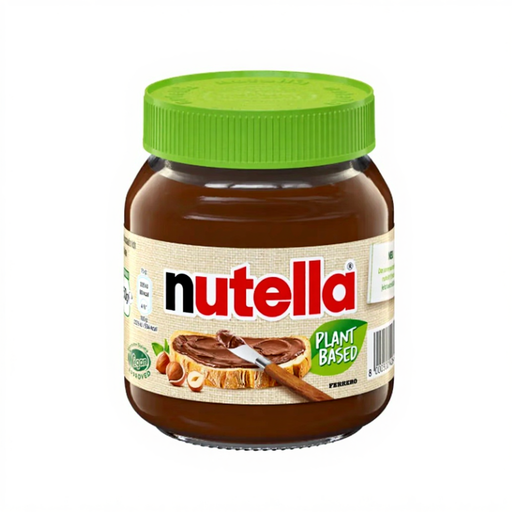 Image unavailable
Worth considering if you’re looking for a plant-based cocoa and hazelnut spread to enjoy on bread or toast as a snack.
The description says it comes in a 350 g glass jar. Before choosing this product, check its label for the ingredients, allergens and nutritional values per 100 g, especially sugars and saturated fatty acids. Also confirm the material of the jar supplied.
No. According to Santé publique France, displaying Nutri-Score is voluntary. The DGCCRF says nutrition information is compulsory for most prepacked foods, so check it even if the logo isn’t shown.
Compare their nutritional values per 100 g, especially sugars and saturated fatty acids. Jar size and a brand’s suggested serving size aren’t a substitute for this common basis of comparison.
No. Auchan France describes Jardin Bio étic’s choco-hazelnut product as vegan and lactose-free, but it also warns that it may contain traces of milk proteins. If you have an allergy, check the ingredients and any ‘may contain’ warnings for the exact product.
ADEME says empty glass packaging should go in the glass recycling container. Check the relevant instructions separately for the lid and any seal, depending on what they’re made from.
Choose a size to suit the number of people who’ll be eating it and how often you’ll use it. Some products recommend consuming the contents within a month of opening. Check the guidance and storage instructions on the jar you’re considering.