
Livraison le jour même ou le lendemain

Qualité garantie

Débloquez vos offres de bienvenue: Livraison GRATUITE | Jusqu'à -80 % | 30 jours d'essai gratuits à JoyPlus
Téléchargez l'application
Between promises of leak-proof seals, claims of “compatible with all appliances” and multi-piece sets, choosing a glass food storage container can quickly become a headache. Whether you’re taking your lunch to the office, storing family leftovers or prepping meals in advance, certain details make all the difference in everyday use.
A lid that clips on doesn’t automatically turn the container into a leak-proof food storage box. To transport soup, sauce or a dish in the car, check for a silicone seal and a closure system that’s clearly described. The manufacturer’s recommendations about transporting liquids are also valuable.
An airtight lid also helps limit odours spreading in the fridge. That doesn’t mean it can go in the oven or microwave, though: the glass and the lid may have different usage limits.
A microwave-safe container may require you to remove its lid. Similarly, a container advertised as freezer-safe shouldn’t be filled to the brim: liquid foods expand as they freeze.
Temperature changes also deserve your attention. Placing a still-hot container directly into the freezer, or putting a frozen dish into a preheated oven, can cause thermal shock. Always let the glass return gradually to room temperature and refer to the manufacturer’s instructions.
A set of food containers might seem economical, but poorly chosen capacities end up taking over your cupboards. For genuinely practical organisation, it’s better to combine several sizes:
Borosilicate glass is often used in containers designed to go from fridge to reheating, within the temperature limits stated by the manufacturer. However, it still doesn’t excuse you from avoiding sudden temperature changes.
Non-porous, glass generally retains fewer odours and stains than some plastics. Also check the lid design and whether there’s a removable seal. These parts should be cleanable separately to prevent residue building up in the grooves.
For a glass lunch box, a rectangular shape generally makes it easier to pack in a bag and stack in the fridge. A lid with clips or a locking system can be very practical at the office, but make sure the manufacturer clearly states it’s leak-proof.
Avoid transporting a container filled to the brim. Even with a tight seal, pressure can build up if the contents are still warm. Let your food cool before sealing the container completely, unless the manufacturer advises otherwise.
Before putting a glass food container in any appliance, be clear about the different uses:
To discover other sizes and accessories suitable for reheating, also browse our selection of microwave-safe products.

Why this suits this profile: With eight capacities ranging from 150 ml to 1,040 ml, this set lets you gradually equip yourself for meals, leftovers and ingredient storage.
The variety of sizes stops you ending up with only large containers that aren’t suited to individual portions.
Borosilicate glass, eight pieces and rectangular shapes that are easy to store.
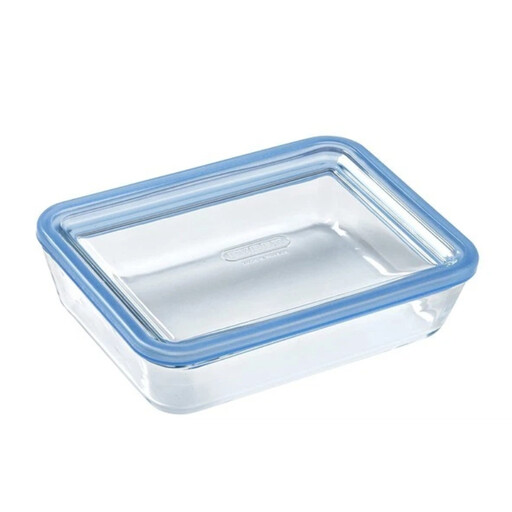
Why this suits this profile: Its 0.8 litre capacity works well for individual portions, leftovers and meal prep. It’s stated as suitable for the fridge, freezer, microwave, oven and dishwasher.
The stated uses are detailed separately, so you can clearly distinguish between storage, reheating and cooking.
Non-porous borosilicate glass, 0.8 litre capacity and stackable design.

Why this suits this profile: With its 2 litre capacity, this container is aimed at family cooking, bulk storage and batch-prepped meals.
The removable silicone seal can be cleaned separately. In the microwave, the lid must be removed. The container isn’t designed for a conventional oven.
2 litre capacity, removable seal, stated as airtight and compatible with the dishwasher, microwave and freezer.
We’ve put together a full, real-time updated selection of products that meet these criteria and European safety standards.
A glass container can last you for years if you check it regularly. Before each use, make sure there are no cracks, chips or deep scratches. Also replace a warped lid or a seal that no longer springs back into shape.
For washing, use a soft sponge and avoid knocking it against the sink. Let the container cool down before cleaning. Removable seals should be taken out regularly to remove residue, then dried completely before being refitted.
This is generally not recommended. The rapid temperature change can cause thermal shock. Let the container return gradually to room temperature and check the manufacturer’s instructions before reheating.
Look for an explicit mention such as “airtight” or “leak-proof”, as well as a seal and a suitable closure system. Before transporting sauce or soup in it, do a test run with a small amount of water, keeping the container upright.
For one person, a capacity of 500 to 800 ml is usually enough for a full meal. Capacities of 1 to 2 litres are better suited to family cooking. A set with several sizes lets you store each portion without cluttering up the fridge unnecessarily.