
Livraison le jour même ou le lendemain

Qualité garantie

Débloquez vos offres de bienvenue: Livraison GRATUITE | Jusqu'à -80 % | 30 jours d'essai gratuits à JoyPlus
Téléchargez l'application
Switching to glass food storage containers is an excellent move towards a healthier, more organised kitchen. But be warned: the market is a minefield where tempting promises often hide disappointing products. As the Head of Product Curation at Joybuy, my mission is to help you see things more clearly. Together, let's break down the common traps to help you make an informed, durable choice that truly fits your daily life.
The appeal of glass is understandable: it's a healthy, durable, and elegant material. But pay close attention to the details that can turn a good investment into a real disappointment.
1. The Myth of the "100% Airtight" Lid
An airtight glass jar that leaks in your bag? It's a mishap we wouldn't wish on anyone. The culprit is almost always the lid. Many budget-friendly models use low-quality silicone gaskets or clipping systems that warp after just a few runs through the dishwasher or microwave. The result: the seal fails, food doesn't stay fresh for as long, and the risk of leaks skyrockets. An effective lid must have a thick, removable gasket and a robust locking mechanism.
2. Confusion Over Heat Resistance: Not All Glass Is Created Equal
This is the most expensive—and dangerous—mistake. A container that cracks when going from the fridge to the microwave or shatters in the oven isn't just a waste of money; it's a genuine safety hazard. The cause? The fundamental difference between standard soda-lime glass and borosilicate glass. Only the latter guarantees high resistance to thermal shock, allowing it to withstand wide temperature swings (with a few precautions). A true oven-safe glass dish must be made of borosilicate glass.
To make the right choice, focus on these two technical features that make all the difference.
The type of glass is the number one criterion.
The effectiveness of a storage container depends as much on its body as its lid.
To illustrate these criteria in practice, here are models that meet specific needs.

Why we chose it: Its 630 ml capacity is perfect for a single serving. Its rectangular shape slips easily into a bag, and its clip-on lid ensures secure transport. It's the ultimate **glass lunch container** for those who prep their lunches in advance.
This container is made from borosilicate glass, allowing you to safely reheat your meal in the microwave (without the lid). The clip-locking system is designed for a reliable seal, avoiding the classic trap of leaky lids.
Total versatility: freezer, microwave, and dishwasher safe. One container to do it all: prep, store, transport, and reheat.
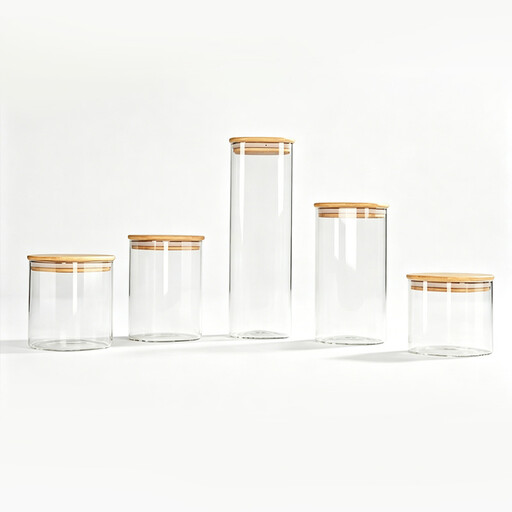
Why we chose it: This glass storage container set offers five different sizes (from 750 ml to 2300 ml), perfect for harmonising the storage of dry goods like pasta, rice, cereal, or legumes. Their transparency lets you see stock levels at a glance.
It checks all the boxes for stylish and functional glass kitchen storage. The lids are designed to be airtight, protecting dry foods from moisture and pests, unlike purely decorative jars.
A unified and modular system. The different sizes allow you to create an organised and visually cohesive pantry while ensuring optimal preservation.

Why we chose it: With its large 2-litre capacity, this oven-safe glass dish is perfect for preparing casseroles, lasagnas, or roasts for the whole family. It goes directly from the oven to the table, then to the fridge to store leftovers.
Made from borosilicate glass that is heat-resistant up to 400 °C (without the lid), it is explicitly designed for baking. This eliminates any risk of breakage associated with using glass not suited for high temperatures.
The true all-in-one dish for cooking and storing. The airtight lid allows you to keep leftovers fresh directly in the baking dish, which significantly reduces washing up.
We've put together a complete selection of products that meet our quality criteria and safety standards.
Only if it is a borosilicate glass dish. However, to avoid any thermal shock, never place the dish directly from the freezer into a preheated oven. Let it rest at room temperature for a few minutes beforehand. The plastic lid must never go in the oven.
For perfect hygiene, the gasket should be removable. Gently remove it from the lid and wash it by hand with warm, soapy water. Rinse it well and let it air dry completely before putting it back in place. This prevents mould growth and odour retention.
Yes, glass is an inert and non-porous material. It does not absorb food stains or odours. Most importantly, it does not leach any chemicals, even when in contact with hot or acidic foods. This is why many prefer it for glass food storage, especially to avoid compounds like BPA that are sometimes found in certain plastics.