
Livraison le jour même ou le lendemain

Qualité garantie

Débloquez vos offres de bienvenue: Livraison GRATUITE | Jusqu'à -80 % | 30 jours d'essai gratuits à JoyPlus
Téléchargez l'application
Switching from plastic to glass containers is no longer just a trend—it's a genuine movement. Whether for health concerns, environmental reasons, or simply to bring order to the kitchen, glass has established itself as the superior alternative. But with a vast array of choices on the market, how do you make the right decision?
As the Head of Product Recommendations at Joybuy, my mission is to provide you with clear, practical advice to help you choose products that simplify your daily life. This guide is designed to help you find your next glass food storage container by breaking down the essential criteria and showcasing our top picks.
Before we dive into our selection, let's review the key points to consider for an informed choice that truly fits your lifestyle.
The main advantage of glass is its thermal versatility. However, not all glass is created equal. To safely move between the oven and the freezer, opt for a borosilicate glass dish. This material is specifically designed to withstand thermal shock, making it a must-have for transferring a dish from the freezer to the oven. Still, be careful: always read the manufacturer's instructions. The lid, which is often plastic, must never, ever end up in the oven.
A good airtight food container is fundamental. It guarantees freshness, prevents disasters in your backpack, and stops your fridge from smelling like last night's curry. Locking systems vary:
Glass is an inert, non-porous, and hygienic material. Say goodbye to lingering odours and tomato sauce stains that turn your containers into abstract art—glass leaves no trace. Choosing glass means choosing a container that is naturally a BPA-free food container. It's a durable food container: with a little care, these containers will last for years and reduce your waste.
We have selected three products that each meet a specific need, from meal prep to meticulous kitchen organisation.
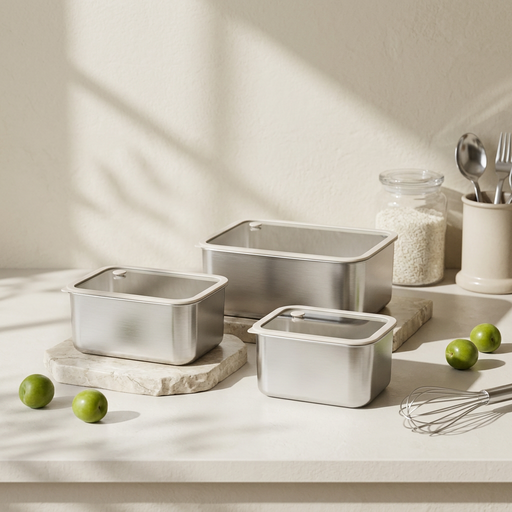
What sets it apart: This set cleverly plays the hybrid card. The container bodies are made of food-grade 304 stainless steel, renowned for its robustness and neutrality. The lids are made of borosilicate glass with a silicone seal. The result: you can see what's inside, and the seal is perfectly airtight. It's the best of both worlds: the strength and lightness of stainless steel combined with the transparency of glass.
Advantages:
Who is it for? For meal prep enthusiasts who take their lunch to work every day. A smart option for those who want the durability of stainless steel without sacrificing the visibility offered by a glass lid.
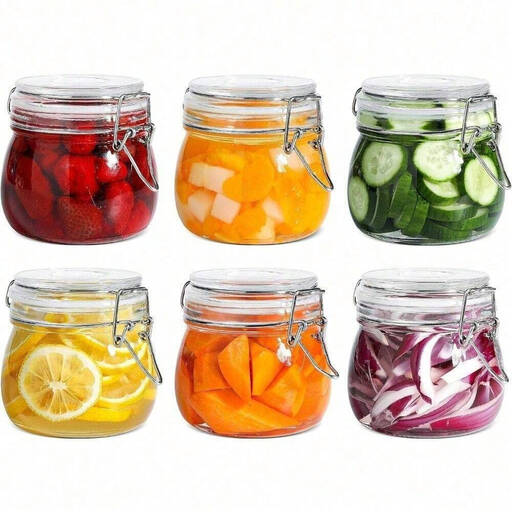
What sets it apart: Here, aesthetics and practicality are one and the same. With its hammered glass and acacia wood lid, this jar, reminiscent of a Roman amphora, is a true decorative piece. Note that this is not a baking dish, but an elegant and durable food container for your dry goods.
Advantages:
Who is it for? For anyone who wants a pantry that is as beautiful as it is organised. Dedicated to dry foods, it transforms a simple shelf into a decorative element in its own right.
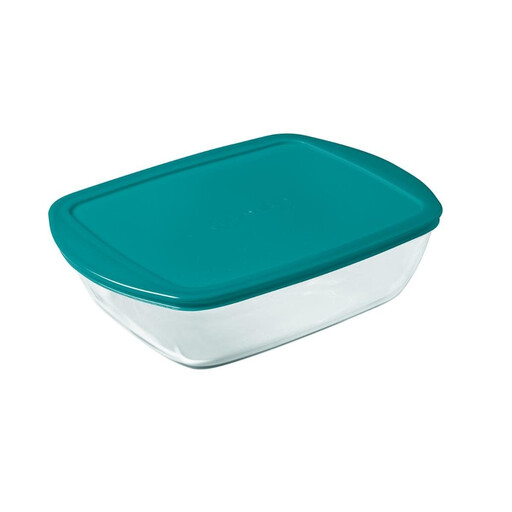
What sets it apart: This kitchen classic needs no introduction. The Cook&Store dish from PYREX is the very definition of versatility. Made from borosilicate glass, it moves seamlessly from the oven to the table, and then to the fridge. Its rectangular shape is ideal for gratins, lasagnas, and roasts, as well as for optimised storage.
Advantages:
Who is it for? A must-have for fans of batch cooking and large family meals. It's the all-in-one solution for anyone looking for a reliable, multi-functional glass dish with a lid that can do almost anything.
Our selection is just a taste of what's available. To discover other shapes, sizes, or locking systems and find the container that will fit perfectly into your kitchen, feel free to explore our complete collection.
Discover Our Entire Collection of Glass Food Storage Containers
Yes, but under two strict conditions. First, check that it is made of borosilicate glass, which is designed for high temperatures. Second, and this is non-negotiable, always remove the lid if it is plastic: it could melt and release unwanted substances.
Thermal shock is a sudden temperature change that can crack or shatter glass. To avoid it, the golden rule is: no abrupt temperature changes. Never move a dish from the freezer directly into a hot oven; let it acclimate for a few minutes at room temperature. Likewise, a hot dish should never be placed on a cold or wet surface. The best practice is to use a wooden or cork trivet.
Absolutely. Glass is considered the safest material for food contact. It is completely inert, meaning there is no risk of chemicals migrating into your food. Unlike some plastics, it is naturally a BPA-free food container and free of phthalates. Its non-porous surface is also a major advantage: it prevents bacteria from settling in and makes cleaning a breeze.