
Livraison le jour même ou le lendemain

Qualité garantie

Débloquez vos offres de bienvenue: Livraison GRATUITE | Jusqu'à -80 % | 30 jours d'essai gratuits à JoyPlus
Téléchargez l'application
Prepping your meals in advance, or meal prep, is a powerful method for eating better, saving time, and cutting costs. But when it's time to get equipped, choosing the right containers can become a real headache. A bad glass container set can quickly turn this good resolution into a nightmare?with leaky lids, cracking glass, or food that loses all its freshness.
As a Product Expert at Joybuy, my mission is to help you see things more clearly. Let's forget the marketing jargon and focus on what's essential. Here are the pitfalls to avoid and the key criteria for choosing a set of containers that will serve you for years to come.
Before you even look at products, you need to know how to spot the design flaws that make a kit worthless after just a few months.
To be sure of your investment, three technical features must be scrutinised. They are the secret to a truly durable and practical storage kit.
The material of your containers is non-negotiable: demand borosilicate glass. Unlike standard soda-lime glass, it has exceptional resistance to thermal shock.
The seal of a storage container depends entirely on its lid. The most reliable system combines four locking clips and a removable silicone gasket.
A good kit goes beyond simple storage. Think about your entire routine: preparation, storage, transport, reheating, and serving. Smart accessories like an unbreakable stainless steel plate can perfectly complement your setup. 304 stainless steel is an excellent option: robust, lightweight, oven-safe (and sometimes induction-compatible), it's a durable alternative to traditional dinnerware.
Here are a few options that meet these quality criteria, tailored to specific needs.
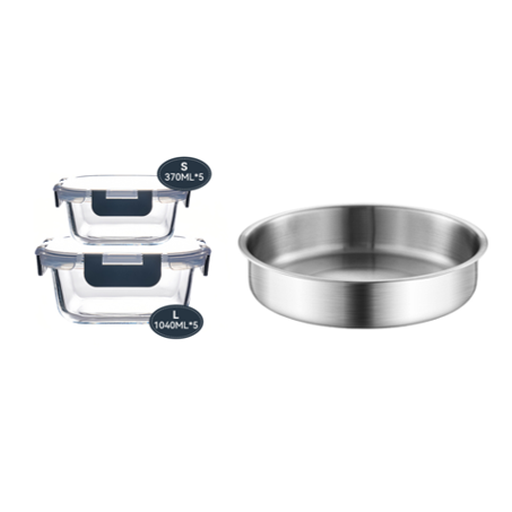
Why we chose it: This set is the perfect solution for organising all your lunches for the week. It includes glass storage containers in two different sizes, ideal for separating the main dish from its side. The added bonus: the included stainless steel plate, so you can have lunch at the office without disposable dishes.
The clip-on lids resist warping and ensure a foolproof seal, preventing leaks in your bag. The borosilicate glass easily withstands thermal shock.
An all-in-one meal prep kit that takes you from the kitchen to your lunch break, with healthy materials built to last.
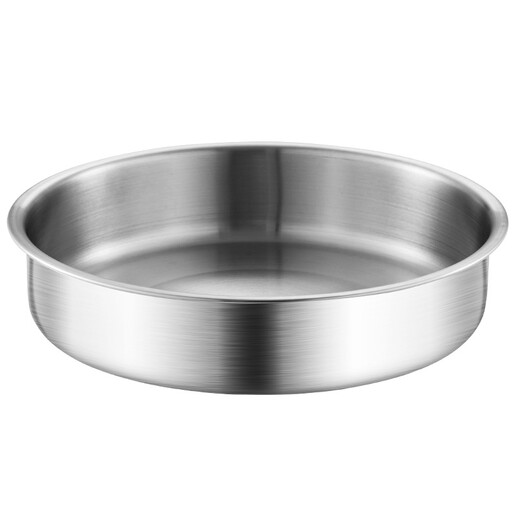
Why we chose it: For families, durability is the number one priority. This unbreakable stainless steel plate is the perfect alternative to fragile dinnerware. It goes from prep to oven to table without worry, even with kids around. Its deep-dish format is ideal for saucy meals.
There's no risk of cracking or chipping here, unlike with glass or ceramic. The food-grade 304 stainless steel won't rust and is incredibly easy to clean.
Versatility (oven and induction compatible) and rock-solid durability. An investment that quickly pays for itself for years of peace of mind.
We have selected a full range of products that meet our quality criteria and current safety standards.
1. What is the difference between borosilicate glass and regular glass? Borosilicate glass contains boron trioxide, which makes it highly resistant to temperature changes. In practical terms, it can withstand extreme temperature shifts (the infamous thermal shock) without cracking, unlike ordinary glass. That's why it can safely go from the freezer to the oven.
2. How do I care for my glass containers to extend their lifespan? The glass containers are perfectly safe for the dishwasher or can be washed by hand. For the lids, it's best to hand-wash them to preserve the gasket's elasticity. Remember to remove the gasket from time to time for a deep clean, and let it dry completely before putting it back to prevent any mould. Never use an abrasive sponge on the lids.
3. Are plastic lids safe for reheating in the microwave? As a precaution, it's best to avoid putting plastic lids in the microwave. Even if they are marked as "compatible", the heat can accelerate their wear and potentially cause substances to leach into the food. The safest method is to reheat the glass dish by itself, covered with a dedicated microwave cover or a simple plate.