
Livraison le jour même ou le lendemain

Qualité garantie

Débloquez vos offres de bienvenue: Livraison GRATUITE | Jusqu'à -80 % | 30 jours d'essai gratuits à JoyPlus
Téléchargez l'application
Switching from old plastic boxes to glass containers is a choice for durability and peace of mind. Say goodbye to containers stained by tomato sauce, warped in the dishwasher, or holding onto the smell of yesterday's meal. Glass stands out as a healthy and sustainable alternative for keeping your food fresh.
But with a sea of options, it can be hard to know where to start. This guide is here to bring you clarity: we review the essential criteria and present our selection of the best products to organise your kitchen, get started with meal prep, or simply store your leftovers safely.
Before you take the plunge, here are a few points to check to ensure your future set of glass food storage containers is perfectly suited to your daily life.
Glass is prized for its neutrality: it transfers neither taste nor odour and contains no controversial substances like BPA. For unbeatable durability, opt for borosilicate glass. As the champion of thermal shock resistance, it allows you to safely move a dish from the refrigerator to the oven (without its lid).
And for transport? If you're worried about breakage, food-grade stainless steel (type 304) is an excellent alternative. It combines the durability of metal with the benefits of a plastic-free fridge storage container, all while being lighter and virtually unbreakable.
Proper food preservation relies above all on a perfectly airtight seal. A worthy set of airtight food containers must be equipped with a quality silicone gasket and a reliable locking system (sturdy clips, screw-on lid, etc.).
This is a non-negotiable criterion for:
Think practical, think storage! A good stackable glass food container will save you precious space in your often-overloaded cupboards and refrigerator. Check that the containers, with or without their lids, can nest or stack stably. The transparency of glass is also a major asset: it allows you to identify the contents at a glance. No more opening three boxes before finding the right lentils!
We've scoured the market to find standout models that cater to all needs and budgets.
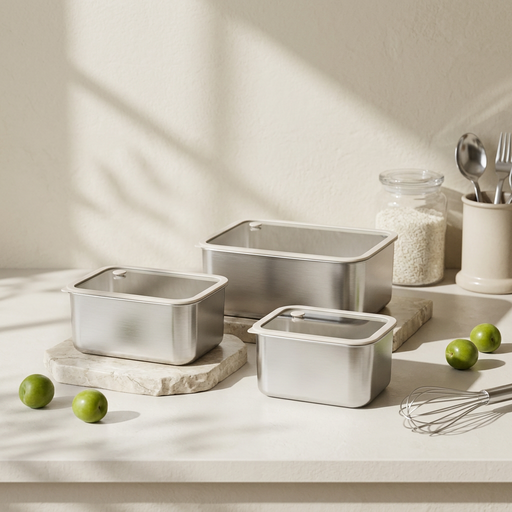
Why it stands out: This set is the smart alternative to all-glass. Its 304 stainless steel body is robust, lightweight, and impact-resistant, while the transparent borosilicate glass lid lets you keep an eye on the contents. A hybrid solution that combines the best of both worlds.
Pros:
Who is it for? For those on the go who need sturdy containers for their travels (office, gym, hiking) and want a durable alternative to plastic, without the stress of breakage.
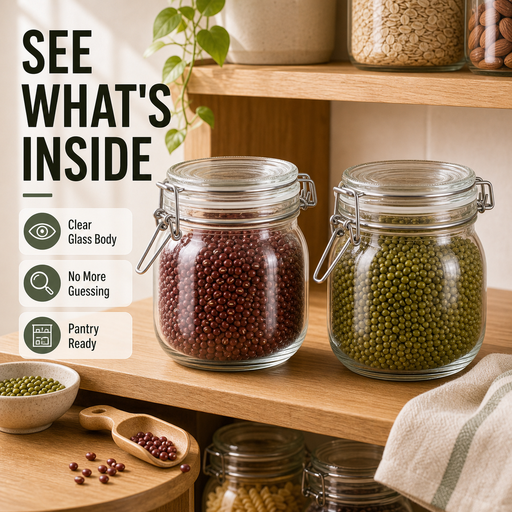
Why they stand out: Ideal for organising the pantry, these storage jars for dry goods combine elegance with practicality. Made from borosilicate glass, their closing system with stainless steel clips and a silicone gasket offers optimal protection against moisture and air.
Pros:
Who is it for? For organisation enthusiasts who want to enhance their kitchen with containers that are as beautiful as they are effective for their dry goods.
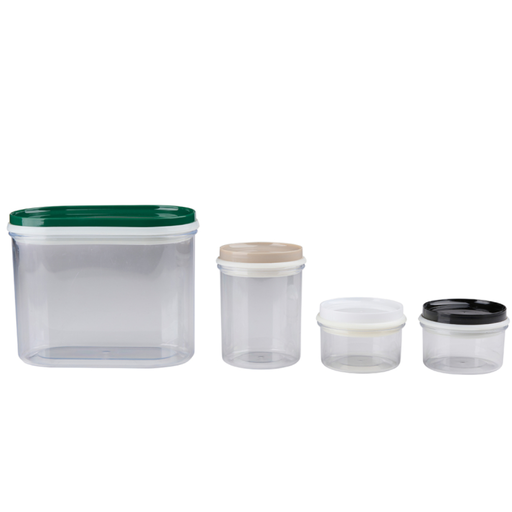
Why it stands out: This is a great deal for those on a budget or with varied storage needs. Yes, it's plastic (polypropylene - PP), but it's a lightweight and practical solution for organising small quantities, with a set of multiple sizes that makes it very versatile.
Pros:
Who is it for? For those looking for an affordable, lightweight, and secondary storage solution. Perfect for students or for storing low-fat, non-staining foods.
The world of food storage containers is vast! If our selection doesn't check all your boxes, don't worry, there are a multitude of other models out there.
? Explore our entire collection of food storage containers to discover other sizes, shapes, and materials.
1. Can glass containers be used in the microwave and oven? Yes, but with one crucial precaution! The borosilicate glass container is designed for the oven and microwave, but never the lid (whether it's plastic, bamboo, or even glass with a gasket). The golden rule: always consult the manufacturer's instructions to avoid thermal shock or an accident.
2. How do I care for my glass containers so they last for years? It's very simple. The glass body is completely dishwasher-safe. For the lid, and especially to preserve the elasticity of its silicone gasket, it's best to wash it by hand with a mild detergent. Pro tip: make sure everything is completely dry before storing the containers to prevent mould growth.
3. Is glass really healthier than plastic? Absolutely. Glass is an "inert" material, meaning it does not leach any chemicals into your food, even when in contact with heat, acidic, or fatty foods. It's the champion of plastic-free fridge storage, ensuring that the taste and quality of your meals remain perfectly intact.