
Livraison le jour même ou le lendemain

Qualité garantie

Débloquez vos offres de bienvenue: Livraison GRATUITE | Jusqu'à -80 % | 30 jours d'essai gratuits à JoyPlus
Téléchargez l'application
Switching from plastic to glass for food storage is a smart move, both for your health and for the planet. But with an overwhelming selection full of tempting claims, it's easy to end up with a disappointing glass food container. Leaky lids, containers that crack from thermal shock... these are all-too-common mishaps.
As a product expert at Joybuy, my mission is to guide you. Together, let's break down the pitfalls to avoid and the criteria that truly matter for making a smart, durable, and practical choice for your kitchen organisation.
Before you decide, it's crucial to know the hidden flaws that can make a glass container completely unusable for daily life.
For optimal food preservation and a hassle-free experience, two technical parameters must be examined closely.
The number one criterion is the type of glass. Always opt for borosilicate glass. Unlike standard soda-lime glass, it offers far superior thermal and mechanical resistance.
The lid is just as important as the container. A good locking system must be both reliable and easy to maintain.
Rather than searching for a one-size-fits-all container, it's better to choose models tailored to your habits. Here is our selection for three user profiles.

Why we chose it: Its large 2-litre capacity is perfect for preparing casseroles, lasagnas, or roasted vegetables for the week. It allows you to cook, store, and reheat all in one dish.
The borosilicate glass withstands thermal shock (up to 200°C according to the manufacturer), preventing the risk of cracking between the fridge and the microwave. The silicone gasket is removable for a thorough clean.
Large capacity and versatility (freezer, microwave, dishwasher) for heavy-duty use.

Why we chose it: With its 630 ml capacity, this is the ideal size for a **glass lunch box**. It's large enough for a main salad or a daily special, yet compact enough to slip into a bag without weighing it down.
The clip-lock system and thick silicone gasket prevent leaks, sidestepping the trap of "falsely" airtight containers. You can transport your salad dressing without fear.
Portable size, reliable seal, and it is microwave-safe (without the lid), perfect for reheating lunch at the office.
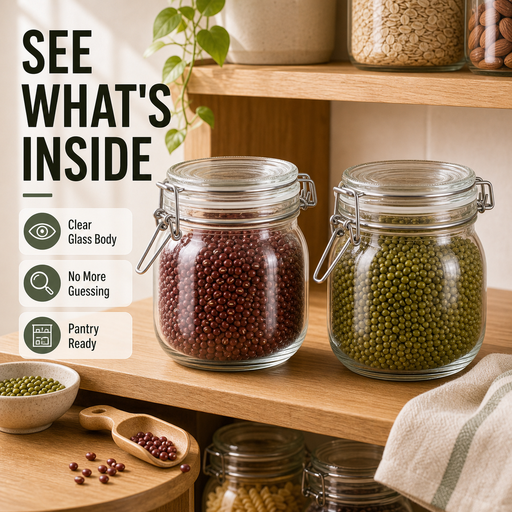
Why we chose it: Perfect for storing dry goods (rice, pasta, legumes, coffee beans). The clear glass allows you to identify contents at a glance and easily manage your stock.
The stainless steel lever-lock system applies strong, consistent pressure on the silicone gasket, ensuring a much more reliable air and moisture-tight seal than a simple screw-top lid.
Durable mechanical closure and a thick gasket provide optimal protection for dry foods against moisture and pests.
We have compiled a complete selection of products that meet our strictest quality and safety standards.
It depends entirely on the type of glass. Only a borosilicateglass food container can withstand such a temperature change, and even then, caution is advised. Our tip: let the dish rest for a few minutes at room temperature and always remove the lid before microwaving. Never attempt this with standard glass, as the risk of shattering is very high.
Maintenance is simple but essential. Remove the gasket from the lid at least once a week. Wash it by hand with warm, soapy water, or let it soak for a few minutes in a mixture of water and white vinegar. The most important step is to let it air dry completely before putting it back in place.
For storing dry goods (pasta, flour, biscuits), a wooden lid with a good silicone gasket is very effective at protecting against moisture and air. They add an undeniable aesthetic touch to your kitchen organisation. However, for transporting liquids or saucy dishes, a clip-lock system offers far superior leak-proof security. The choice, therefore, depends entirely on how you plan to use it.