
Livraison le jour même ou le lendemain

Qualité garantie

Débloquez vos offres de bienvenue: Livraison GRATUITE | Jusqu'à -80 % | 30 jours d'essai gratuits à JoyPlus
Téléchargez l'application
Switching to glass for food storage is an excellent decision, whether for health, environmental reasons, or simply to better organise your kitchen. But be warned: the market is full of promises that don't always deliver. A container that leaks in your bag, a lid that warps after the first wash, a dish that cracks straight out of the fridge… these frustrations are unfortunately all too common.
To avoid turning a good investment into a disappointment, it's best to know the common pitfalls that often only reveal themselves after several weeks of use. Here's how to avoid them.
batch cooking storage.glass food storage container often fails because of its lid. Low-quality plastics warp in the heat of the dishwasher or microwave, while poor-quality gaskets quickly lose their elasticity.For a lasting purchase, focus on a few technical details that separate a gadget from a true everyday ally.
The type of glass is arguably the number one criterion. There are two main types on the market:
glass lunch box or for storing leftovers.The seal depends entirely on the lid. To avoid nasty surprises, examine two key points:
In a well-organised kitchen, every square inch counts. Stackable food containers are a real bonus for optimising space in cupboards and the fridge. Favour ranges where containers of different sizes nest inside each other (when empty) and stack stably (when full). It's a detail that changes everything, especially if you plan to buy a food container set.
Rather than searching for a one-size-fits-all container, it's better to choose a model suited to your primary use.

Why this one? This size is perfect for a single serving. Its versatility covers all the steps of meal prep: cooking, freezing, transporting, and reheating.
Its borosilicate glass withstands thermal shock, eliminating the risk of cracking between the freezer and the microwave. Its clip-on lid ensures a reliable seal for transport.
Its total compatibility (freezer, oven, microwave, dishwasher) makes it the Swiss Army knife of meal prep.
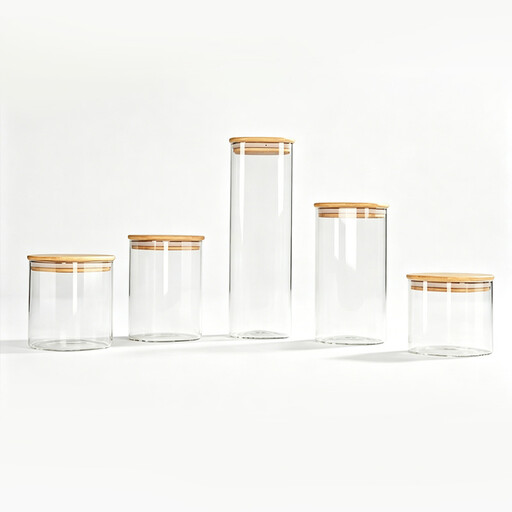
Why this one? This set is specially designed for storing dry goods (pasta, rice, legumes...). It helps create a harmonious pantry while protecting food from moisture and pantry moths.
Unlike multi-purpose containers, these jars are specialised for dry foods. Their lids provide an excellent airtight seal without the heavy locking mechanism, which is often unnecessary for this use.
The set of five different sizes offers a turnkey solution that is both practical and aesthetic for organising all your bulk goods.
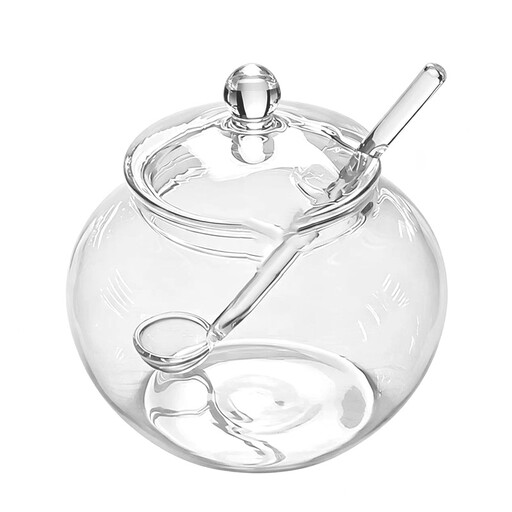
Why this one? Its compact size and integrated spoon make it the perfect companion for a yogurt, overnight oats, or a fruit salad on the go.
No more hunting for cutlery at lunchtime! The spoon attached directly to the lid makes this jar perfectly self-contained and convenient.
Its all-in-one design simplifies life for people on the move, from transport to tasting.
Explore our full selection of products that meet our quality criteria and current safety standards.
Even with borosilicate glass, this is strongly discouraged. Although it resists thermal shock better, the transition is still abrupt. To preserve the lifespan of your container, let it cool to room temperature for about thirty minutes before refrigerating it.
For a deep clean and to get rid of stubborn odours (tomato sauce, curry, etc.), it's best to remove the gasket from the lid. Wash it by hand with hot, soapy water. If an odour persists, let it soak for an hour in a mixture of water and white vinegar. Make sure the gasket and the groove in the lid are completely dry before putting it back in place.
Yes, but with an important nuance. Most models have flat lids that allow them to be stacked stably. However, stacking is more secure with containers of the same size. The best systems feature lids with rims or grooves that interlock, ensuring perfect stability. This is a detail to check if optimising vertical space is your top priority.