
Livraison le jour même ou le lendemain

Qualité garantie

Débloquez vos offres de bienvenue: Livraison GRATUITE | Jusqu'à -80 % | 30 jours d'essai gratuits à JoyPlus
Téléchargez l'application
Switching to glass containers is an excellent move for healthy, sustainable food storage. But in a market saturated with promises, how can you be sure you won't end up with a container that cracks at the first thermal shock or a lid that won't seal after a few weeks? As a Product Expert at Joybuy, I'm here to guide you. Let's break down the common pitfalls and essential criteria for making the right choice.
To prevent your investment from going to waste, here are the most common disappointments to be aware of before you check out.
For plastic-free food storage that combines convenience and durability, here are the three technical points to examine closely.
The difference is all in the composition. Borosilicate glass is specially treated to withstand large, rapid temperature changes. This allows it to go safely from the freezer to the microwave and serve as a true oven-safe glass dish. A borosilicate container can therefore go from the freezer to the oven (after a short time adjusting to room temperature) and handle high-temperature cooking. This is THE key criterion for versatility and safety.
For meal prep or transporting your lunch, a 100% reliable lid is non-negotiable. Here are the points to check:
Rectangular or square containers are easier to stack and store, optimising space in your fridge or bag. Round models, on the other hand, are perfect for mixing a salad or reheating soup. Think about your daily routine: small sizes for sauces and snacks, medium sizes for solo lunches, and large dishes for family meals or batch cooking.
To help you see more clearly, here are a few products that check all the boxes for quality, safety, and convenience.

Why we chose it: This set is the perfect partner for meal prep enthusiasts. With two sizes (5 large 1040 ml containers and 5 small 370 ml containers), it covers all your needs for the week, from main courses to snacks.
The container is made of borosilicate glass, eliminating the risk of cracking from thermal shock. The sturdy, clip-on lids ensure a flawless seal to prevent leaks in your bag.
A complete and cohesive set for streamlined organisation. The stackable, rectangular containers optimise space in the fridge.
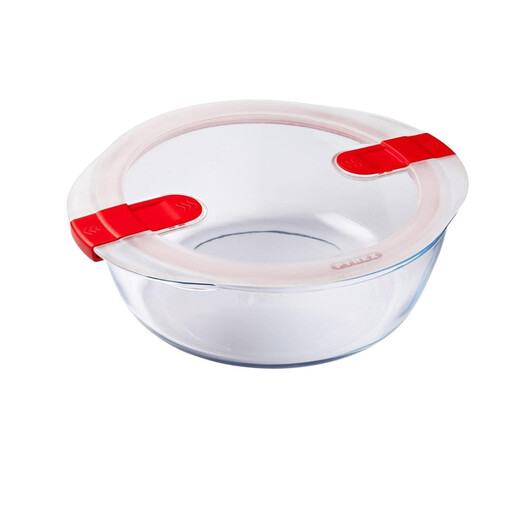
Why we chose it: With its generous 2.3 L capacity, this container is ideal for a family-sized dish, leftovers from Sunday's casserole, or a marinade. It's the ultimate all-in-one tool: from the oven to the table, then to the fridge.
Its borosilicate glass dish is designed for oven cooking. Cleverly, the lid includes a steam vent that allows for splatter-free microwaving without the lid popping off.
Its absolute versatility: cooking, storing, and reheating. The silicone seal provides a perfect airtight closure to keep food fresh for longer.
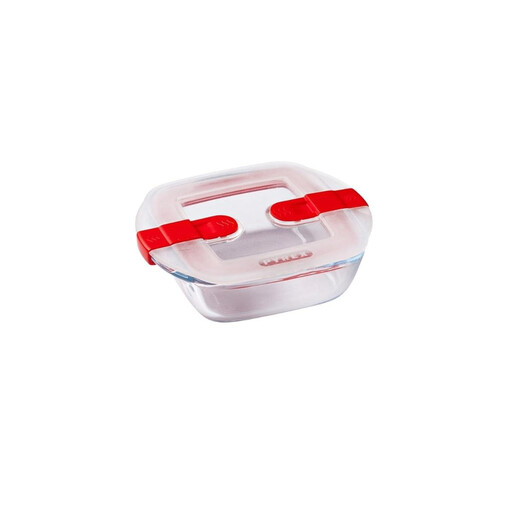
Why we chose it: Its compact size is perfect for a single serving, a soup, or a salad to take to the office. Being square, it slips into a backpack or tote bag without taking up too much space.
The clip-on lid with its dual steam valve is designed for life on the move. It prevents both leaks during transport and mishaps when reheating in the microwave.
The ingenious design of its lid, which ensures an airtight seal and controlled reheating. It's the most reliable on-the-go solution.
We've curated a complete selection of glass containers that meet our strict requirements for safety and durability.
Yes, as long as it's made of borosilicate glass. However, to avoid severe thermal shock (a risk that still exists even with this material), it is highly recommended to let the dish sit at room temperature for a few minutes before putting it in the oven. Never place it directly from the freezer into a preheated oven.
To keep it hygienic and effective, the best practice is to remove it after each use and wash it separately with soapy water. Make sure both the seal and the groove in the lid are completely dry before putting it back. This is the best way to prevent mould and preserve its elasticity.
Glass is an inert material, so it never contains BPA. It's the plastic lid you need to be vigilant about. While most reputable brands now offer BPA-free lids, always check for this claim on the packaging, especially for entry-level or unbranded products.