
Livraison le jour même ou le lendemain

Qualité garantie

Débloquez vos offres de bienvenue: Livraison GRATUITE | Jusqu'à -80 % | 30 jours d'essai gratuits à JoyPlus
Téléchargez l'application
Switching from plastic to glass for storing your meals is a brilliant move. Healthier, more durable, and often more practical, glass has it all. But with an overwhelming number of options on the market, how do you choose? The risk of making the wrong choice is very real. A lid that leaks in your bag, a dish that cracks in the oven... too many of us have experienced these unpleasant surprises.
As a product expert for the Joybuy editorial team, my mission is to do the legwork for you. Let's skip the marketing jargon and get straight to the point. Here is a simple guide to finding the perfect glass food storage container for your needs and, most importantly, how to avoid the common traps that end up being costly.
Before you pull out your credit card, let's review the deal-breakers that can turn a promising purchase into a real disappointment.
To make the right choice every time, two technical points are absolutely non-negotiable.
The type of glass makes all the difference. To switch between the freezer, oven, and microwave without fear, borosilicate glass is the undisputed gold standard.
Thanks to its specific composition, it handles thermal shock like no other. It's what allows you to safely move a dish from the freezer to the oven. Choosing a borosilicate glass container is a guarantee of safety and durability, especially for heavy daily use.
The effectiveness of your glass food container depends entirely on its lid. For a flawless seal, check these two elements:
Every user has specific needs. Here are a few options that cater to distinct user profiles, all meeting the quality criteria we've just discussed.

Ideal for: Its 630 ml capacity is calibrated for a single serving. It's the perfect size for a packed lunch, transitioning seamlessly from the fridge to the microwave.
Its body, made of borosilicate glass, is heat-resistant, eliminating the risk of cracking in the microwave or oven. The clip system ensures a tight seal for transport.
Total versatility: freezer, fridge, microwave, and oven safe (without the lid). A single container to prep, store, transport, and reheat.

Ideal for: Baking a small casserole, roasting some vegetables, or storing dinner leftovers. Pyrex is a trusted name and the benchmark brand for oven-to-table ware. This 0.8L size is a time-tested classic.
Made from pure borosilicate glass, it's designed for oven use and eliminates any risk from thermal shock. Its simple, stackable design makes cleaning easy.
The reliability of a brand renowned for its heat resistance. The non-porous glass won't absorb stains or odours, keeping your food's flavour pure.
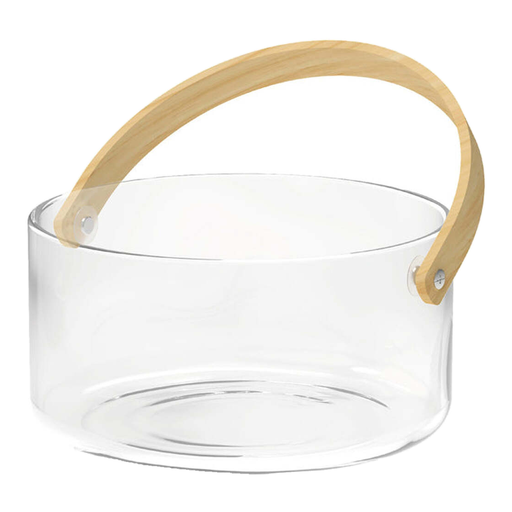
Ideal for: Those who want a dish that's as beautiful as it is practical, ready to go straight to the dining table. This glass serving bowl beautifully showcases salads, fruits, or hot dishes, with a design touch from its bamboo handle.
While it's not an airtight storage container, its borosilicate glass body allows it to handle hot preparations without risk, unlike a standard glass serving bowl.
The fusion of aesthetics and function. The bamboo handle provides a stable and secure grip, even when the dish is hot.
Discover all the products that passed our tests and meet these demanding quality standards.
Absolutely not! This is a common and potentially costly mistake. Only containers that explicitly state "oven-safe" on their product sheet or are made of borosilicate glass can be placed in the oven. Soda-lime glass (the most common and cheapest type) cannot withstand thermal shock and is likely to shatter. Always check the manufacturer's specifications before use.
The secret is to choose a model with a removable silicone gasket. After each use, remove the gasket from the lid. Wash the lid and gasket separately with soapy water. Let both parts air dry completely before reassembling. This simple step prevents moisture from getting trapped and stops mould from forming.
It all depends on your use case. Glass has the advantage of being non-porous: it won't absorb odours or stains (goodbye, tomato sauce stains!). It is generally oven-safe and infinitely recyclable. BPA-free plastic, on the other hand, is lighter and less breakable, making it ideal for transport. It is also often more affordable. However, it can scratch and stain over time and is not suitable for oven cooking. For total versatility (cooking, storing, and reheating), borosilicate glass remains the undisputed champion.