
Livraison le jour même ou le lendemain

Qualité garantie

Débloquez vos offres de bienvenue: Livraison GRATUITE | Jusqu'à -80 % | 30 jours d'essai gratuits à JoyPlus
Téléchargez l'application
Swapping your plastic boxes for glass containers is an excellent move, both for your health and for your kitchen organisation. But here's the catch?: the market is flooded with models making various promises, and it's easy to fall into common traps. A leaky lid, glass that cracks on its first trip to the oven, or an impractical shape can quickly turn what seemed like a good investment into a real headache.
As a product expert at Joybuy, my mission is to help you make an informed decision. Let's review the mistakes to avoid and the essential criteria for finding THE glass food storage container that will truly meet your needs.
Before falling for an attractive design or a tempting promotion, it's crucial to know the hidden flaws that make some products unreliable in the long run.
To make the right choice, a few technical points are simply non-negotiable. They are the guarantee of your future reusable food container's durability and versatility.
The most important point is the nature of the glass. For versatile use that includes cooking, it is imperative to choose borosilicate glass.
The entire effectiveness of an airtight jar or a glass lunch box rests on its lid.
Think "everyday practicality." Square or rectangular boxes are easier to stack and optimise space in the fridge and cupboards. Also, check for compatibility?: freezer, microwave (always without the lid), and dishwasher for simplified maintenance.
To guide you, here are a few options that stand out for their suitability for specific user profiles, taking into account the criteria we've just discussed.

Why we love it : This comprehensive set is the perfect partner for those who prep their week's meals in advance. The two sizes (1040 ml and 370 ml) allow you to separate main dishes and sides, and their rectangular shape makes them easy to store in a lunch bag and the fridge.
The glass is indeed borosilicate, compatible with the oven and microwave. The sturdy clip-on lids ensure a reliable seal for transport, thus avoiding the leakage trap.
A complete and cost-effective set to get you equipped for the long haul. The versatility of sizes covers the majority of meal prep needs.
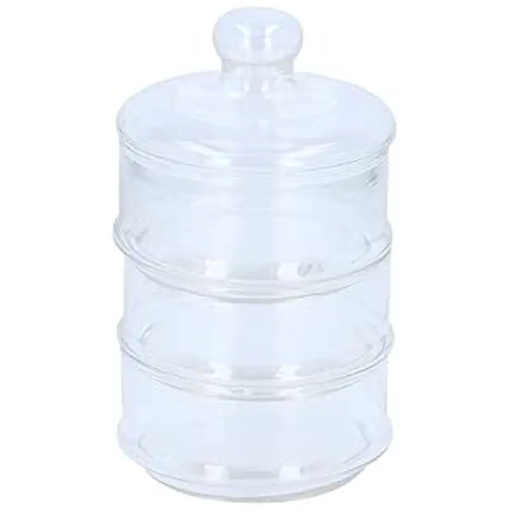
Why we love it : The ideal solution for optimising vertical space on a countertop or shelf. This system allows you to store three types of dry foods (dried fruit, biscuits, sweets) in a single compact container, while keeping the contents visible.
It avoids the trap of flashy design by focusing on functional aesthetics: vertical space-saving. Each tier is individually accessible.
A smart, stackable design that maximises vertical kitchen storage. Perfect for organising and beautifully displaying dry foods.

Why we love it : This large 2-litre dish is the Swiss Army knife of family meals. It allows you to prepare a bake, cook it in the oven, store leftovers in the fridge, and reheat them in the microwave, all in one single container.
It ticks all the boxes: borosilicate glass resistant up to 400°C (without lid) and the 4-clip Lock&Lock system, renowned for its reliability and airtight seal.
Its absolute versatility. It's a true oven dish that transforms into a high-performance storage container. Less washing up, more simplicity.
Discover our full selection of products that meet our quality criteria and the strictest safety standards.
Definitely not in the oven?! As a general rule, plastic lids, even BPA-free ones, are not designed to withstand such high temperatures. In the microwave, either remove the lid or simply rest it on top of the dish without locking it, to allow steam to escape. Only the glass dish itself is suitable for cooking.
To prevent odours and mould, the best practice is to remove the silicone seal after each use and wash it separately with soapy water. Make sure the seal and its groove in the lid are completely dry before putting it back in place.
Thermal shock is the stress a glass object undergoes when exposed to a sudden temperature change, which can cause it to crack or shatter. Even with borosilicate glass, caution is advised?: never move a dish directly from the freezer to a hot oven, and never place a hot dish on a cold or wet surface. Always let it cool down for a few minutes at room temperature.