
Livraison le jour même ou le lendemain

Qualité garantie

Débloquez vos offres de bienvenue: Livraison GRATUITE | Jusqu'à -80 % | 30 jours d'essai gratuits à JoyPlus
Téléchargez l'application
Whether you're into weekly meal prep or just want a better way to store leftovers, the glass food storage container is an essential tool. Healthy and sustainable, it seems to have it all. Yet, with an overwhelming number of options and sometimes misleading claims, it's easy to make a mistake. A leaky lid, a dish that cracks in the oven, chaotic stacking… To avoid these disappointments, here is our guide to navigating the jungle of models and finding the one that's truly right for you.
To ensure you don't regret your purchase, keep these three common pitfalls in mind.
To make the right decision, carefully examine these few technical features. They are the true guarantee of your future container's quality and durability.
The fundamental difference lies in the type of glass. For all-purpose use, from the freezer to the oven, a borosilicate glass container is the only truly reliable option.
The lid is just as crucial as the container itself. A good locking system is non-negotiable, especially for a glass lunch box that will be traveling in your bag.
Finally, think about your daily routine. Do you prepare your meals for the week? Do you store large quantities or individual portions?
Here are a few models that caught our eye. They meet different needs while adhering to our standards for quality and practicality.

Highlights: An ultra-complete set, designed for batch cooking fans. With two sizes (5 x 1040 ml and 5 x 370 ml), it covers every need, from the main course to a small portion for a side or dessert.
The glass is indeed borosilicate and oven-safe. The 4-clip locking system and removable gasket ensure a reliable seal for transport.
A 10-piece set that serves as an excellent starter kit to get serious about versatile and durable containers.
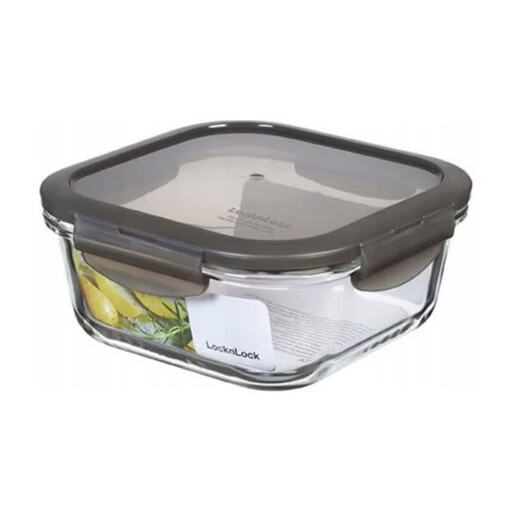
Highlights: Perfect for those looking for a single, ultra-reliable container to store leftovers, bake a small casserole, or pack a lunch. Its square shape is a real plus for optimising space in the fridge and bag.
The product description is clear: the borosilicate glass body is oven-safe up to 400°C (without the lid), which prevents unpleasant surprises. The 4-clip locking system is a safe bet for a leak-proof seal.
A true all-in-one solution: baking, storing, transporting, and reheating. The removable silicone gasket guarantees a spotless clean.

Highlights: For those who love to combine function with beauty and care about the aesthetics of their pantry. This jar is perfect for storing dry goods (pasta, rice, legumes, coffee) while also being a beautiful object to display on a shelf.
This product has the merit of being clear: it is dedicated to dry storage and does not claim to be oven-safe. Its acacia wood lid includes an effective silicone seal to preserve freshness and protect food from moisture.
Its decorative design, with hammered glass inspired by Roman amphorae, combines style and functionality for the airtight storage of dry goods.
Discover our full selection of products that meet our quality criteria and current standards.
No, and this is a golden rule. Whether they are made of plastic (PP), bamboo, or another material, lids are never designed to withstand the high temperatures of an oven. You risk melting or warping them, or releasing harmful substances. Only the borosilicate glass container can go in the oven. For the microwave, it is advisable to place the lid on top of the dish without clipping it shut, or to remove it entirely.
For perfect hygiene and longer life, the best practice is to remove the gasket from the lid before each cleaning. Wash it by hand with warm, soapy water, rinse it thoroughly, and most importantly, let it air dry completely before putting it back. This prevents moisture from getting trapped, thus avoiding bad odours and mould growth.
Yes. Although extremely durable, borosilicate glass is not unbreakable. Its main strength is its resistance to thermal shock (going from cold to hot). However, it remains susceptible to mechanical shocks: a drop onto a tiled floor, for example, can crack or shatter it. Handle it with care, just like any glass object. One last tip: always inspect your dish for any cracks before heating it.