
Livraison le jour même ou le lendemain

Qualité garantie

Débloquez vos offres de bienvenue: Livraison GRATUITE | Jusqu'à -80 % | 30 jours d'essai gratuits à JoyPlus
Téléchargez l'application
Our mission at Joybuy? To cut through the marketing noise and guide you to the right choice. The goal is simple: to help you find the product that truly fits your needs. Today, we're putting the glass food storage container under the microscope.
Switching to glass is a no-brainer for anyone looking for a healthy, durable, and versatile solution for meal storage. Yet, the experience often ends in disappointment. From a lid that leaks in your bag to a dish that cracks straight out of the freezer, nasty surprises are all too common. Before taking the plunge, here are the pitfalls to avoid:
To avoid falling into these traps, a few technical details need to be inspected closely. They are what separate a gadget from a reliable tool that will serve you for years.
Not all glass is created equal. Most entry-level containers are made of soda-lime glass—the same as your drinking glasses. While it's fine for cold storage, its resistance to temperature changes is very limited.
For all-purpose use (freezer, oven, microwave), borosilicate glass is the gold standard. Its composition gives it outstanding resistance to thermal shock. This is what allows an oven-safe food container to go from one temperature to another (with reasonable precautions) without the risk of shattering. It's a non-negotiable feature for anyone who wants to cook, freeze, and reheat in the same dish.
A container's seal relies on two inseparable elements: the locking mechanism and the gasket.
A good glass container should make your life easier. Check its compatibility with:
This versatility turns your glass container into the Swiss Army knife of meal prep, allowing you to prepare, store, transport, and reheat your meals with minimal washing up.
Based on these criteria, we've selected a few models that deliver on their promises for specific uses.

The verdict: Perfect for taking lunch to the office. Its 630 ml capacity is ideal for a single portion, and its rectangular shape fits easily into a bag. The very definition of a reliable, hassle-free glass *lunch box*.
Its 4-clip locking system and silicone gasket ensure a leak-proof seal. No more risk of spills during your commute!
The borosilicate glass body allows you to safely reheat your meal directly in the microwave (without the lid).

The verdict: This set is the turnkey solution for families or fans of weekly *meal prep*. It offers multiple sizes to suit storing leftovers, ingredients, or complete meals.
By offering a cohesive set, it solves the headache of mismatched lids and unstackable containers. The borosilicate glass guarantees long-lasting durability, free from stains or lingering odours.
Excellent value for money to get fully equipped at once with high-quality, uniform, and easy-to-store containers.
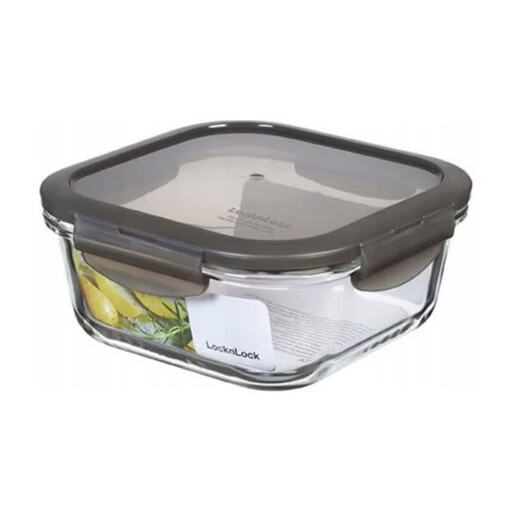
The verdict: This oven dish with a lid is the Swiss Army knife of the kitchen. Its 750 ml capacity is perfect for a gratin, lasagne for two, or roasted vegetables, before storing leftovers directly in the same container.
No nasty surprises here: the product description clearly states that only the borosilicate glass dish is oven-safe (up to 400 °C), preventing any accidents with the lid.
The ultimate 3-in-1: it serves as a baking dish, a serving dish, and a storage container. A great way to significantly reduce the pile of washing up.
An alternative to glass? Stainless steel. Containers like the Maxcook 316 Stainless Steel Food Container 3-Piece Set offer excellent durability and are very lightweight, although they are not microwave-safe.
Discover our full selection of products that meet our quality criteria and safety standards.
The short answer: no. The vast majority of lids are made of plastic (PP) and are not designed to withstand oven heat. Some can tolerate the microwave on low power for a very short time, but it is strongly recommended to remove it to avoid any warping or release of unwanted substances. The golden rule: always check the manufacturer's instructions.
The secret is to remove the silicone gasket from the lid after each use, or at least once a week. Wash it by hand with hot, soapy water, rinse it thoroughly, and most importantly, let it air-dry completely before putting it back. This is the best way to prevent moisture from settling in and to stop mould or bad odours from developing.
It's all about resistance to thermal shock. Regular, or soda-lime, glass is at risk of cracking or shattering if it undergoes a sudden temperature change (from the fridge to the oven, for example). Borosilicate glass, which is enriched with boron oxide, handles these temperature swings much better. This is what makes it suitable for the oven and freezer, offering unparalleled versatility and safety.