
Same-day & Next-day Delivery

Quality Guaranteed

Unlock Your Welcome Offers: FREE Delivery | Up to 80% OFF | Free 30-day JoyPlus trial
Download the APP
Switching to glass containers is a smart move for a healthier, more organised kitchen. The only problem is that the market is flooded with options that, while they may look similar, are far from equal in quality. A poorly designed glass food storage container can crack at the first thermal shock, leak in your bag, or simply become a daily headache. To help you see things more clearly, we've broken down the pitfalls to avoid and the criteria that truly make a difference.
Before you check out, learn to see through the marketing promises and design flaws that can turn a good idea into a useless product after just a few months.
To make the right choice, focus on these three technical points. They are what guarantee the safety, durability, and practicality of your future airtight food container.
The real difference lies in its resistance to thermal shock.
A good seal depends on the trio of lid, gasket, and locking system.
A good storage container should fit seamlessly into your daily routine. Check the compatibility icons: freezer, microwave, oven (always without the lid), and dishwasher. To optimise food preservation and storage, choose square or rectangular shapes. They stack and fit much better in a cupboard or refrigerator than a rounded airtight glass jar.
Rather than an exhaustive list, here are our targeted recommendations for specific uses.

Why we chose it: Perfect for batch cooking and full meals. Its large 2-litre capacity and oven-safe design let you cook, store, and reheat in a single dish. Its 4-clip locking system makes it perfectly reliable for transport to the office.
Its body made of borosilicate glass withstands thermal shock (pitfall #2), while its clip-locking system with a removable gasket ensures a leak-proof seal (pitfall #1).
Total versatility: it goes from the freezer to the oven (up to 400°C without the lid), and then straight to the table. Its 2L capacity is perfect for family-sized dishes or several meal prep portions.
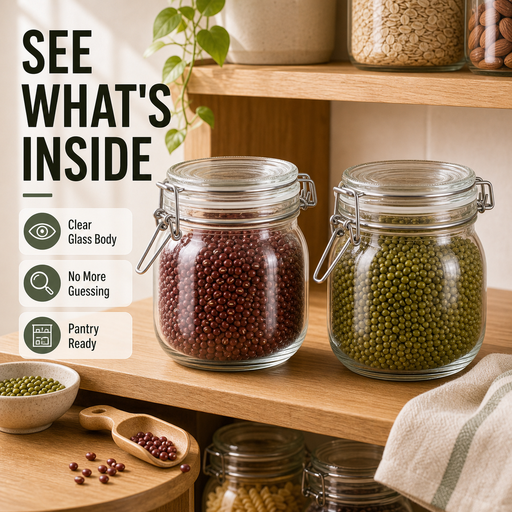
Why we chose it: Ideal for organising dry goods (rice, pasta, legumes, nuts). The transparent glass lets you identify the contents at a glance, and the mechanical closure is an impenetrable barrier against moisture and pantry moths.
The silicone gasket and stainless steel lever provide a robust and truly airtight mechanical seal, perfect for dry goods (pitfall #1). Its sleek design is a breeze to clean (pitfall #3).
A mechanical closure built to last, unlike plastic clips. The non-porous borosilicate glass doesn't retain odours or stains, not even from spices like turmeric.
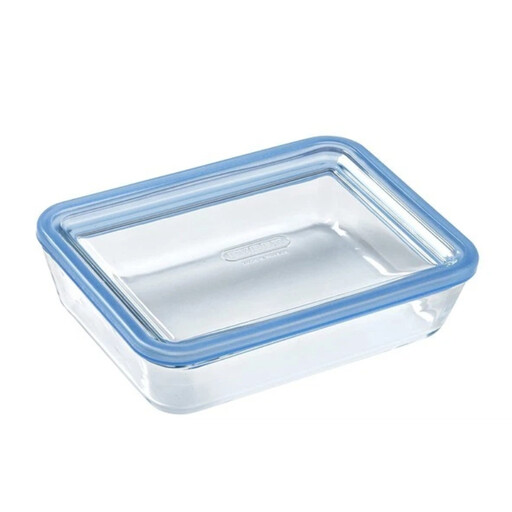
Why we chose it: With its 0.8L capacity, it's the perfect size for a single serving or dinner leftovers. It moves effortlessly from the fridge to the microwave or oven, simplifying everyday meal management.
Made from borosilicate glass by a benchmark brand, it ensures foolproof thermal resistance (pitfall #2). Its simple rectangular shape is stackable and easy to clean (pitfall #3).
A reliable choice: a simple, effective, and versatile product. Its pure, non-porous glass is guaranteed PFOA-free and won't absorb food stains, odours, or flavours.
Explore our full selection of products that meet our strictest quality and safety standards.
Absolutely not! This is the surest way to cause thermal shock and shatter the glass, even if it's borosilicate. To ensure the longevity of your dish and your safety, always let it cool to room temperature before placing it in the refrigerator or freezer.
It's often the gasket that absorbs odours (curry, tomato sauce...). Fortunately, it's almost always removable. Gently take it out and let it soak for an hour in a mixture of hot water and white vinegar (or baking soda). Rinse it thoroughly and let it air dry completely before putting it back in place.
Each material has its advantages. Glass is non-porous (it doesn't retain odours, stains, or flavours), is considered healthier (free of BPA or other controversial substances), and is oven-safe. On the other hand, plastic is lighter, cheaper, and shatterproof. The choice depends on your priorities: for cooking and 100% neutral storage, glass is the clear winner. For on-the-go use and budget-conscious shoppers, plastic remains a relevant option.