
Livraison le jour même ou le lendemain

Qualité garantie

Débloquez vos offres de bienvenue: Livraison GRATUITE | Jusqu'à -80 % | 30 jours d'essai gratuits à JoyPlus
Téléchargez l'application
Switching from plastic to glass for food storage is an excellent move, for both your health and the planet. The problem? The market is saturated with products that make tempting but often disappointing promises. A glass food storage container leaking at the bottom of your bag, a dish that cracks coming out of the freezer, a lid that warps in the dishwasher… You're probably all too familiar with these mishaps.
As the Head of Product Recommendations at Joybuy, my mission is to guide you through this jungle of options so you can make a truly informed choice. Together, let's break down the pitfalls to avoid and the criteria to look for to invest in containers that will go the distance.
The 3 pitfalls to avoid before buying:
To be sure of your investment, focus on these three technical points that make all the difference.
The first thing to check on the label is the mention of borosilicate glass. Unlike classic soda-lime glass, it contains boron trioxide, which gives it exceptional resistance to thermal shock (rapid temperature changes).
The leak-proof quality of your container comes down to one thing: its lid. For truly effective, zero-leak plastic-free food storage, pay close attention to two points:
The great advantage of glass is its versatility. An excellent glass meal prep container is a true Swiss Army knife: it can be used to prepare, store, transport, reheat, and even serve your meals. Before you check out, take a look at the compatibility icons:
This versatility is the key to a good glass kitchen organiser: less washing up, less handling, and greatly simplified meal management.
To help you see more clearly, we've selected a few products that perfectly illustrate these criteria, each one meeting a specific need.
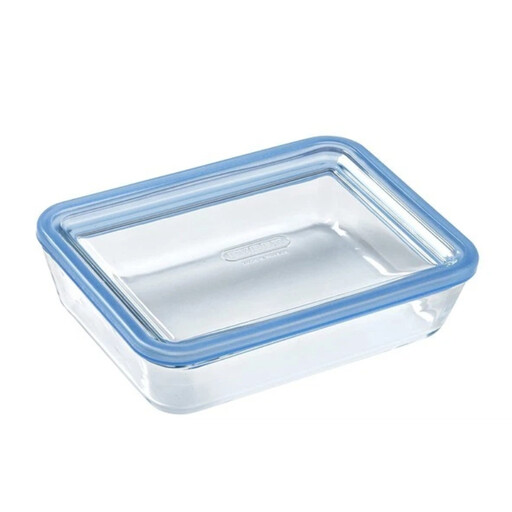
Why we love it: Its 0.8 L capacity is perfect for a single serving. It's the ultimate glass meal prep container for taking your lunch to the office, with the assurance that you can reheat it directly in the container.
Made from ultra-heat-resistant borosilicate glass, it eliminates any risk of cracking when going from the fridge to the microwave.
Its total versatility: oven, microwave, freezer, and dishwasher safe. A true all-in-one that simplifies your life.
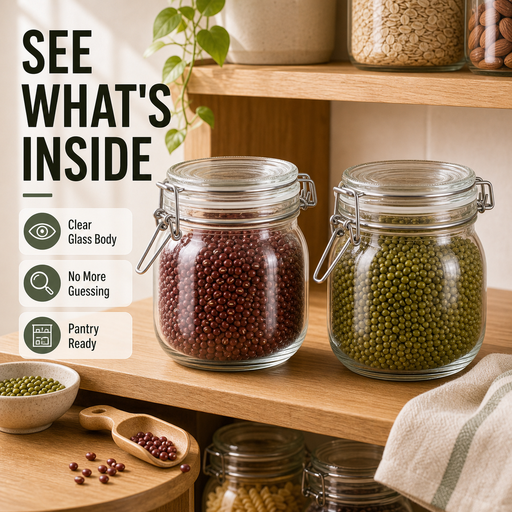
Why we love it: Ideal for storing dry goods (rice, pasta, legumes, nuts). Its transparency allows you to see the contents at a glance, a must-have for any self-respecting glass kitchen organiser.
It avoids the "false seal" trap with its stainless steel locking lever and silicone gasket, guaranteeing perfect protection against air and moisture.
Its food-grade silicone gasket is removable, which radically simplifies cleaning and ensures impeccable long-term hygiene.

Why we love it: Its large 2 L capacity is perfect for family meal leftovers, a marinade, or a casserole. It's the ultimate family-sized glass dish with a lid.
It counters the pitfall of fragile lids. Its locking system is robust, and its removable silicone gasket prevents premature wear and hygiene issues.
Its large capacity combined with thermal shock resistance up to 200 °C (manufacturer's data) offers maximum flexibility, from the freezer to the microwave.
Discover our full selection of products that meet our rigorous selection criteria and current safety standards.
Absolutely not! This is strongly discouraged, even with borosilicate glass. An overly aggressive thermal shock can cause it to shatter. The right move: let the dish return to room temperature for 15 to 30 minutes before putting it in the oven. And never put a hot dish in the freezer or under cold water.
Those black spots are usually mould. If the gasket is removable, take it out and let it soak for an hour in a mixture of hot water and white vinegar. Scrub it with a small brush, rinse thoroughly, and then let it air-dry completely before putting it back.
No, and this is an important point. It is highly resistant to thermal shock, but it is still glass. A mechanical shock (like a drop on a tiled floor) can break it. Get into the habit of inspecting your containers before each use to spot the slightest crack or chip. If in doubt, stop using it.