
Same-day & Next-day Delivery

Quality Guaranteed

Unlock Your Welcome Offers: FREE Delivery | Up to 80% OFF | Free 30-day JoyPlus trial
Download the APP
Switching from plastic to glass for food storage is a smart choice, both for your health and for the planet. The problem is, the market for glass food containers with lids is flooded with models making tempting promises, but the reality is often disappointing. A lid that warps, glass that cracks at the first thermal shock… it's easy to end up with an impractical, or even dangerous, product.
As a Product Recommendation Manager at Joybuy, I'm here to help you see things more clearly. Let's cut through the marketing jargon and focus on what truly matters. Here are the pitfalls to avoid and the criteria you need to know to choose a container that will last for years, without any unpleasant surprises.
The appeal of an organised, healthy kitchen can sometimes make us overlook the essentials. Beware of these three common mistakes:
To ensure healthy food storage and hassle-free use, three technical points are an absolute must-check.
The key to versatility is the borosilicate glass food container. Unlike ordinary glass, its composition gives it exceptional resistance to thermal shock (rapid and significant temperature changes).
A leak-proof seal depends on two elements: the locking mechanism and the gasket.
Before any purchase, systematically check the pictograms or manufacturer's instructions for each component:
Rather than talking about the "best" products, it's more useful to identify the right product for the right purpose. Here are a few options that meet specific needs while respecting the quality criteria we've just discussed.

Why we chose it: Its 630 ml capacity is ideal for a single-serving lunch to take to the office. Its compact rectangular shape slips easily into a bag, and its clip-locking system ensures leak-free transport.
It's made from heat-resistant borosilicate glass, and its clip-on lid eliminates the risks of thermal cracking and poor sealing.
Its reliable airtight seal for worry-free transport. Freezer, microwave (without lid), and dishwasher safe.

Why we chose it: With its generous 2-litre capacity, this dish is perfect for prepping meals for the week (the famous *batch cooking*) or for storing leftovers from a family meal like a gratin or a roast.
Its borosilicate glass body can go in the oven up to 400°C (without its lid), making it a true baking dish. The 4-clip lid then ensures perfect storage in the fridge or freezer.
Its XXL versatility: one large dish to cook, store, freeze, and reheat.
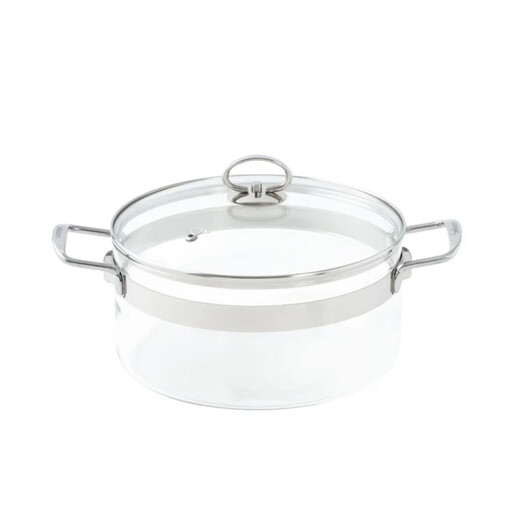
Why we chose it: Much more than a storage container, this is a true stockpot. Its large 4.2 L capacity and compatibility with gas and electric hobs make it a prime choice for soups, stews, or cooking pasta, before serving elegantly right at the table.
This product goes beyond simple storage. Its transparent borosilicate glass lets you monitor cooking without ever lifting the lid, and its coating-free design (zero PFAS/PTFE) meets the demand for healthy cooking.
Cook-and-serve versatility: hob (gas/electric) and oven safe (up to 180°C) with a design that goes straight from the kitchen to the table.
We have selected other products that meet our demanding standards for quality and safety.
No, this is a very bad idea. Even a borosilicate glass dish has its limits. Such an extreme thermal shock (going from -18°C to 180°C) can cause it to crack. The best practice: let the dish thaw at room temperature for about thirty minutes before putting it in the oven.
For optimal maintenance, remove the seal from the lid after each use (if the model allows). Wash it by hand with hot water and washing-up liquid. To remove stubborn odours (curry, tomato sauce, etc.), the trick is to let it soak for an hour in a mixture of warm water and white vinegar before rinsing it thoroughly.
No, it is not unbreakable. Its main advantage is its resistance to thermal shock. It is still glass and can break if dropped or subjected to a sharp impact. Handle it with care, especially when it is hot.