
Livraison le jour même ou le lendemain

Qualité garantie

Débloquez vos offres de bienvenue: Livraison GRATUITE | Jusqu'à -80 % | 30 jours d'essai gratuits à JoyPlus
Téléchargez l'application
Switching from plastic to glass for food storage is a smart move—it's both healthier and more sustainable. The problem? The market is flooded with products that make tempting promises but often disappoint in practice. A lid that warps after two dishwasher cycles, a crack that appears after a trip to the oven, or a seal that fails in the middle of your backpack… These mishaps are avoidable, as long as you know which details to look for.
Before you decide, let's review the two common pitfalls that turn a good idea into a bad investment:
This guide is designed to arm you with objective criteria to find a glass food container that truly lives up to its promises, whether for your everyday glass lunch box or for your weekly meal prep.
To avoid making a mistake, two technical features demand your full attention. They are the true hallmark of quality and durability for your future container.
Not all glass is created equal when it comes to heat. The main distinction is between soda-lime glass (standard) and borosilicate glass.
Checking this detail is the best way to ensure your glass dish with a lid won't fail you mid-reheat.
A good container is, first and foremost, one that doesn't leak. The lid's effectiveness relies on a winning combination:
Instead of a soulless catalogue, here is our curated selection, designed for specific uses and meeting our criteria for durability and practicality.

Why we chose it : This glass food container set is tailor-made for *batch cooking* fans. With 10 pieces in two complementary sizes (1040 ml and 370 ml), it easily covers a week's worth of lunches and snacks.
Its borosilicate glass withstands repeated trips to the microwave without issue, while the sturdy clip-on lids ensure a perfect seal for transport.
A complete and cohesive starter kit to get into meal prep with reliable and durable equipment.

Why we chose it : Its generous 2-litre capacity is perfect for family-style dishes like lasagnas and casseroles, or for storing leftovers. It's a true all-in-one dish : it goes from the oven to the fridge with no extra steps.
Its borosilicate glass is specifically designed to withstand temperatures up to 400 °C (without the lid), eliminating any risk of breakage due to heat.
Absolute versatility : cook, store, freeze, and serve all in the same large-format dish.
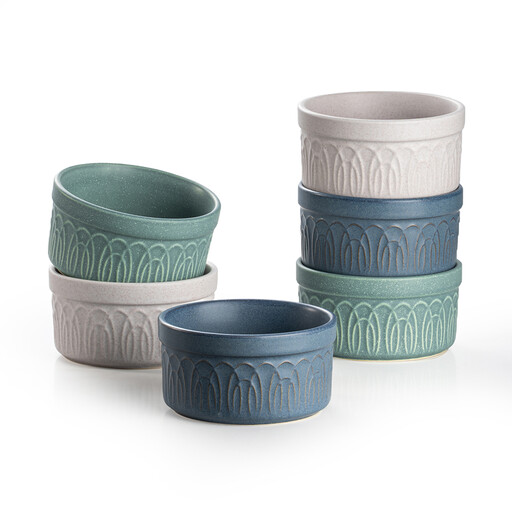
Why we chose them : For individual desserts (crème br?lée, chocolate lava cakes), sauces, or small snacks, these ceramic ramekins are an excellent alternative. Their size is ideal for portion control and for an elegant presentation at the table.
Although it's ceramic and not glass, this material is designed for oven use. It offers foolproof sturdiness and heat resistance, perfect for smaller preparations.
An ultra-versatile format that goes from the oven to the microwave and dishwasher, perfect for baking and then serving individual portions.
Explore our complete, up-to-date selection of products that meet our strictest quality and safety standards.
Even with borosilicate glass, such an extreme thermal shock—like moving a dish from -18?°C to a preheated 200?°C oven—should be avoided. To ensure the longevity of your dish, let it acclimate to room temperature for a few minutes, or place it in a cold oven before starting the preheat. And of course, never forget to remove the plastic lid before putting it in the oven.
For a spotless clean and to prevent odours and mould, make it a habit to remove the silicone gasket from the lid before each wash. Wash it by hand with warm, soapy water, using a small brush if needed. Make sure the gasket and the groove in the lid are completely dry before putting it back in place.
It all depends on your use case. If you're just looking for a simple glass food container to store salads, fruits, or leftovers in the fridge, standard soda-lime glass will do the job. However, if you plan to cook, freeze, and then reheat your meals in the same container, investing in borosilicate glass is a worthwhile guarantee of safety and durability.