
Same-day & Next-day Delivery

Quality Guaranteed

Unlock Your Welcome Offers: FREE Delivery | Up to 80% OFF | Free 30-day JoyPlus trial
Download the APP
Opting for glass to store your food is an excellent choice: it's a healthy, durable material that doesn't retain odours or stains. However, the market is flooded with promises that aren't always kept. A glass lunch box that leaks in your bag, a dish that cracks in the oven... These mishaps are common. Before you decide, it's best to know the few pitfalls that can turn a good investment into a real disappointment.
As a product expert at Joybuy, my mission is to guide you through the options, based on objective and concrete criteria.
airtight food container. Flimsy locking systems or low-quality silicone gaskets can warp after a few washes, letting in air and, even worse, liquids.To ensure the quality and versatility of your glass storage container, there are three technical parameters to inspect closely.
The difference is all in the glass composition. For versatile use (refrigerator, freezer, oven, microwave), borosilicate glass is the gold standard. Its low thermal expansion allows it to withstand significant temperature changes (typically from -20°C to +400°C for the container alone), which is essential for oven and microwave food storage worthy of the name. It's a guarantee of safety and durability.
A good lid is just as crucial as the container. The most reliable systems generally combine:
A good glass meal container should simplify your life. Check its compatibility with different appliances:
A glass dish with a lid that checks all these boxes is a true ally in the kitchen.
Rather than an endless list, we've matched each product to a typical user profile, making it easy for you to picture it in your daily routine.

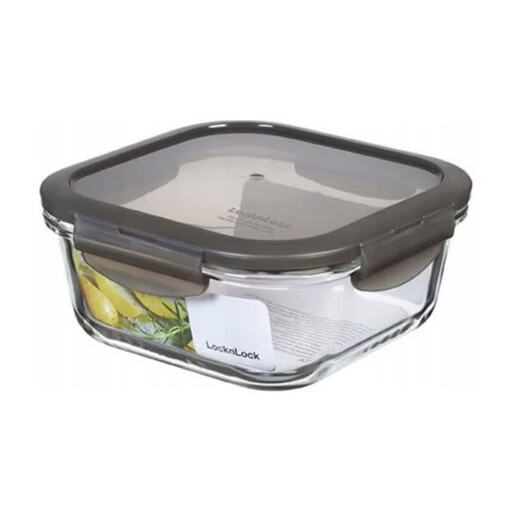
Why this choice? The 630 ml size is ideal for a single lunch portion. Compact, lightweight, and reliable, this container slips easily into a bag without any risk of leaks. The perfect `glass lunch box` for the office.
LocknLock's 4-clip locking system and silicone gasket are renowned for their reliability, thus avoiding the pitfall of lids that aren't truly airtight.
Its borosilicate glass ensures a risk-free transition from the refrigerator to the microwave. Versatility is clearly its strong suit.

Why this choice? This 10-piece set (5 x 1040 ml and 5 x 370 ml) offers a complete solution for storing leftovers, prepping meals for the week, or storing ingredients. The value for money is particularly compelling for heavy family use.
This cohesive set ends the chaos of mismatched, non-stackable containers. Its high-density borosilicate glass prevents any risk of breakage from thermal shock.
The variety of sizes covers all needs, from individual portions to family-sized dishes. The clip-lock system ensures optimal food preservation.
Why this choice? This dish is designed for those who love to cook. Its heat resistance up to 400°C (without the lid) makes it perfect for preparing gratins, lasagnas, or small roasts, and for serving them directly at the table.
It avoids the trap of the vague "oven-safe" claim by clearly stating its high heat tolerance (400°C), crucial information for cooking safely.
Its dual role for both cooking and storage makes it a powerful ally in the kitchen. The borosilicate glass guarantees its longevity, even with intensive oven use.
Explore our complete, up-to-date selection of products that meet our strict selection criteria and current safety standards.
Even with borosilicate glass, it's best to avoid extreme thermal shock. The ideal way is to let the dish return to room temperature for a few minutes, or run it under lukewarm water before microwaving. Remember to always remove the lid before reheating.
For impeccable hygiene, remove the gasket from the lid at least once a week. Wash it by hand with warm, soapy water or place it in the top rack of the dishwasher. Make sure it is completely dry before putting it back in place to prevent bad odours and mould.
Tempered glass is soda-lime glass that has undergone a thermal treatment to improve its resistance to mechanical shock. It is therefore stronger than standard glass but remains far less effective than borosilicate glass against thermal shock. For versatile use from the freezer to the oven, borosilicate remains the safest and most suitable choice.