
Livraison le jour même ou le lendemain

Qualité garantie

Débloquez vos offres de bienvenue: Livraison GRATUITE | Jusqu'à -80 % | 30 jours d'essai gratuits à JoyPlus
Téléchargez l'application
Switching from plastic to glass for food storage is a smart move, both for your health and for the planet. At first glance, a glass food container seems to tick all the boxes: it's simple, healthy, and durable. The reality, however, is that the market is a jungle of competing claims, and you can easily end up with a cracked dish, a lid that won't seal, or a container that's anything but practical.
As the Head of the Home section at Joybuy, my mission is to do the legwork for you. Let's cut through the marketing jargon. Here, we'll get straight to the point: the criteria that truly matter and the pitfalls to avoid to make a smart purchase.
To ensure you never get caught out again, here are the technical points to check. It's simple, and it makes all the difference in the durability, safety, and practicality of your future glass food container.
This is the heart of the matter. Insist on borosilicate glass. It's the de facto standard for intensive, hassle-free use. Unlike ordinary glass, its thermal resistance is exceptional.
The lid is as crucial as the container. For a glass lunch box you carry on the go or for storing leftovers, a leak-proof seal is non-negotiable.
Finally, think practically. Round containers have their charm, but square or rectangular formats are the kings of optimisation. Their secret? Straight sides and flat lids that allow them to be stacked securely. This is a decisive advantage for a tidy fridge or for your Sunday meal prep session.
Rather than a soulless catalogue, here are our top picks that meet specific needs, all vetted against the quality and practicality criteria we've just discussed.

The Verdict: Designed for meal prep fans, this set cleverly combines two sizes (1040 ml and 370 ml) to manage main dishes and sides. Perfect for preparing all your week's meals in one session.
Its borosilicate glass withstands thermal shock without flinching, and its clip-on lids guarantee a foolproof seal, so you can transport your glass lunch box with peace of mind.
Starting with a 10-piece set guarantees streamlined organisation. The sizes are perfectly stackable for maximum space-saving in the fridge and cupboards.
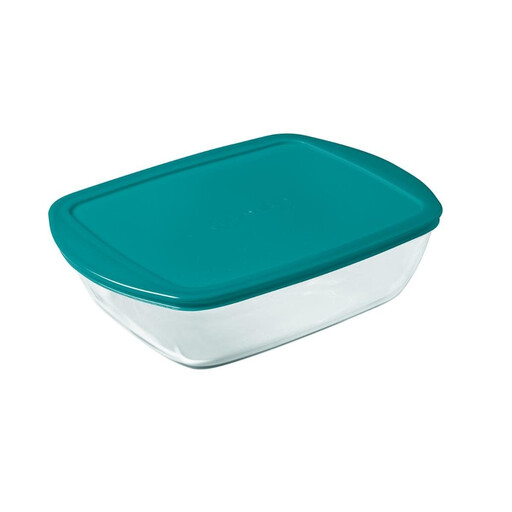
The Verdict: Pyrex needs no introduction as the benchmark in culinary glassware. This large dish is a family meal ally: perfect for a gratin, it goes into the fridge with its lid to store leftovers, then into the microwave for reheating. It's the quintessential versatile glass dish with lid.
Made from ultra-durable borosilicate glass, it's a true glass oven dish. The lid is designed for storage (not cooking), which prevents any risk of warping.
Its large capacity and total compatibility (oven, microwave, freezer, dishwasher) make it a kitchen staple, from preparation to storage.
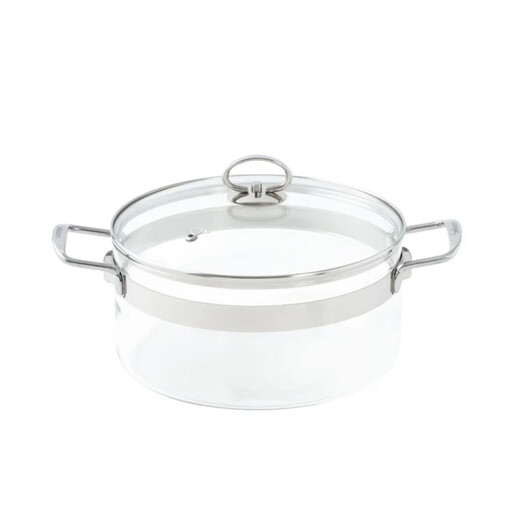
The Verdict: More than just a container, this is a genuine transparent stockpot for cooking. It lets you monitor a simmering stew without ever lifting the lid. Its inert material, with no coating (zero PFAS/PTFE), is ideal for healthy food storage and controlled cooking.
Designed specifically for cooking (gas, electric, oven up to 180°C), it doesn't fall into the trap of false versatility. Its borosilicate glass gives it the necessary strength for this use.
Cook, serve, and store all in the same dish. Its transparency offers unique visual control over soups, steamed vegetables, or saucy dishes.
Discover our full selection of products that meet our quality charter and the strictest safety standards.
Even with borosilicate glass, this is a bad idea. The thermal shock, while better handled, still puts significant stress on the material. The best practice is to let your dish cool to room temperature on the countertop before putting it in the fridge. This will extend the life of your container and prevent any risks.
This information must be clearly indicated by the manufacturer, either on the packaging or via a pictogram (a small oven icon) engraved on the dish. The golden rule: only borosilicate glass is truly designed for the oven. And of course, the plastic lid should never go in the oven!
Yes, provided you choose wisely. Today, reputable brands offer lids made without Bisphenol A (BPA), a controversial chemical. The key is to look for the "BPA-free" label on the product. For microwave reheating, the ideal method is to simply place the lid on top of the dish without clipping it shut, or to use a dedicated microwave cover.