
Same-day & Next-day Delivery

Quality Guaranteed

Unlock Your Welcome Offers: FREE Delivery | Up to 80% OFF | Free 30-day JoyPlus trial
Download the APP
Better food preservation, a more organised kitchen, preparing meals in advance (the famous meal prep)... Switching to glass containers is a no-brainer. More durable and healthier than plastic, they seem like the perfect solution on paper. Yet, the market is flooded with products that make tempting promises but quickly disappoint. A leaky lid, a dish that cracks at the first thermal shock... These setbacks are, however, avoidable.
As a product expert at Joybuy, I'm here to separate fact from fiction for you. Let's forget the marketing jargon and focus on what matters. Here are the pitfalls to avoid and the essential criteria for choosing THE glass food container that's right for you.
Before you pull out your credit card, watch out for these three weak points that too often turn a good deal into a hassle.
To avoid these disappointments, here are the technical specifications that truly make a difference.
There are two main types of glass used for a glass food container: soda-lime glass (standard) and borosilicate glass.
The seal's effectiveness depends directly on the locking mechanism. There are three main types:
A quick look at the manufacturer's pictograms will confirm compatibility with:
Rather than an endless list, here are our top picks, each meeting a specific need and the criteria we've just discussed.

Why we chose it: Its large 2-litre capacity is perfect for preparing family-sized dishes or several meals in advance. The 4-clip system ensures worry-free transport from the fridge to the office.
Made of borosilicate glass, it easily handles the transition from freezer to oven (without the lid). Its 4-clip locking system with a removable silicone seal guarantees a foolproof seal.
Maximum versatility: it's oven-safe (up to 400°C), microwave-safe, freezer-safe, and dishwasher-safe. A true all-in-one.

Why we chose it: For those who refuse to choose between function and form. Its hammered design and acacia wood lid make it a decorative piece for the countertop or open shelves.
It doesn't promise the versatility of an oven dish. Its function is clear: storing dry foods. The wooden lid with a silicone seal ensures a good seal against moisture, with no false promises.
Its refined aesthetic. The hammered glass and natural wood bring a touch of elegance to kitchen organisation.
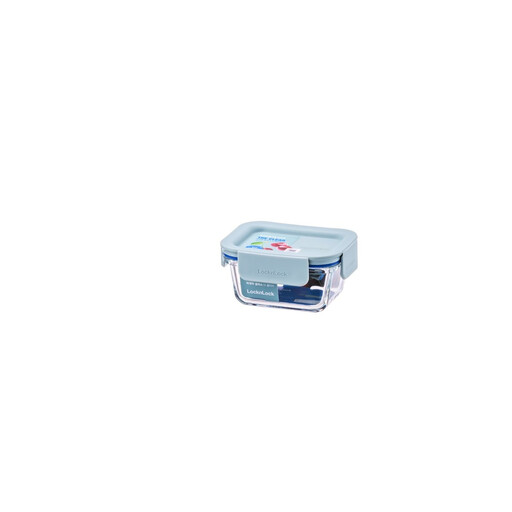
Why we chose it: Its compact 380 ml size is ideal for a single serving. Lightweight and rectangular, it slips easily into a bag without taking up too much space.
It directly tackles pitfall #1: leaks. Its clip-locking system is designed for transport. The borosilicate glass allows you to safely reheat your meal in the microwave.
A compact size and a reliable seal—the winning combination for a daily grab-and-go glass lunch box.
Explore our full selection of products that check all the boxes on our quality and safety checklist.
Absolutely not! It's strongly discouraged, even with borosilicate glass. While it handles thermal shock better, the risk still exists. The golden rule: always let the dish cool to room temperature before putting it in the cold, and vice versa.
The silicone seal is often removable. Take it out and wash it separately with white vinegar or baking soda diluted in hot water. Let it soak for an hour before rinsing. For the lids, avoid soaking them for too long and dry them immediately after washing to prevent odours.
Its primary quality is its thermal resistance. While it is indeed more robust than standard soda-lime glass, it is not unbreakable. A sharp impact or a fall can still shatter it. Handle it with care, just like any other glass object.