
Same-day & Next-day Delivery

Quality Guaranteed

Unlock Your Welcome Offers: FREE Delivery | Up to 80% OFF | Free 30-day JoyPlus trial
Download the APP
Switching from plastic to glass for storing your meals is an excellent idea, for both your health and the planet. The problem? The market is flooded with promises that don't always deliver. A glass food container that looks perfect on the shelf can quickly turn into a nightmare: a lid that warps, cracks after a trip to the microwave, or worse, a lunch bag flooded with sauce.
To avoid buyer's remorse, here's how to navigate the most common pitfalls and invest in containers that will genuinely make your life easier.
The "All-in-One" Myth: Beware of containers marketed as ultra-versatile. Not all glass is created equal. Standard (soda-lime) glass won't handle thermal shock well, such as going straight from the fridge to the microwave. The risk? A crack, resulting in an unusable and even dangerous product. The simple mention of "glass" is no guarantee of oven-safe compatibility.
The False Promise of a Leak-Proof Seal: An airtight glass container is useless if its lid is poor quality. Flimsy locking systems or low-grade silicone gaskets lose all effectiveness after just a few washes. The result: food is no longer protected from the air, and transporting your glass lunch box becomes a high-risk mission.
To choose a truly durable and practical glass food container, rely on objective criteria rather than marketing claims.
The durability of your container depends entirely on the type of glass. This is THE number one criterion for safe and versatile use.
The lid is just as crucial as the container itself. A good lid must guarantee a foolproof seal and excellent durability.
The practicality of a glass container (like Pyrex or other brands) also comes down to its design.
meal prep, or storing bulk ingredients.Here are a few models that meet specific needs, all selected based on our criteria for quality and practicality.

Why it's perfect for them: With its large 2-litre capacity, this glass dish is perfect for preparing meals for several days. Its rectangular shape optimises storage, and its 4-clip locking system makes it ultra-reliable for transport.
Its 4-clip locking system, with a removable silicone gasket, avoids the "false seal" pitfall and ensures a perfect closure, even for saucy dishes.
Its borosilicate glass body is oven-safe up to 400°C (without the lid), allowing you to cook, store, and reheat in a single dish.
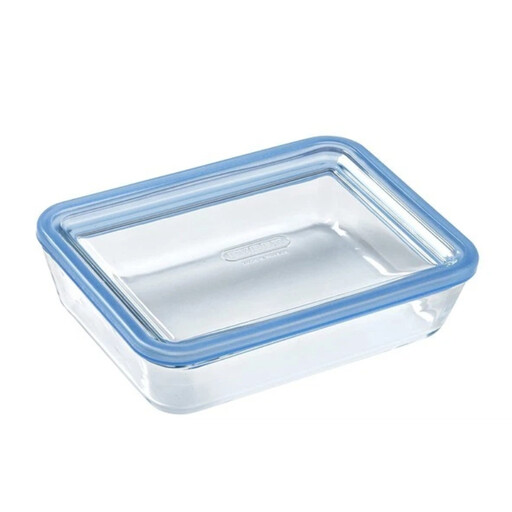
Why it's perfect for them: With its practical 0.8 L capacity, this container is perfect for taking lunch to work, storing leftovers, or preparing a single portion. Its versatility makes it a true daily ally.
Made of pure borosilicate glass, it avoids the pitfall of low-grade glass that cracks at the first thermal shock. It's designed to handle the temperature variations of daily use (fridge, microwave, oven).
Its extreme versatility: it's safe for the refrigerator, freezer, microwave, oven, and dishwasher. A true Swiss Army knife for the kitchen.
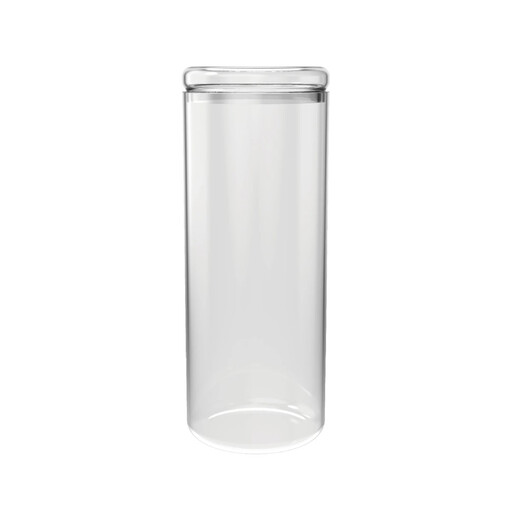
Why it's perfect for them: This jar is specifically designed for storing dry foods (pasta, rice, coffee, legumes). Its clean, transparent design is perfect for organising your pantry in style, while protecting the contents from moisture.
Clearly positioned for dry storage (it is not oven or microwave safe), it prevents any confusion and the risk of using it for an unsuitable purpose.
Its airtight lid is optimised to preserve the freshness and crunch of dry foods, a very different requirement from that of a take-away container.
We have curated a complete selection of products that meet our strict selection criteria and current safety standards.
Borosilicate glass contains boron trioxide, which gives it exceptional resistance to thermal and chemical shock. This is why it's used for laboratory glassware and oven-safe dishes. Regular (soda-lime) glass is cheaper but much more fragile when faced with sudden temperature changes: it can shatter when going from cold to hot.
As a general rule, no. Most lids are made of plastic (even BPA-free) or contain silicone, materials that cannot withstand high oven temperatures. For the microwave, some lids are compatible if their vent is open, but the safest bet is to remove it or place it on top of the container without locking it. When in doubt, always check the manufacturer's instructions.
The main enemy of glass is thermal shock. To avoid it, the golden rule is simple: never move a glass dish directly from the freezer to a preheated oven. Let it acclimate to room temperature for about thirty minutes. Likewise, never place a hot dish on a cold or wet surface, and don't pour cold liquid into a dish that just came out of the oven. Gentle handling is key.