
Livraison le jour même ou le lendemain

Qualité garantie

Débloquez vos offres de bienvenue: Livraison GRATUITE | Jusqu'à -80 % | 30 jours d'essai gratuits à JoyPlus
Téléchargez l'application
Swapping your plastic tubs for glass containers is an excellent move for both your health and the planet. But here's the catch: the glass food container market is flooded with products that don't always live up to their claims. Make the wrong choice, and you're setting yourself up for disappointment?: warped lids, dishes that crack at the first thermal shock, or a storage nightmare. To avoid buyer's remorse, it's crucial to know the most common pitfalls.
Here are the three most common mistakes to avoid?:
To make a smart purchase, there are a few technical points to check. They are your guarantee of durability and safety for your future containers.
The real difference lies in the glass composition. For versatile use (baking, freezing, reheating), borosilicate glass stands out as the only truly reliable option.
The lid is just as important as the dish itself. For a glass lunch box or for storing saucy meals, a perfect seal is non-negotiable.
Consider your daily habits and the space you have in your cupboards and fridge.
meal prep or family-sized bakes.Instead of an endless list, we've selected products that excel in specific situations. Our goal is to help you find the model that will truly fit your daily routine.

Why it's a great choice ? This comprehensive set is designed for `meal prep` fans. With two sizes (1040 ml and 370 ml), it covers every need, from the main course to dessert or a snack. Everything stacks perfectly for a well-organised fridge.
The high-resistance borosilicate glass withstands thermal shock, while the clip-on lids with removable seals ensure a foolproof, leak-proof closure. No more soup spilling in your bag !
Complete 10-piece set to get you fully equipped at once. Borosilicate glass is oven-safe (without lid), microwave-safe, and freezer-safe.
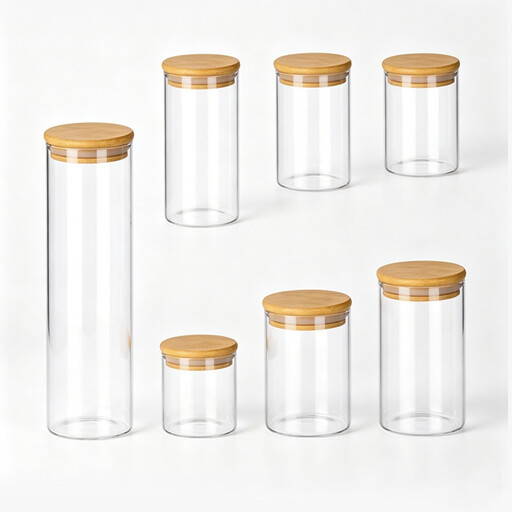
Why it's a great choice ? For those who dream of an Instagram-worthy pantry, this set combines aesthetics with practicality. The wood-effect lids add a warm touch, and the seven different sizes allow you to store everything harmoniously: pasta, rice, legumes, coffee...
These jars are dedicated to dry storage. Their airtight lids with silicone seals preserve freshness and keep pantry moths at bay, avoiding the trap of poor seals that ruin your goods.
Elegant design with wood-effect lids. Assortment of 7 sizes for harmonious storage. The transparent glass lets you see the contents at a glance.
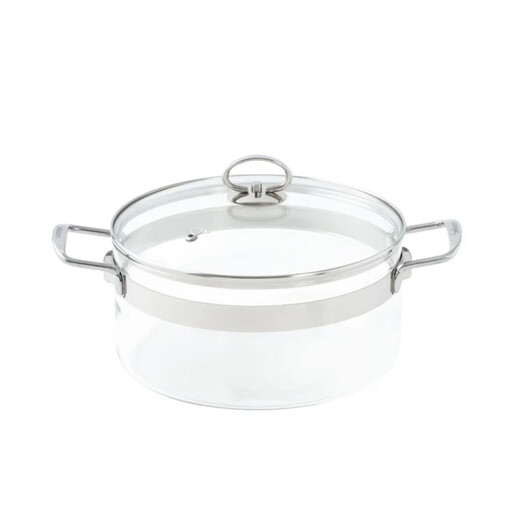
Why it's a great choice ? This takes things to the next level. This stockpot isn't just a container: it can be used for cooking directly on the hob (gas or electric), allows you to monitor cooking at a glance, and goes straight into the fridge to store leftovers. From hob to table to fridge, all in one dish.
This is the ultimate demonstration of borosilicate's versatility. Unlike dishes that are limited to the oven, this one can handle active cooking on a hob, proving the technical superiority of this type of glass.
Compatible with all hobs except induction. Healthy, guaranteed PFAS/PTFE-free material. Large 4.2-litre capacity, perfect for family meals.
Discover our full selection of products that meet our quality criteria and European safety standards.
Yes, as long as it's borosilicate glass and you follow a few rules. The number one enemy is severe thermal shock. Best practice is to let the frozen dish sit at room temperature for a few minutes before placing it in a cold oven (which will then heat up with the dish), or to thaw it in the refrigerator beforehand. And the golden rule: never pour cold liquid into a hot glass dish.
To prevent bad odours and mould, the secret is to gently remove the silicone seal from its groove in the lid. Wash it separately with hot, soapy water, using a small brush if needed. The crucial step?: make sure both the seal and its groove are completely dry before putting it back in place.
Yes, there's no secret about it: glass is a denser material, and therefore heavier than plastic. For a glass lunch box that you carry every day, the weight is a factor to consider. However, for home use (fridge storage, baking, glass kitchen storage), its benefits far outweigh this drawback: durability, perfect hygiene (no stains or odours), and health safety (zero BPA or other controversial substances).