
Livraison le jour même ou le lendemain

Qualité garantie

Débloquez vos offres de bienvenue: Livraison GRATUITE | Jusqu'à -80 % | 30 jours d'essai gratuits à JoyPlus
Téléchargez l'application
Switching to glass for food storage is a smart move—for your health, the environment, and sheer convenience. Yet, the market is a minefield of marketing promises that rarely hold up. A lid that leaks in your bag, a dish that cracks straight out of the freezer... these all-too-common mishaps quickly turn a good investment into a source of frustration. To avoid being let down, here’s how to sidestep the most common traps.
Here are the two main mistakes to avoid:
To ensure you don't regret your purchase, it's better to rely on specific technical criteria than on marketing hype. Here are the three non-negotiable features to check.
The key difference comes down to heat resistance. A borosilicate glass container is engineered to withstand extreme temperature changes (typically from -20°C to +400°C). This allows it to go safely from the freezer to the oven (without its lid, of course). If you're looking for an oven-safe glass dish that also works for storage, the "borosilicate glass" label is an absolute must-have. It's your guarantee of safety and durability.
Forget lids that clip loosely on one or two sides. For a reliable seal, opt for four-sided locking systems. These distribute pressure evenly across the silicone gasket, preventing air from getting in and, more importantly, liquids from getting out. Brands like Lock&Lock have built their reputation on this type of mechanism. A high-quality, removable gasket for easy cleaning is also a sign of thoughtful design.
The whole point of a good glass food container is its ability to adapt to your daily routine. A quality model should serve as a meal prep container for your weekly meals, a casserole dish with a lid for a family dinner, and a simple storage box for leftovers. Check its compatibility with the freezer, microwave (always without the lid), oven, and dishwasher for maximum flexibility.
Instead of an endless list, here is a selection of products tailored to specific needs, all of which meet the quality and safety criteria we've just discussed.

Why we chose it: This set is perfect for getting started with meal prepping. With two different sizes, it allows you to vary portions, plan a full week of meals, and optimise fridge space.
The glass is indeed high-borosilicate, which eliminates any risk of shattering in the oven. The sturdy clip-on lids solve the leakage problem and ensure worry-free transport.
A complete 10-piece set (5 large, 5 small) offering excellent value for money to get you fully equipped in one go.

Why we chose it: Its large 2-litre capacity is perfect for family-style dishes like lasagnas, casseroles, or small roasts. It's the ultimate multi-purpose dish: it goes from the oven to the table, then to the fridge to store leftovers.
It checks all the boxes: borosilicate glass that withstands 400°C and the brand's famous 4-clip locking system. The result: cooking safety and a flawless seal.
Extreme versatility (baking, freezing, storing, serving) and a large capacity for family use.
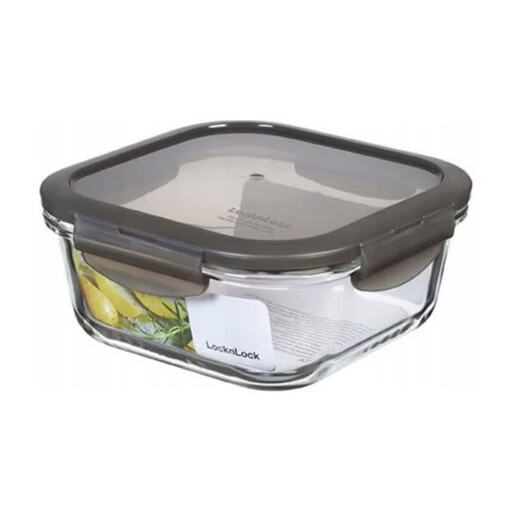
Why we chose it: Its 750 ml capacity is ideal for a single serving. Its square shape slides easily into a bag, and its legendary leak-proof seal lets you transport soups and saucy dishes without any worry.
The Lock&Lock locking system is the industry standard for leak-proofing, eliminating any risk of spills. The borosilicate glass ensures safe reheating in the microwave once you're at the office.
Compact and square format, perfect for a lunch box, with a fail-safe seal.
Find our complete selection of storage solutions that meet strict criteria for quality and durability.
No, and this is a basic safety rule. Lids are almost always made of plastic (polypropylene) and are not designed to withstand the high temperatures of an oven. It's also best to remove the lid in the microwave. If you must, you can place it on top without clipping it shut to allow steam to escape. Only the glass dish itself is designed for cooking.
Regular glass (soda-lime) is highly sensitive to thermal shock: a rapid temperature change causes it to contract or expand unevenly, leading to cracks or even shattering. Borosilicate glass, on the other hand, contains boron trioxide, which gives it a very low coefficient of thermal expansion. It can therefore handle wide temperature swings effortlessly, allowing it to be used safely from the freezer to the oven.
Silicone gaskets have a tendency to retain odours. The best practice is to remove them from the lid after each use and wash them separately with hot, soapy water. If an odour lingers (like curry or tomato sauce), soak them for an hour in a mixture of hot water and white vinegar, then rinse thoroughly. It's crucial to let them air dry completely before putting them back in place.