
Livraison le jour même ou le lendemain

Qualité garantie

Débloquez vos offres de bienvenue: Livraison GRATUITE | Jusqu'à -80 % | 30 jours d'essai gratuits à JoyPlus
Téléchargez l'application
Switching from plastic to glass for food storage is a smart move, both for your health and for the planet. But there's a catch: the market is flooded with options making tempting promises, and disappointment is often just around the corner. A glass food container that cracks at the first thermal shock, a lid that leaks in your lunch bag... these are mishaps we know all too well. To help you make a worthwhile investment, our editorial team has broken down the common pitfalls to avoid and the essential criteria to check before you buy.
Before you pull out your credit card, let's review the design flaws that too often turn a promising purchase into a genuine regret.
To ensure you make the right choice, focus on a few technical details that will make all the difference in your daily routine.
This is THE non-negotiable criterion: the type of glass. Insist on a borosilicate glass container. This material is specifically engineered to withstand significant thermal shock (typically temperature variations up to 120°C / 248°F, or even more). It's what allows you to use the same glass dish with a lid to freeze a meal, reheat it in the microwave, and even bake it in the oven (without its lid, of course). Another major advantage is that glass is a non-porous material: it doesn't retain odours or stains (goodbye, tomato sauce stains!), ensuring impeccable hygiene over the long term.
The effectiveness of a glass lunch box hinges on its lid. The most reliable systems feature robust clips (usually four of them) that apply uniform pressure on a silicone gasket. Check that this gasket is removable—this is essential for deep cleaning and preventing mould growth or lingering odours. A good lid not only guarantees zero leaks but also better preserves freshness, a crucial point for glass meal prep enthusiasts.
A good glass food container should simplify your life. Always check its compatibility with your various appliances:
Rather than an endless list, here are a few models that check all the boxes for our quality and durability criteria, each suited for a specific purpose.
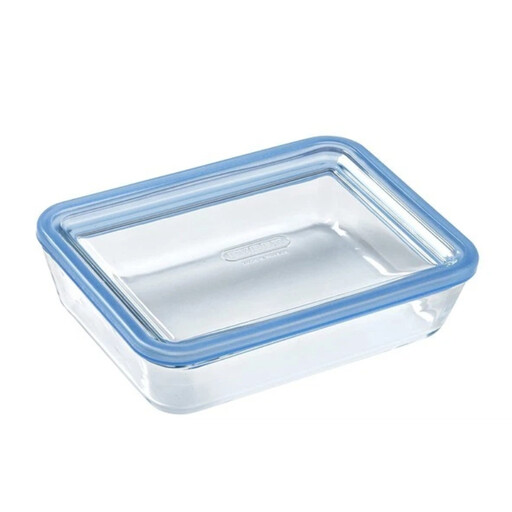
Why we love it: Perfect for preparing and taking your lunch on the go. Its 0.8 L capacity is ideal for a generous portion, and its rectangular shape optimises space in a bag or refrigerator.
Made from pure borosilicate glass, it withstands thermal shock and eliminates any risk of cracking when going from cold to hot (microwave).
Its total versatility: compatible with the freezer, refrigerator, oven (without lid), microwave, and dishwasher. One dish to do it all, from storage to cooking.

Why we love it: Its large 2-litre capacity is perfect for storing leftovers from a family meal, preparing a casserole, or marinating food. A generous and ultra-practical size.
Its clip-lock system, combined with a removable silicone gasket, ensures a completely leak-proof seal. No more dealing with lids that leak or don't close properly.
Its borosilicate glass withstands thermal shocks up to 200°C / 392°F (according to the manufacturer), offering maximum flexibility between the freezer and the microwave.
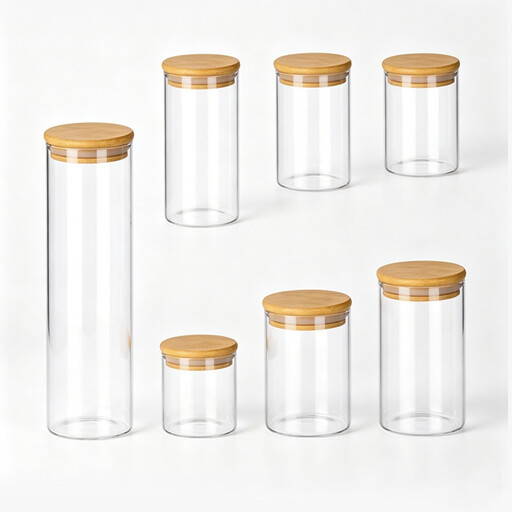
Why we love it: This set is designed for storing dry goods (pasta, rice, cereal, legumes). Its different sizes allow you to organize your pantry with style and efficiency.
It avoids the "false versatility" trap. This isn't a do-it-all product, but it excels at its mission: keeping dry foods safe from moisture thanks to perfectly airtight lids.
A complete 7-piece set in various sizes provides an all-in-one organization solution. The faux-wood lid design adds a very welcome decorative touch.
Explore our full selection of products that meet our demanding selection criteria and current safety standards.
No, that's the surest way to shatter it. Even borosilicate glass has its limits. Always let the dish return to room temperature (for at least 30 minutes) before placing it in a preheated oven. Another golden rule: never place a hot glass dish on a cold or wet surface.
If an odour (like curry or garlic) lingers despite washing, remove the gasket from the lid. Soak it for an hour in a mixture of hot water and white vinegar (or baking soda). Rinse it thoroughly and let it air dry completely before putting it back in place.
No, it's "only" highly resistant. Its primary quality is its exceptional thermal resistance. It is still glass, so it can break from a mechanical shock (like being dropped). Make it a habit to inspect your containers before each use and set aside any dish that has a crack or chip, no matter how small.