
Livraison le jour même ou le lendemain

Qualité garantie

Débloquez vos offres de bienvenue: Livraison GRATUITE | Jusqu'à -80 % | 30 jours d'essai gratuits à JoyPlus
Téléchargez l'application
Juggling weekly meals, saving leftovers from a Sunday feast, or simply packing lunch in a healthy and sustainable container… These small daily challenges call for solutions that are as practical as they are reliable. In this quest, the glass dish with a lid stands out as the Swiss Army knife of the modern kitchen: a single container to cook, store, and reheat.
But with so many options on the market, how do you find your way? This guide is here to break down the essential features and help you choose the perfect glass dish for your needs, whether you're a meal prep enthusiast or the undisputed master of the gratin dauphinois.
Before diving into our top picks, let's review the key points for making a smart and sustainable purchase.
Not all glass is created equal, especially when it comes to thermal shock. There are two main types:
Don't underestimate the lid; it's just as crucial as the dish itself. For a truly airtight glass container, the locking system is paramount. Models with clips and a silicone seal are the gold standard for a leak-proof experience, preventing spills and preserving food freshness.
Some lids, designed for reheating, include a steam vent. This clever valve allows steam to escape during microwaving, preventing splatters for clean and even heating. Make sure the lid is made of BPA-free plastic and check its dishwasher compatibility.
The shape of your glass storage container isn't just about aesthetics; it determines its use and how it's stored.
Finally, carefully consider the capacity you need: small containers for on-the-go lunches, medium ones for leftovers, or large dishes for family meals.
We've scoured the market to bring you a selection of models that shine for their versatility, design, and practicality.
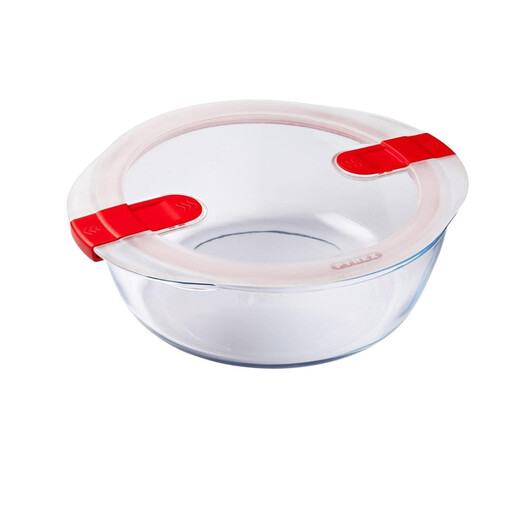
Key Features
This model from the Pyrex with lid range is designed for complete meal management. Its generous 2.3-litre capacity is perfect for family-sized portions. Its star feature is a bright red airtight lid equipped with a patented steam vent. This innovation allows you to reheat your meals in the microwave without removing the lid. The result: even, clean, and splatter-free heating.
Pros
Who is it for?
Ideal for families managing large quantities and for batch cooking fans who prepare their weekly menus in advance. It's the all-in-one solution for cooking, storing, and reheating.

What sets it apart
This model focuses on the robustness of its material, borosilicate glass, which can withstand up to 400°C (dish only). Its four-sided clip-locking system, combined with a removable silicone seal, guarantees a completely leak-proof seal, making it a top choice for meal prep.
Pros
Best for?
For those who demand the best for oven baking and need a zero-leak transport solution for their lunches. Its durability makes it an excellent long-term investment.
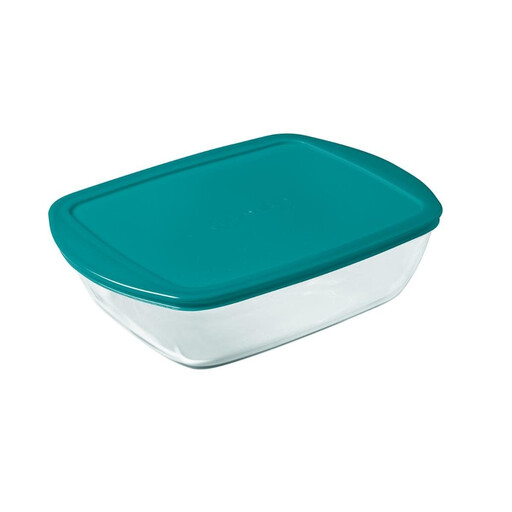
The essentials, without compromise
This model is a classic, as simple as it is effective. Its 28x20 cm rectangular format is a standard size for many gratin, lasagne, or cake recipes. Its design is straightforward: a durable glass dish and a plastic lid that fits snugly for storage. Designed to be stackable, it makes organisation much easier.
Pros
Who is it for?
For anyone looking for a reliable, no-frills basic for baking and storing. It's a must-have for any well-equipped kitchen.
Are your needs unique? Looking for other sizes, multi-piece sets, or models specifically designed for freezing?
? Explore our complete collection of glass food containers for freezers to find the perfect fit for you.
1. Can you put a glass dish with its lid in the oven?
The answer is no, and this is a golden rule. The glass dish (whether tempered or borosilicate) is designed for high oven temperatures. However, the plastic lid must never be placed in the oven, as it will melt or warp. It is intended only for storage (in the fridge/freezer) or, for some models, for microwave reheating (with the vent open).
2. What is the difference between borosilicate glass and tempered glass?
To put it simply, borosilicate glass is the champion of thermal shock resistance (withstanding rapid temperature changes). It is therefore ideal for dishes that go from the fridge to the oven. Tempered glass, on the other hand, specialises in mechanical shock resistance (drops, bumps) but is more sensitive to extreme temperature variations. Both are excellent, food-safe options.
3. How can I avoid thermal shock and extend the life of my glass dishes?
The secret is to be gentle! To preserve your dishes, avoid sudden temperature changes at all costs. Rule #1: never move a dish from the freezer directly into a preheated oven. Instead, let it thaw for a few hours in the refrigerator. Likewise, do not pour cold liquid into a still-hot dish or place it on a cold or wet surface right out of the oven. The best practice is to always use a trivet.