
Same-day & Next-day Delivery

Quality Guaranteed

Unlock Your Welcome Offers: FREE Delivery | Up to 80% OFF | Free 30-day JoyPlus trial
Download the APP
Switching to glass containers is an increasingly popular choice: they're healthier, more eco-friendly, and incredibly versatile. But be warned: the market is saturated with promises that aren't always kept. A glass dish with a lid bought on impulse can quickly lead to disappointment, or even danger. To avoid buyer's remorse, here are the three most common pitfalls you absolutely need to know.
To make the right choice, you need to focus on a few non-negotiable technical features.
The key is to look past the marketing slogans and learn to decipher the label. Here are the three points to check systematically before you buy.
The type of glass makes all the difference. For peace of mind in the kitchen, opt for a borosilicate glass dish. Unlike standard glass, its composition gives it far superior resistance to thermal shock.
This is a true guarantee of safety and longevity for your investment.
The effectiveness of an airtight food container rests on two pillars: the locking mechanism and the quality of the gasket.
A truly versatile dish should simplify your life, not complicate it. Always check the specifications for both the dish AND its lid. Ideally:
A lid that is neither dishwasher-safe nor microwave-safe will require extra steps and much more demanding maintenance.
To help you see how these criteria apply in practice, here are a few models that meet specific needs, chosen for their technical specifications.
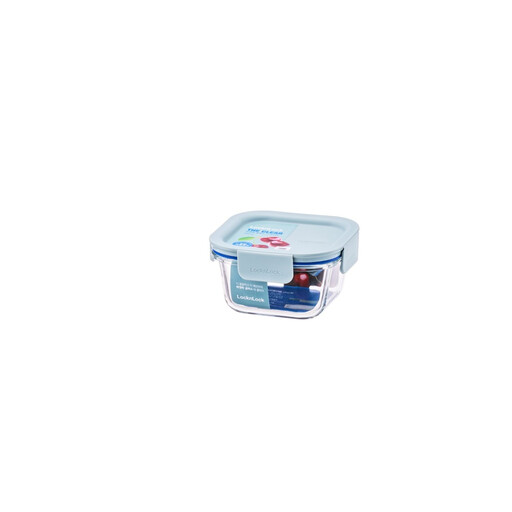
Why this model? Perfect for those who prep their lunches in advance. Its 500 ml capacity is ideal for a single serving, and its square shape optimises space in a bag or fridge. It's the ultimate glass meal prep container for daily use.
Its borosilicate glass body withstands both heat and cold. The LocknLock clip system is renowned for its leak-proof seal, eliminating the risk of a leaky lid.
Total versatility: the dish is oven, microwave, freezer, and dishwasher-safe, as is its lid (guaranteed BPA-free).
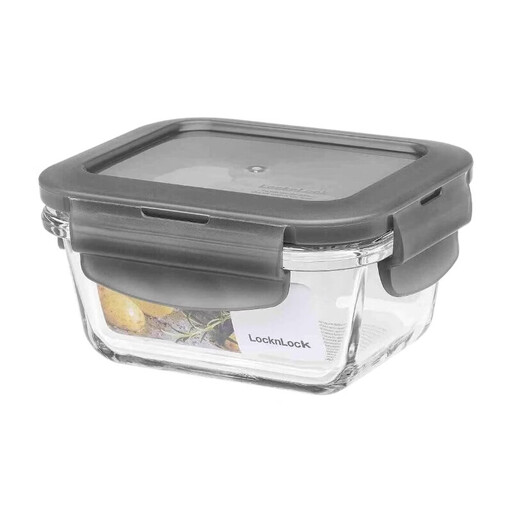
Why this model? Perfect for baking individual portions of casseroles, lasagnas, or gratins. This dish is designed to go from oven to table, thanks to its minimalist design, and then straight to the fridge to store leftovers.
It clearly states its oven resistance up to 400°C (without the lid), leaving no room for ambiguity. Its high thermal resistance glass construction is designed for baking.
Its high heat tolerance makes it a true oven-to-table glass dish. Its clip-locking system ensures leftovers are stored in a perfectly airtight container.
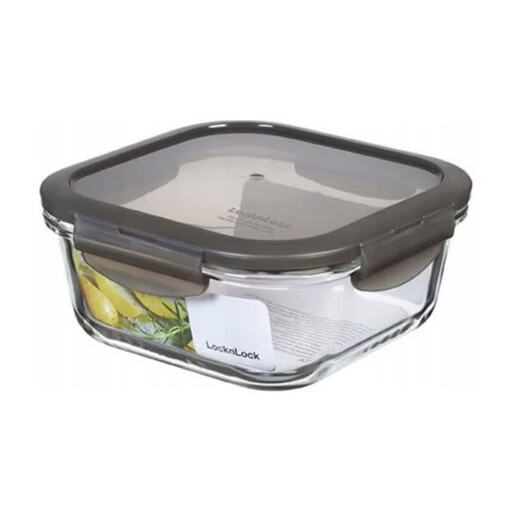
Why this model? With its 750 ml capacity, it's perfect for storing leftovers from a family meal, prepping a large salad for two, or storing ingredients in larger quantities. Its square, stackable shape is a real bonus for organising the fridge.
Its 4-clip locking system is robust enough to secure a large volume of food, while the borosilicate glass ensures the durability needed for heavy use.
Its large 750 ml capacity and stackable design for maximum space-saving. Fully dishwasher-safe (dish, lid, and gasket) for the simplest possible clean-up.
We have compiled a complete selection of products that meet our strict selection criteria and current safety standards.
Even with a borosilicate glass dish, this is strongly discouraged. Thermal shock, while better absorbed, still places major stress on the material. The best practice is to let the dish return to room temperature for a few minutes before putting it in the oven, or to place it in a cold oven and let it heat up gradually. And of course, always remove the lid before placing it in the oven.
For an optimal clean, gently remove the silicone gasket from the lid after each use. Wash it by hand with hot, soapy water, or place it in the top rack of the dishwasher if it's compatible. Make sure the gasket and the groove in the lid are completely dry before putting it back. This is the best way to prevent mould growth and odour retention.
The glass portion, if well-maintained and protected from extreme mechanical and thermal shocks, can last for many years. The lifespan of the lid, however, depends on the quality of its clip hinges. Models from reputable brands like LocknLock Ovenglass are often tested to withstand hundreds of thousands of openings and closings, which guarantees a lifespan of several years under normal use. Remember to regularly inspect the dish and lid for any cracks and stop using them if they are damaged.