
Livraison le jour même ou le lendemain

Qualité garantie

Débloquez vos offres de bienvenue: Livraison GRATUITE | Jusqu'à -80 % | 30 jours d'essai gratuits à JoyPlus
Téléchargez l'application
Glass containers have plenty going for them: they are transparent, versatile and easy to incorporate into both a kitchen and a table setting. However, not all of them are designed for the same uses. A box suitable for storing leftovers may not necessarily be suitable for cooking, while an attractive decorative jar may prove impractical for everyday use.
Before getting your bank card out, three common mistakes are worth avoiding:
Here are the key points to consider when choosing a glass storage box, storage jar, baking dish or vase that is genuinely suited to your everyday needs.
Borosilicate glass is widely used for kitchen containers. Marketed as heat-resistant and non-porous, it is easy to clean and less likely to retain odours and flavours. However, bear in mind that the presence of borosilicate glass does not automatically mean that a container can safely go straight from the freezer to the oven.
Always check the manufacturer’s guidance regarding:
Even a glass food container designed to withstand heat can crack as a result of thermal shock. Allow it to return to room temperature before placing it on a cold surface or putting it into a hot appliance.
When storing soup, salad or a prepared meal, the lid matters just as much as the glass. An airtight glass jar with a silicone seal is well suited to dry foods, while a box with a leakproof closure is more practical for transporting your lunch.
In particular, check:
A wooden lid, particularly one made from acacia, adds an attractive decorative touch. However, it will generally need to be washed by hand and should not be left submerged.
If you prepare meals in advance, having several capacities available can be useful. Smaller sizes are suitable for individual portions and sauces, while larger ones can hold family meals. A stackable container helps you make more efficient use of the available height in your fridge or cupboard.
Before ordering, measure:
Glass is transparent, so you can also see the contents immediately without having to open every box.

Why this is a good fit for this profile : With a capacity of 0.8 litres, this container is suitable for leftovers, individual portions and everyday preparations. It can be used in the fridge, freezer, microwave, oven and dishwasher, provided you follow the supplied instructions.
Its rectangular, stackable shape helps minimise wasted space. However, you should allow it to return to room temperature before exposing it to another change in temperature.
Non-porous borosilicate glass, 0.8 litre capacity and dishwasher-safe design.

Why this is a good fit for this profile : Its hammered glass and acacia lid give kitchen storage a genuinely decorative appeal. It is suitable for cereals, dried fruit, pasta, rice and coffee beans.
The silicone seal is designed to provide an airtight closure. However, the wooden lid must be washed by hand and protected from prolonged exposure to moisture.
750 ml capacity, hammered borosilicate glass and contents visible at a glance.
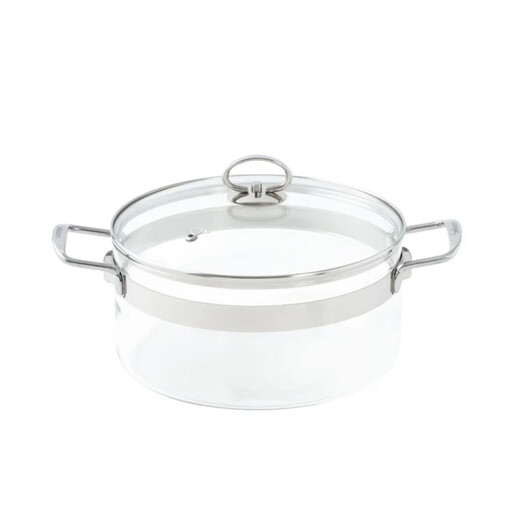
Why this is a good fit for this profile : Its 4.2 litre capacity is ideal for soups, pasta and family meals. Its transparent body lets you monitor cooking without lifting the lid.
The stated compatibility covers gas and electric hobs. For induction, you will need to add a suitable diffuser plate. The maximum oven temperature indicated is 180 °C.
Large capacity, integrated pouring spout and a material stated to be free from PTFE and PFAS coatings.
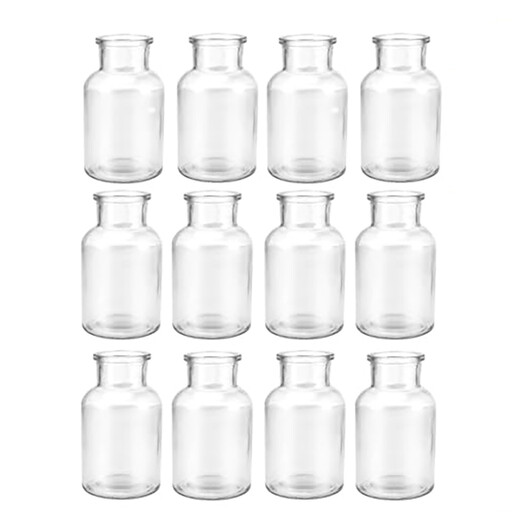
Why this is a good fit for this profile : With twelve pieces, you can create a coordinated display for a family meal, birthday or reception. Their compact size is ideal for fresh or dried flowers, as well as more unusual arrangements.
The number of pieces is clearly stated, making it easier to plan for a large table. However, their limited capacity means they cannot hold large bouquets.
Pack of 12 vases, jute ribbon included and stated dishwasher-safe cleaning.
We have put together a complete, real-time updated selection of products that meet these exacting criteria, while also taking European safety regulations into account.
To help your containers last longer:
Glass vases are not just for bouquets. They can be used as table centrepieces, hold dried branches or showcase a seasonal arrangement. For food storage, however, choose models explicitly designed for this purpose.
No. Compatibility depends on the model and its lid. A container may be oven-safe even though its lid is not. Remove lids that are not designed for heat and follow the stated maximum temperature.
Borosilicate glass has a non-porous surface and can be designed to withstand greater temperature changes than some standard glass. However, you should still consult the manufacturer’s instructions and avoid sudden thermal changes.
Wash the container soon after use, clean the lid and seal separately, then allow each component to dry completely. Glass’s transparent, non-porous surface makes it easier to check that it is clean. Depending on its material, however, the lid may retain more odours.