
Livraison le jour même ou le lendemain

Qualité garantie

Débloquez vos offres de bienvenue: Livraison GRATUITE | Jusqu'à -80 % | 30 jours d'essai gratuits à JoyPlus
Téléchargez l'application
The glass container with a lid has become a kitchen essential. Practical for storing, cooking, and transporting meals, it ticks all the boxes for those seeking healthy and sustainable solutions. But be warned: not all models are created equal, and a few small details can quickly turn a good purchase into a real disappointment.
Before you decide, here are the 3 most common pitfalls to avoid:
To help you see clearly and make a smart purchase, here are the technical points to inspect closely.
The secret to a truly versatile glass oven dish is its material. There are two main types of glass:
The seal is a crucial point, especially if you transport your meals or store saucy dishes. Look closely at the lid:
Your diligence shouldn't stop at the glass dish. The lid is also in direct contact with your food. Check that it is made from a food-grade plastic, like polypropylene (PP), and that it is certified BPA-free. This is the only guarantee that potentially harmful substances will not leach into your food.
Rather than an endless list, we've matched user profiles with products that tick all the boxes for our quality and safety criteria.

Why we chose it: Ideal for preparing and taking lunches on the go. Its 630 ml capacity is perfect for a single serving, and its rectangular shape fits easily into a bag. The perfect solution for weekly meal prep.
Its 4-clip locking system, combined with the removable silicone gasket, ensures a completely leak-proof seal. No more leaks! Its borosilicate glass body guarantees ideal thermal resistance for safe use in the microwave.
Total versatility. It's oven-safe (without the lid), microwave-safe, freezer-safe, and dishwasher-safe. One dish to do it all: prepare, store, transport, and reheat.

Why we chose it: With its generous 2-litre capacity, this dish is perfect for storing leftovers from a family meal, a casserole, or a large salad. Ideal for cooking in larger batches and optimising fridge space.
Its borosilicate glass body can withstand temperatures up to 400 °C (without its lid), making it a true glass oven dish. No more worries about moving it from the fridge to the oven to reheat leftovers.
Its large 2 L capacity and 4-clip locking system guarantee optimal storage, protecting your food from air and fridge odours.
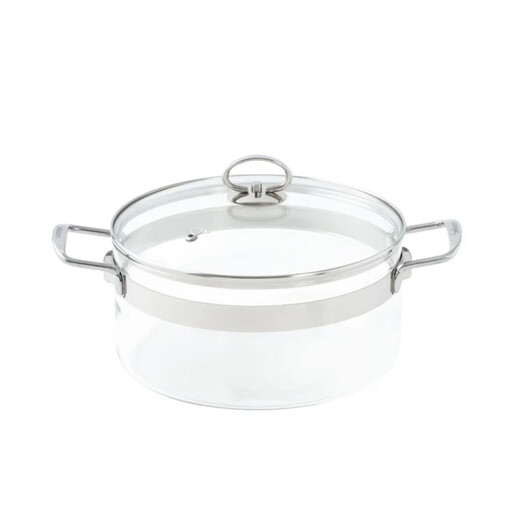
Why we chose it: Much more than a simple glass storage container, this stockpot allows you to cook directly on gas or electric hobs. Its complete transparency is a real plus for monitoring cooking, and its XXL 4.2 L capacity is perfect for soups, pasta, or stews.
Specially designed for cooking, its borosilicate glass withstands direct heat from stovetops. Its inert, non-porous material with no coating guarantees healthy cooking, without transferring flavours or unwanted substances.
Stunning versatility. It goes from the hob to the oven (up to 180 °C), then straight to the table for serving, before ending up in the refrigerator for storage.
Discover our full selection of products that meet our strict selection criteria and current safety standards.
In a word: no. Plastic lids, even BPA-free ones, are not made to withstand high oven temperatures. For the microwave, it's best to remove it or simply place it on top of the container without clipping it shut, allowing steam to escape. In any case, always check the manufacturer's instructions.
Glass has the advantage of being non-porous, so it doesn't absorb odours. The weak point is often the lid's silicone gasket. For a spotless clean, remove it and wash it separately with hot, soapy water. Let each part dry completely before reassembling the lid to avoid trapping moisture.
The entire difference comes down to thermal shock resistance. Borosilicate glass contains boron trioxide, which allows it to withstand rapid and significant temperature changes without shattering. Conversely, regular (soda-lime) or even tempered glass is much more sensitive and risks cracking if it goes from cold to hot too quickly. This is precisely what makes borosilicate the material of choice for versatile kitchen use.