
Livraison le jour même ou le lendemain

Qualité garantie

Débloquez vos offres de bienvenue: Livraison GRATUITE | Jusqu'à -80 % | 30 jours d'essai gratuits à JoyPlus
Téléchargez l'application
Windows, mirrors, windscreens, glasses and screens cannot all be cleaned in the same way. Yet many products are marketed as versatile, fast-acting or eco-friendly without always making their limitations clear. Choosing the wrong product can leave a greasy film, create more streaks or damage a delicate surface.
Here are the criteria to consider before buying a glass cleaner, along with a selection of products suited to different uses and needs in France.
A multi-surface cleaner may be perfectly suitable for windows, mirrors or washable surfaces, without being appropriate for screens, treated surfaces or glasses. Ammonia, certain solvents or a highly concentrated fragrance can damage more delicate materials.
Before applying any product, check the label and the manufacturer's recommendations. For a computer or television screen, it is generally better to spray the product onto a cloth rather than directly onto the display.
Even the best streak-free glass cleaner can leave marks if it is used incorrectly. Too much liquid, a cloth that is already damp or glass heated by the sun can all cause watermarks, even with a spray advertised as fast-drying.
The method matters just as much as the formula:
A product containing alcohol or certain degreasing agents may be flammable or irritating to the eyes and skin. Hazard statements, ventilation recommendations and restrictions concerning surfaces are not simply marketing claims.
Never mix different household cleaning products. For products containing sensitising substances, such as certain glasses cleaning wipes, also check the ingredients and warnings printed on the packaging.
Start by identifying your exact needs:
A 500 to 750 ml bottle is suitable for routine cleaning around the home. For a large house, a block of flats, a shop or frequent use, a 5-litre container can reduce the need for restocking — provided you have enough space to store it.
The spray bottle also deserves some attention. An ergonomic trigger, a safety lock and a clearly visible fill level make everyday use more comfortable while reducing unnecessary splashes.
A product marketed as eco-friendly is not necessarily harmless. When a certification is mentioned, distinguish it from a simple claim such as ‘of natural origin’. The MICHELIN eco-friendly glass cleaner, for example, is presented as an eco-friendly detergent certified by ECOCERT Greenlife in accordance with the ECOCERT standard. Its product information also states that more than 99% of its ingredients are of natural origin.
Also take the time to read the recommendations concerning hot surfaces, contact with the eyes, ventilation and keeping the product out of the reach of children. A fast-drying product does not remove the need to follow these precautions.
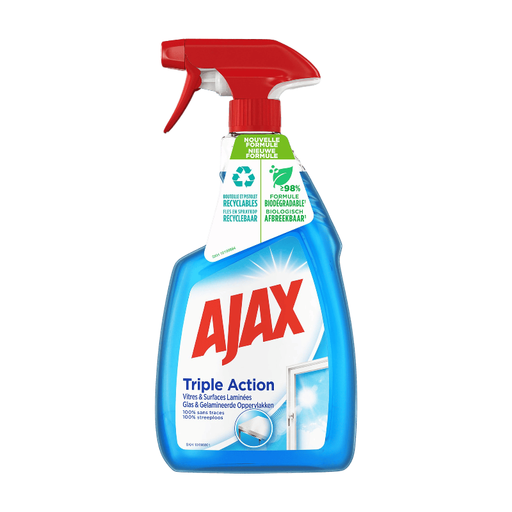
Why this product suits this need: Its 750 ml format and spray bottle are well suited to routine cleaning of windows, mirrors, glass tables and many glazed surfaces around the home.
The product information details the compatible surfaces and recommends following the manufacturer's instructions for screens, helping to prevent unsuitable use.
750 ml, lemon fragrance, formula advertised as containing 99% ingredients of natural origin, and compatibility with several glazed surfaces.
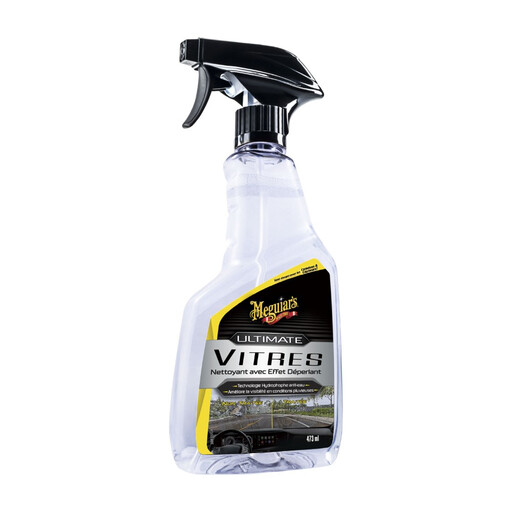
Why this product suits this need: This car-care product combines cleaning with advertised hydrophobic technology. It is designed for drivers who want to treat interior and exterior windows with a single bottle.
It is presented as a product for cars and tinted windows, rather than as a universal cleaner for every surface in the home.
473 ml bottle, suitable for use on tinted glass according to the product information, with an advertised water-repellent finish.
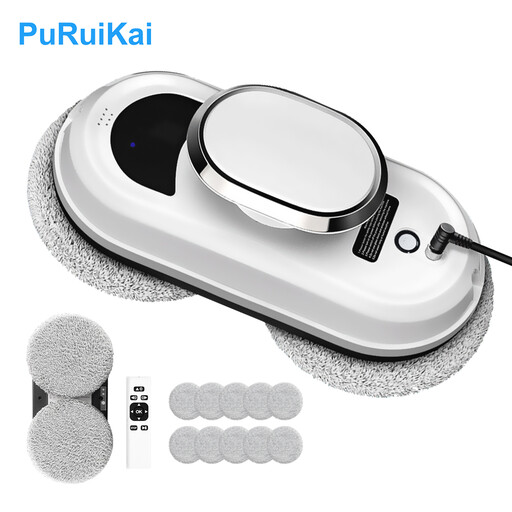
Why this product suits this need: A window-cleaning robot can reduce manual work on certain smooth glazed surfaces, particularly when access to the outside is difficult.
It does not work without mains power: the battery acts as a safeguard in the event of a power cut. The 4.5 m safety cord must be attached every time it is used.
Automatic edge detection, advertised suction of 2,800 Pa × 2 and protection against power cuts for 20 minutes, according to the product information.
We have brought together a complete, real-time updated selection of products that meet these demanding selection criteria and European safety regulations.
The VU glasses cleaning wipes are sold in packs of 20 individual sachets. According to their description, they are suitable for several types of lenses, including organic and anti-reflective lenses. Their compact format fits easily into a bag, and each wipe is intended for single use.
However, the product information mentions the presence of preservatives and isothiazolinones, substances that may cause an allergic reaction. These wipes are designed for optical surfaces. To clean a screen, follow the manufacturer's instructions and, if necessary, use a soft, lint-free cloth.
For more versatile use around the home, the JACQUES BRIOCHIN glass surface cleaner can be used on windows, mirrors, furniture and certain delicate surfaces. For screens, the manufacturer recommends spraying the product onto the cloth, never directly onto the device. Surfaces that come into contact with food must be rinsed with clean water after use.
A professional glass cleaner is primarily distinguished by its packaging, spray system, intended surfaces and frequency of use. It is therefore not automatically better suited to domestic use.
For a cleaning company, shop window or public-facing establishment, check the following in particular:
CIF Pro Formula Glass & Multi-Surface Cleaner, available in 750 ml, is presented as a ready-to-use product for windows, mirrors, glass tables and display stands. VINCKEL Glass & Stainless Steel Cleaner, in 500 ml, can also be used on stainless steel, ceramic glass and induction hobs. However, these two products are not interchangeable: always check the instructions before applying them to a new surface.
Use a small amount of product on a cool surface, then wipe with a clean, dry microfibre cloth. Avoid cleaning in direct sunlight and change the cloth as soon as it becomes damp or collects too much dust.
Yes, provided the product information states that it is suitable for automotive use and confirms compatibility with the type of glass concerned. A ready-to-use screenwash fluid, such as ECO BUDGET 5 L, is poured into the designated reservoir. It should not be confused with a spray intended for manual cleaning.
No. It must remain connected to the mains while operating, be secured with its safety cord and be used only on a smooth, undamaged and properly fixed surface. Stay nearby and follow the manufacturer's instructions, particularly when using it at height.