
Livraison le jour même ou le lendemain

Qualité garantie

Débloquez vos offres de bienvenue: Livraison GRATUITE | Jusqu'à -80 % | 30 jours d'essai gratuits à JoyPlus
Téléchargez l'application
By Joybuy, Your Product Expert
Worried about chemicals like PFAS or PTFE found in some non-stick coatings? You're not alone. Many households are rediscovering simpler, safer cooking materials. Among them, glass stands out as a clear choice: inert, durable, and transparent, it's the key to healthy, worry-free cooking.
But be aware, not all glassware is created equal. Heat resistance, hob compatibility, versatility... it's easy to get lost in the details. As your Joybuy Product Expert, my goal is simple: to guide you with clear, objective criteria to find the perfect glass casserole dish for you, without the unnecessary jargon.
Before you dive in, let's review the key points to make the right choice.
The type of glass is the number one criterion. Borosilicate glass is the undisputed star of the kitchen. Renowned for its incredible resistance to thermal shock (sudden temperature changes) and heat, it's designed to go from the countertop to the hob or oven safely (while respecting the manufacturer's limits, of course). It's a non-porous and inert material, meaning it doesn't react with food, absorb odours or flavours, and guarantees healthy, PFAS-free cooking.
The ideal choice? An all-hob compatible casserole dish for maximum versatility. Always check the product specifications:
Think about your daily kitchen routine. A transparent glass pot is a real advantage: you can monitor your cooking without lifting the lid, which conserves heat and saves energy. A model with a well-fitting lid can double as a glass oven dish for your gratins and roasts, or as a storage container in the refrigerator. Capacity is also a key factor: a 2.5L dish is perfect for a couple, while a family might opt for a 4L model or larger.
To help you take the next step, here is our selection of products that combine quality and food safety for every need.
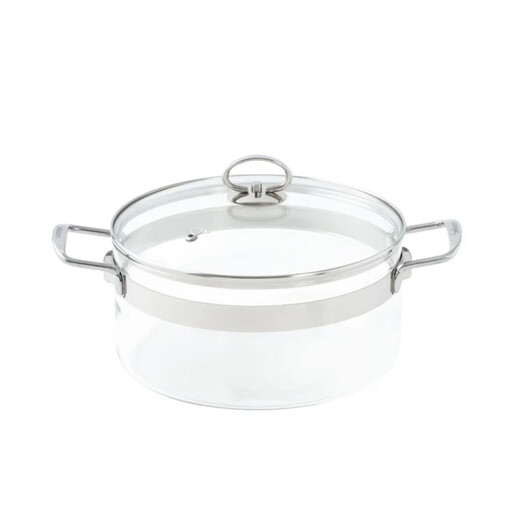
Why we love it This stockpot stands out with its generous 4.2-litre capacity, ideal for large family meals. Its fully transparent borosilicate glass design offers perfect visual control when cooking soups, pasta, or simmered dishes. It's the healthy, non-toxic alternative to non-stick pans for all your saucy recipes.
The highlights
Who is it for? For families and those who love to cook in large batches. Perfect as a primary pot for simmered dishes, stews, or broths that require constant monitoring.
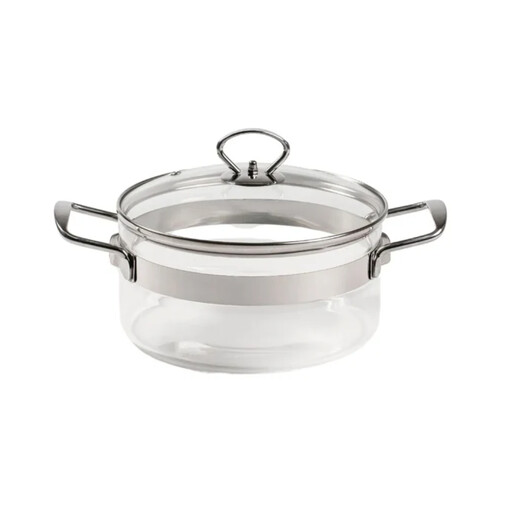
Why we love it This glass Dutch oven offers the same benefits as its larger sibling in a more compact size. Its 2.5-litre capacity makes it especially easy to handle for everyday tasks, like making sauces or side dishes. Its versatility is a major asset for kitchens where space is at a premium.
The highlights
Who is it for? For individuals, couples, or as a secondary pot for preparing sauces and vegetables. It's an excellent entry point for equipping your kitchen with healthy cookware.
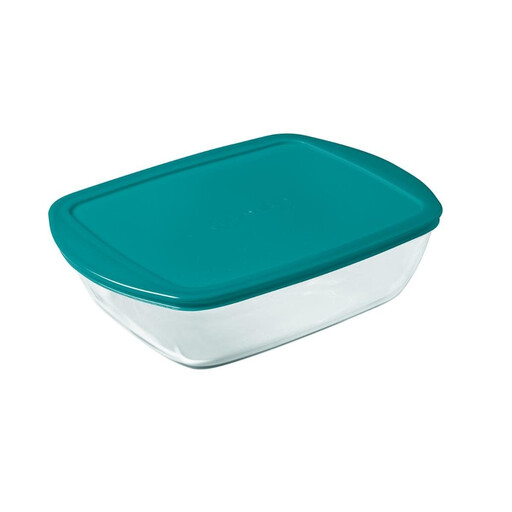
Why we love it A true classic from PYREX that cleverly combines cooking and storage. Much more than a simple dish, it's a complete solution: cook your gratin, serve it directly at the table, and then store it in the refrigerator with its airtight lid. Its rectangular shape optimises space in the oven and fridge.
The highlights
Who is it for? For meal prep enthusiasts and anyone looking for an all-in-one solution to cook, serve, and store. It's the ultimate smart glass oven dish.
If this selection doesn't meet all your needs, or if you're curious to explore other formats (round dishes, storage containers...), we have just what you're looking for.
? Explore our full range of oven and freezer-safe glass containers to find the perfect addition to your kitchen.
Absolutely, provided it is made of borosilicate glass and the manufacturer specifies its compatibility with hobs (gas, electric). These casserole dishes are designed to withstand direct heat. For induction, an adapter disc is required. The golden rule: always read the product manual.
The number one benefit is food safety. Glass is a perfectly inert material: it releases no chemicals into your food, even at high temperatures. It doesn't retain tastes or odours, which ensures pure flavours. Finally, its transparency is a significant advantage for monitoring cooking at a glance without heat loss.
Thermal shock is the main cause of breakage. To avoid it, follow a few golden rules: