For serving several ingredients separately
If you alternate between muesli, nuts, seeds and sugar, compare smaller sizes of around 350 to 500 ml. They let you keep each ingredient in its own container, but you’ll need to refill them more often.


Choose a size to suit what you serve: around 350 to 500 ml for keeping toppings separate, 1 L for keeping a dry food within easy reach, and 2 L if you need a larger supply. For everyday use, also check that the container is food-safe, that its closure is suitable for frequent opening and that each part can be cleaned according to the manufacturer's instructions.
If you alternate between muesli, nuts, seeds and sugar, compare smaller sizes of around 350 to 500 ml. They let you keep each ingredient in its own container, but you’ll need to refill them more often.
If you serve the same food every morning, a 1 L jar is a good mid-sized option to compare with the size of your usual pack and the space you have available.
If you store a large quantity of dry food, consider 2 L containers, taking their size into account. For jam and other homemade preserves, choose a closure that’s suitable for the preservation method you plan to use.
Start by thinking about how much you want to keep in each container, then compare the closure and care instructions for the model you choose.
| What to consider | What to check | Who is it for? |
|---|---|---|
| Capacity | Compare the jar’s capacity with the size of your usual pack, then measure the available height in your storage space. | When I serve several toppings, I prefer separate containers; for a larger supply, I want to avoid having to refill a small jar too often. Around 42% of consumers would put size at the heart of their choice. |
| Closure | Check the type of lid, whether it has a seal and whether it’s intended for dry foods. | If I open the muesli or nuts every morning, I look for a closure suited to frequent use rather than a jar designed primarily for preserving. Around 33% of consumers would make the closure their top consideration. |
| Care and food contact | Check that the container is intended for food and read the washing instructions for both the glass and the lid. | I want to be able to clean each part according to its instructions and use a container designed to hold food directly. For around 25% of consumers, this would be their main concern. |
According to the DGCCRF, only containers intended for cooking or storing food should be used for these purposes.
Before filling a jar with cereal or sugar, check that it’s food-safe and read its instructions for use.
Le Parfait advises against using its Super range for bulk foods that require frequent opening and closing. A closure designed for home preserving may not be suitable for a jar you open every morning.
For muesli, sugar or nuts, compare models designed for everyday storage of dry foods.
Instructions vary by model: Lidl says its 1 L SilverCrest jar is dishwasher-safe without its wooden lid, while Auchan says its 1 L jar isn’t dishwasher-safe.
Before washing for the first time, check the separate instructions for the jar, seal and lid.
An item listed online may not be available at the store you plan to visit.
Check availability at your local store or for your address before setting off.
The retailer lists 0.5 L and 1 L glass jars; the listing for the 1 L model describes it as transparent.
The retailer has listed a set of four Remember glass jars, each with a capacity of around 380 ml.
Glass jars in 0.5 L, 1 L and 2 L sizes let you compare different capacities for breakfast.
The range includes a set of two 350 ml glass jars for dry foods such as sugar, nuts or muesli, as well as a 1 L storage jar.
Aldi has listed a set of three Crofton glass storage containers.
The retailer lists Le Parfait jars in 0.5 L and 2 L sizes, among others.
These containers let you compare two 500 ml sizes, a 750 ml jar designed for dry foods and a 2 L container. For square or rectangular models, check that the opening is suitable for the way you serve your ingredients.
 Image unavailable
If you want to keep a larger quantity in one container, compare this 2 L size with the space you have available.
This is a rectangular container rather than a traditional jar, so check that its opening is suitable for the food you plan to serve.
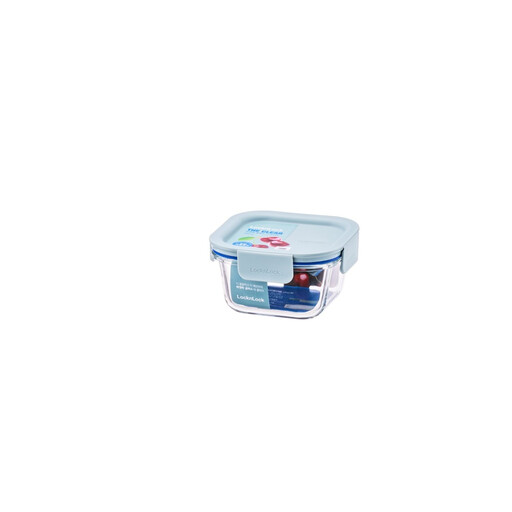 Image unavailable
The 500 ml size may suit you if you want to store a small quantity separately.
This is a square container rather than a traditional jar, so check that its opening makes it easy to serve the ingredient you’ve chosen.
 Image unavailable
This jar is designed for dry foods and could be used to store ingredients served at breakfast.
It has a capacity of 750 ml, an acacia lid and a silicone seal. Hand-wash the wooden lid.
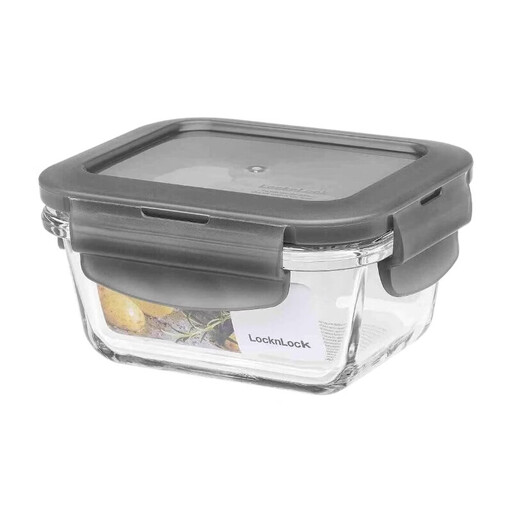 Image unavailable
This 500 ml container could be used to keep a small quantity of ingredients separate, as long as its opening suits your needs.
It’s square rather than a traditional jar. The lid must be hand-washed.
Around 350 to 500 ml is enough to keep small quantities separate, 1 L is a mid-sized option for a dry food you use every day, and 2 L suits a larger supply. Also check that the jar you’re considering will fit your usual pack and your available storage space.
Only use it if it’s suitable for food contact. The DGCCRF recommends choosing containers designed for storing food and following their instructions for use. Check that the jar is food-safe before adding any food.
Not always: it depends on the model and on each part. Lidl says its 1 L SilverCrest jar is dishwasher-safe without its wooden lid, while Auchan says its 1 L jar isn’t dishwasher-safe.
Don’t choose it just because it has a seal. Le Parfait advises against using its Super range to store bulk foods that are opened frequently. For everyday use, compare closures designed for dry foods and check how easy they are to clean.
Follow the instructions for your model and don’t use a damaged jar. In particular, avoid sudden changes in temperature if the manufacturer advises against them; for the relevant Lidl jars, the brand warns that this could cause the glass to crack or break.