Fans of spicy ginger
If you’re looking for a clear ginger flavour, check the stated ginger content, if available, along with the other spices and the steeping time. None of these factors alone measures how intense the drink will taste.


For a spicy cup in a holiday rental, a herbal tea bag with clearly listed ingredients and steeping time is a practical choice. The word “strong” alone doesn’t tell you how it will taste. If you want to avoid caffeine, check the ingredients for tea or guarana. Fresh ginger lets you adjust the brew to your taste, but takes more equipment and time to prepare.
If you’re looking for a clear ginger flavour, check the stated ginger content, if available, along with the other spices and the steeping time. None of these factors alone measures how intense the drink will taste.
Tea bags save you from chopping and straining fresh ginger. If you’re making it from scratch, check that the accommodation has the basics, such as a saucepan and a sieve.
A spicy recipe isn’t necessarily caffeine-free. The Anses notes that tea and guarana naturally contain caffeine, so read the full ingredients list, especially if you’re planning to drink it in the evening.
First decide whether “bold” means the heat of ginger or the character of tea to you. Then compare the ingredients and preparation method with the equipment available in your rental.
| Criterion | What to check | Who is it for? |
|---|---|---|
| Spicy flavour | Stated ginger content, other spices and recommended steeping time. | I want to taste the ginger clearly, rather than relying on the word “strong” alone. Spicy flavour would be the main criterion for around 33% of consumers. |
| Preparing it in a rental | Tea bag format, or the equipment needed to chop, steep and strain fresh ginger. | If the kitchen is poorly equipped, I’d rather make a cup without chopping or straining. Ease of preparation would come first for around 27% of consumers. |
| Caffeine | Whether the ingredients list includes tea or guarana. | If I’m planning to drink it in the evening, I want to rule out recipes containing caffeine. Around 20% of consumers would prioritise this. |
| Ingredients and claims | The full ingredients list and the precise nature of any claims. | I want to choose based on the recipe rather than assuming “wellbeing” means a proven effect. This would be the main concern for around 20% of consumers. |
This wording is no substitute for checking the ingredients. If the packaging states the ginger content, that tells you about the recipe but doesn’t guarantee a particular intensity in the cup.
Check the other spices too, and follow the steeping time given for the product you choose.
Ginger may be combined with guarana or tea. According to the Anses, both naturally contain caffeine.
If you want to avoid caffeine, check all the ingredients before choosing a recipe, even if it’s described as a herbal infusion.
Suggestive wording doesn’t prove that a drink treats tiredness or any other symptom. The DGCCRF notes that health claims made about food are regulated.
Choose your drink based on its flavour, ingredients and preparation method, rather than treating it as a remedy.
Lidl’s ginger and lemon infusion recipe involves cooking, steeping and straining, unlike making a tea bag.
Before packing fresh ginger, check what equipment is available in your accommodation. Otherwise, tea bags save you these extra steps.
Making it from scratch also takes time to chop the ginger and strain the drink.
The brand offers herbal infusions with a range of aromatic blends. Happy Mind, for example, combines turmeric, dragon fruit, apple, chilli and moringa.
Carrefour’s range includes herbal infusions in a variety of flavours, some of which are made with cold water.
Carrefour offers an organic ginger, lemongrass and lemon infusion in a box of 20 tea bags, weighing 30 g.
E.Leclerc offers herbal infusions including verbena, liquorice and mint, as well as products made with cold water.
The product details for the Ayurveda Ginger, Honey & Lemon infusion featured by Auchan state that it contains 35% ginger and should be steeped for 5 minutes in 250 ml of water at 90 °C.
These two ginger options offer different choices for your stay: a herbal infusion in tea bags and a tea. If you want to avoid caffeine, make sure you know which type you’re buying.
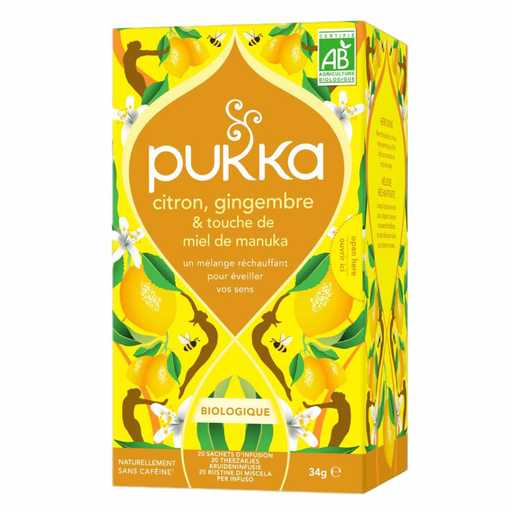 Image unavailable
Worth considering if you’d prefer a ginger herbal infusion in tea bags, without having to prepare fresh root ginger in your rental.
Box of 20 tea bags. The recipe name pairs ginger with lemon and honey; check the ingredients if you’re looking for a drink where ginger takes centre stage.
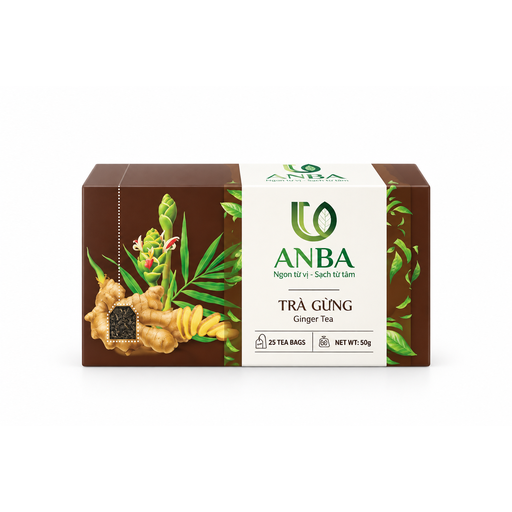 Image unavailable
Worth considering if you’re looking for ginger tea rather than a herbal infusion. Tea naturally contains caffeine, so this isn’t the right choice if avoiding caffeine is a priority.
The product name gives the pack size as 50 g. Check the ingredients and preparation instructions for this product before buying.
No. The word alone doesn’t prove that a drink has any effect on your health. The DGCCRF notes that health claims made about food are regulated. When choosing a herbal infusion, look instead at its ingredients and preparation method.
Start by following the steeping time given for your chosen product, if a range is provided. E.Leclerc’s product details for Vitavéa Ginger Lemon infusion recommend 3 to 5 minutes, depending on how strong you like it. The recipe also affects the taste in the cup.
No. Some recipes contain guarana, which naturally provides caffeine, according to the Anses. Check the ingredients for the product you choose; don’t rely only on the word “infusion” or its spicy flavour.
It can be, if the accommodation has the right equipment and you have time to prepare it. Lidl’s ginger and lemon recipe involves boiling and then straining the infusion, among other steps; tea bags save you the extra work.