Fans of a strong ginger flavour
You’re looking for a spicy flavour at lunchtime and want to compare the ingredients in different recipes, without treating the ginger percentage as a measure of how the drink will taste.


For a spicy cup at lunchtime, compare the stated ginger content and recommended brewing time rather than relying on claims such as ‘invigorating’ or ‘wellbeing’. Bear in mind, though, that the ingredients list doesn’t measure how strong the drink will taste. If avoiding caffeine in the afternoon is your priority, look for a recipe that is explicitly caffeine-free. In all cases, check the other ingredients too, especially liquorice.
You’re looking for a spicy flavour at lunchtime and want to compare the ingredients in different recipes, without treating the ginger percentage as a measure of how the drink will taste.
You want a hot drink with lunch and need to tell the difference between an infusion that is explicitly caffeine-free and a flavoured tea.
You enjoy a post-lunch break, but choose based on the ingredients rather than assuming a marketing claim means the product has a health benefit.
When choosing a lunchtime drink, think about the flavour you want, whether you’d like to avoid caffeine, and the full list of ingredients. A recipe that sounds strong on paper won’t necessarily taste the strongest in your cup.
| What to consider | What to check | Who is it for? |
|---|---|---|
| Spicy flavour | The ginger content, if stated, and the recommended brewing time; neither tells you exactly how the drink will taste. | At lunchtime, I want a noticeable ginger flavour without relying on the recipe name alone; around 42% of consumers would put this level of flavour at the top of their list of criteria. |
| Caffeine-free | An explicit ‘caffeine-free’ claim and the ingredients list, including whether it contains tea leaves. | When I’m going back to work after lunch, I prefer to avoid caffeine in my hot drink; almost 33% of consumers would make this their priority. |
| Ingredients | The herbs and other ingredients, including liquorice, as well as any allergens listed for the product you choose. | After a meal, I want to know what’s in my cup before being swayed by a ‘wellbeing’ claim; around 25% of consumers would look at the ingredients first. |
These words don’t prove that an infusion aids digestion or treats a health problem. The DGCCRF notes that nutrition and health claims used for food products are regulated.
Choose based on flavour, ingredients and the preparation instructions, and don’t use an infusion as a substitute for medical advice.
Product listings from Auchan and E.Leclerc state that Les 2 Marmottes contains 43% ginger and Vitavéa 33%. These figures describe the recipes; they aren’t a measure of flavour intensity.
Compare the other ingredients too, and follow the brewing time stated on the product.
The Vitavéa listing from E.Leclerc includes liquorice. The Anses has also documented adverse effects associated with consuming liquorice in food.
Check the ingredients and allergen information for the specific product you’re considering. If you have any concerns about liquorice in your circumstances, ask a healthcare professional for advice.
A product labelled black tea shouldn’t be treated as a caffeine-free herbal infusion. By contrast, Auchan’s Clipper listing describes its lemon and ginger infusion as naturally caffeine-free.
If you want to avoid caffeine in the afternoon, check the type of drink and look for an explicit statement on the product you choose.
The brand offers, among other options, a ginger and lemon infusion and a lime blossom and verbena blend. Check the recipe rather than choosing on brand name alone.
Auchan describes its organic lemon and ginger infusion as naturally caffeine-free. It can be served hot or iced.
According to the listing published by E.Leclerc, its ginger and lemon infusion also contains lemongrass and liquorice.
The retailer offers several infusions, including ginger, lemongrass and lemon blends, as well as turmeric and ginger recipes.
This instant ginger and lemon drink is an option for your lunch break, but it’s prepared differently from a herbal infusion in a teabag. If you’re deciding between the two, compare the ingredients.
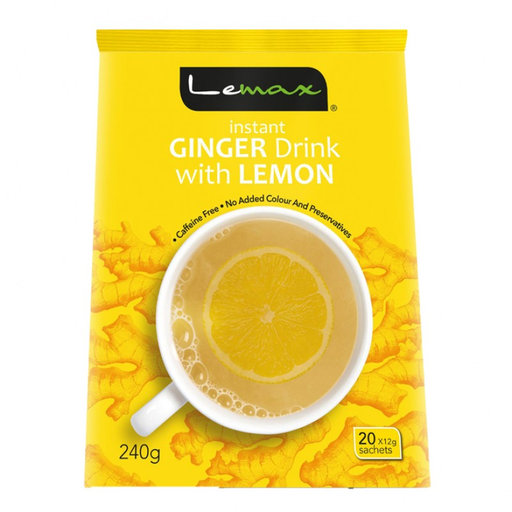 Image unavailable
Worth considering if you’d prefer an instant ginger and lemon drink for your lunch break rather than a herbal infusion in a teabag.
The stated pack size is 240 g for 20 units. Before choosing, check the ingredients, nutritional information and allergens on the packaging. If you’re avoiding caffeine, check for the relevant information too.
No. A spicier flavour doesn’t prove that a drink has a health benefit. The DGCCRF notes that nutrition and health claims are regulated; don’t interpret a claim such as ‘invigorating’ as a promise of treatment.
Start by following the brewing time given for your recipe. The Vitavéa listing published by E.Leclerc recommends 3 minutes, or up to 5 minutes depending on how strong you like it. This won’t guarantee a flavour everyone enjoys or any health benefit.
Look for an explicit ‘caffeine-free’ statement and check the type of drink. Auchan describes the Clipper lemon and ginger infusion as naturally caffeine-free. Don’t choose a product labelled black tea instead just because it has a fruit or herbal flavour.
Yes. Liquorice is one of the ingredients to check in the specific recipe you’re buying. The Vitavéa listing published by E.Leclerc states that it contains 21% liquorice, and the Anses has documented adverse effects linked to consuming liquorice in food. For advice related to your personal circumstances, speak to a healthcare professional.