
Livraison le jour même ou le lendemain

Qualité garantie

Débloquez vos offres de bienvenue: Livraison GRATUITE | Jusqu'à -80 % | 30 jours d'essai gratuits à JoyPlus
Téléchargez l'application
A gel pen can be used for taking notes in class, organising a diary, filling in a bullet journal or adding details to dark paper. However, not all models are suited to the same tasks. A tip that is too broad makes small handwriting look thicker, slow-drying ink leaves marks on your hand, and a fragile mechanism can quickly become frustrating in everyday use.
Before buying a pack of gel pens, it is therefore worth looking beyond the number of colours and the appearance of the barrel. Here are the key points to check to avoid disappointment and find the model that genuinely suits your needs.
An advertised diameter of 0.7 mm generally corresponds to a medium tip, suitable for everyday writing. The result is very different from that of a fine-tip gel pen in 0.38 or 0.5 mm, which is much better suited to margins, tables and small annotations.
Line width also depends on the ink’s viscosity, the pressure applied and the type of paper. For compact handwriting, rely on the measurement in millimetres rather than just the word “fine”.
Quick-drying gel pens help to reduce smudging, but their effectiveness varies depending on the paper and the amount of ink applied. On very smooth notebook paper, coloured or metallic ink may stay wet for longer than on a standard sheet.
Left-handed users should choose a formula advertised as quick-drying and test it on the paper they actually use. Even a pen described as smudge-free may leave a mark if you run your hand over the line immediately after writing it.
A large number of shades does not necessarily guarantee versatility. Coloured gel pens are useful for organising notes, but some light shades are not very readable on white paper. Conversely, metallic gel pens are mainly designed to create decorative contrast on black, kraft or coloured paper.
For administrative notes and schoolwork, black, blue and red are often the most useful colours. For journalling and drawing, a broader palette offers more creative possibilities.
A needle tip generally offers precise control, while a medium-diameter ball is more forgiving when you need to take notes quickly. For drawing, the choice mainly depends on the level of detail required and the paper’s surface.
Retractable gel pens can be put away quickly and mean you do not have to worry about losing a cap. They are particularly practical in a pencil case, at the office or when travelling. A quiet click mechanism can also make a difference in a library, classroom or shared workspace.
Also examine the grip area. A soft, non-slip or textured grip makes long writing sessions more comfortable. However, its shape should still suit the way you hold your pen.
Quick-drying ink helps to reduce marks, but the paper remains a decisive factor. For notebooks with thin paper, check in particular whether the ink bleeds through the sheet. For creative projects, opaque or water-resistant ink may be more suitable, although it does not replace a product specifically designed for archival use.
Erasable gel pens use heat-sensitive ink that disappears through friction. They are practical for timetables, exercises and drafts, but are not suitable for final documents, thermal receipts or writing that needs to remain permanent. Heat can also alter the appearance of the ink.
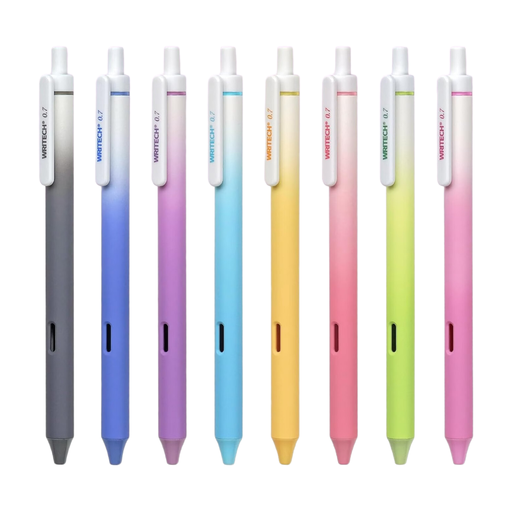
Why this choice suits this profile : This retractable pack contains eight coloured inks and a 0.7 mm tip, making it practical for everyday notes, colouring and journalling.
The tip diameter and number of colours are clearly stated, making comparisons easier. The matt barrel and ergonomic grip mean you do not have to choose between a smart appearance and comfortable writing.
Pack of 8 pens, medium 0.7 mm tip, retractable mechanism and ink advertised as quick-drying.
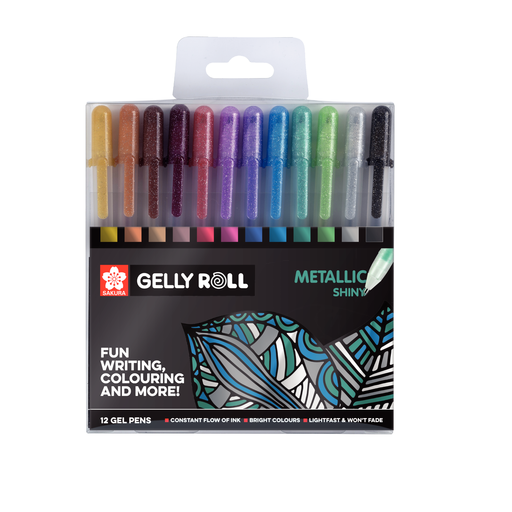
Why this choice suits this profile : This collection is designed for people looking for decorative finishes for bullet journalling, cards, scrapbooking and drawing.
The product details list the 12 metallic shades and the intended surfaces, including white, black and satin-finish paper. This makes the selection more targeted than a general-purpose assortment.
12 metallic colours, water-based pigmented gel ink, designed for writing, drawing and decoration.
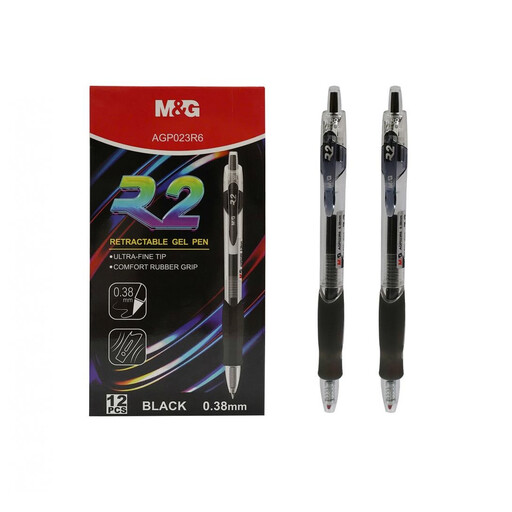
Why this choice suits this profile : The ultra-fine tip is ideal for people who write extensively, fill in tables or annotate documents where space is limited.
The 0.38 mm tip is clearly stated, so you can avoid choosing a medium-tip pen for fine annotations. The included refills also mean you will not have to replace the pens too quickly.
12 black pens, 0.38 mm tip, soft grip and ink described as quick-drying.
For more traditional writing, STABILO pointVisco pens offer a 0.5 mm line and ten assorted colours. For correcting mistakes easily, Deli Erasable Gel Pens feature a 0.5 mm tip and heat-sensitive ink. For working on dark paper, Ohuhu collections combine 0.8 mm tips with white, gold and silver shades.
Remember to replace the caps or retract the tips after each use. Store the pens away from heat and direct sunlight to help prevent them from drying out. Small components may pose a choking hazard to children under 3 years old.
We have put together a complete, real-time-updated list of products that fully meet these strict selection criteria and European safety regulations.
A 0.5 to 0.7 mm tip generally offers the best balance of readability, comfort and smoothness. Choose 0.38 mm for small annotations or highly structured notebooks.
It depends on how much you write, how often you use it and the storage conditions. Retract the tip after each use and close capped models carefully. The ink may also dry out prematurely if the pen is left near a radiator or in a hot car.
No. Their heat-sensitive ink is designed for corrections and temporary use. For a contract, signature, form or document that needs to be kept, choose permanent ink and check the recipient’s requirements.