
Livraison le jour même ou le lendemain

Qualité garantie

Débloquez vos offres de bienvenue: Livraison GRATUITE | Jusqu'à -80 % | 30 jours d'essai gratuits à JoyPlus
Téléchargez l'application
A symbol of sociable and flavourful outdoor cooking, the gas plancha on a cart has become a staple in our gardens and on our patios. Faced with an overwhelming number of options and sometimes misleading marketing claims, turning this purchase into a success can quickly become a headache. To prevent your investment from ruining your future summer evenings, it's essential to know how to avoid the most common pitfalls.
Our mission as experts? To help you see things more clearly. Let's break down the mistakes to avoid and the criteria that truly matter for making the right choice.
The market is flooded with promises, but not all are created equal. Here are three crucial points to watch out for to avoid buyer's remorse:
For a successful outdoor gas cooking experience, you need to focus on tangible elements. Here are the three key points for choosing a high-performance and durable gas plancha on a cart.
This is the heart of the unit. The choice of material determines the cooking quality and ease of maintenance.
The performance of a professional gas plancha isn't just about a kW number. The burner design is the decisive factor in achieving uniform heat.
Trumpet-shaped or ramp-style burners, usually made of stainless steel for longevity, are the most effective. Their design ensures a wide flame distribution under the plate, which eliminates hot spots. A mechanical piezoelectric ignition remains a guarantee of reliability and simplicity, far from sometimes temperamental electronic systems.
The cart is much more than a simple stand. It must be an ally: sturdy, practical, and able to withstand the elements. Favour structures made of painted electro-galvanised steel or stainless steel. They offer far superior rust protection compared to simple painted steel. Wide, swivelling, and self-locking casters are essential for moving the unit effortlessly and ensuring perfect stability during cooking.
A certification like "Origine France Garantie" (Made in France Guarantee) is a real bonus, attesting to expert craftsmanship and adherence to strict manufacturing standards. Also, pay attention to warranties: manufacturers like Le Marquier don't hesitate to offer a lifetime guarantee on their plates and burners, a strong signal of the confidence they have in their products. Finally, a plancha with a lid is not a gimmick: it protects the plate and opens up possibilities for gentler, steam-cooking methods.
Because every cook has different needs, here are our recommendations based on the quality criteria we've just detailed.
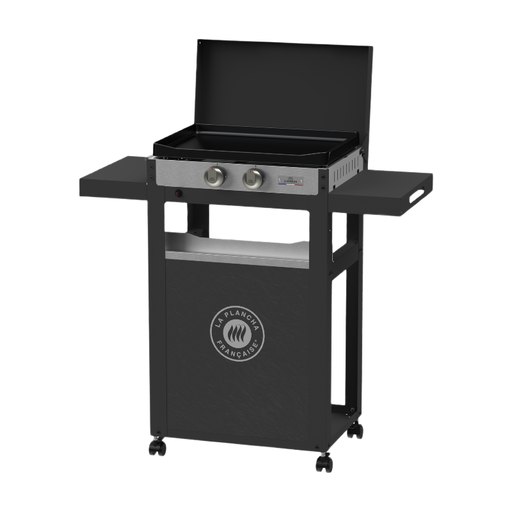
Why we chose it: This is the ultimate cooking station for those who love to entertain large groups. Complete, stylish, and high-performing, it transforms your patio into a true outdoor kitchen thanks to its integrated shelves and storage.
Its electro-galvanised steel cart with stainless steel curtains guarantees rock-solid sturdiness and excellent rust protection. The enamelled cast iron plate and stainless steel trumpet burners are the winning combination for perfect cooking and maximum durability.
All-in-one mobile design (lid, shelves, spice rack). "Origine France Garantie" certification and CE conformity.
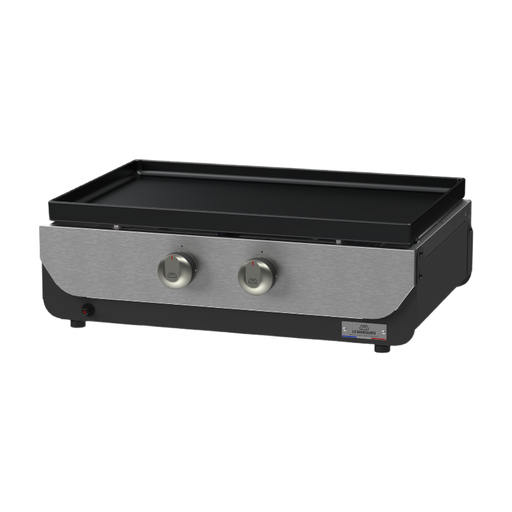
Why we chose it: The ideal solution for balconies, small patios, or to complement an existing summer kitchen. It offers all the quality of professional-grade cooking, without the bulk of a cart.
By focusing on the essentials: a 60x40 cm enamelled cast iron plate and high-performance stainless steel burners, all on a sturdy frame. No compromises are made on the components that ensure great cooking.
Power and cooking surface for 6 to 10 guests in a countertop format. Plate and burners are guaranteed for life by the manufacturer.
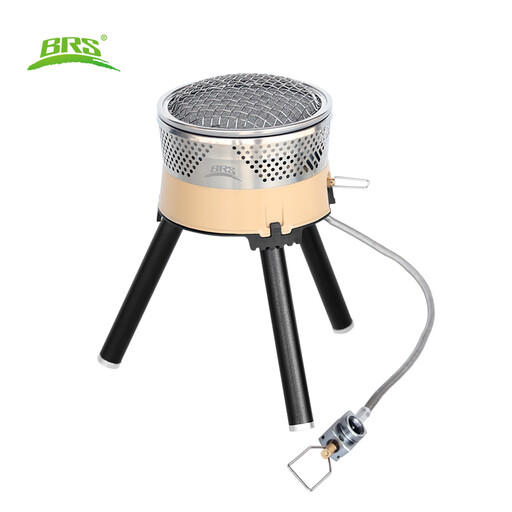
Why we chose it: Let's be clear: for camping or hiking, a plancha is impractical. A specialised stove like this one is THE solution for fast, efficient cooking in the great outdoors, without the bulk.
It doesn't try to be something it's not. It's an ultra-specialised tool that bypasses the problem of "portable planchas," which are often heavy, underperforming, and fragile. Here, the focus is entirely on lightness and efficiency.
Feather-light at 425 g with 1900 W of power (boils 1L of water in 3 minutes). Butane and propane compatible.
If mobility is your number one criterion, discover our complete selection of equipment designed for nomadic cooking, combining performance and safety.
1. What is the lifespan of an enamelled cast iron plancha? When properly maintained, a quality enamelled cast iron plate can last for decades. It's no coincidence that manufacturers like Le Marquier offer a lifetime guarantee. The golden rule: avoid thermal shock (never pour ice-cold water on a scorching hot plate) and abrasive utensils that could scratch the enamel.
2. How do you effectively clean a gas plancha on a cart? It's much simpler than you might think. The trick is to act while the plate is still warm. Deglaze with a little water or white vinegar, then scrape off the cooking residues with a stainless steel spatula. A wipe with a paper towel, and you're done. The grease drip tray, which is almost always removable, is usually dishwasher-safe. As for the cart, a simple wipe with a damp sponge is all it needs.
3. Should I choose propane or butane gas for my plancha? The vast majority of planchas are compatible with both. The choice actually depends on where you store your gas cylinder. Propane is essential for outdoor storage, as it resists freezing down to -44?°C (-47?°F). Butane, on the other hand, freezes at 0?°C (32?°F) and must be stored indoors. For year-round use on a patio, propane is therefore the most logical choice.