
Livraison le jour même ou le lendemain

Qualité garantie

Débloquez vos offres de bienvenue: Livraison GRATUITE | Jusqu'à -80 % | 30 jours d'essai gratuits à JoyPlus
Téléchargez l'application
A garment steamer can simplify your morning routine, help you care for workwear or make it easier to put clothes away after a trip. It generally allows you to steam a garment directly on its hanger, without getting out the ironing board. However, the figures highlighted by manufacturers are not, on their own, enough to help you make the right choice.
Some appliances are let down by a tank that is too small, slow heating or an uncomfortable grip. Others are ideal for quickly steaming a shirt, but reach their limits when faced with a coat, curtain or a whole pile of clothes. Here are the criteria to consider before buying, followed by a selection suited to different needs.
High power, expressed in watts, mainly indicates how quickly the appliance can heat up. It does not tell you how much steam will be produced or how consistently it will be delivered.
When comparing two models, also look at the steam output, expressed in grams per minute, and, for a steam generator, the pressure in bars. A handheld garment steamer producing between 20 and 25 g/min is generally suitable for quick touch-ups and hanging garments. A steam generator rated at 6 to 8 bars is better suited to horizontal ironing and longer sessions.
A small tank makes the appliance more compact, but may mean having to refill it several times to treat a complete outfit. Conversely, a larger capacity often increases the appliance’s size and weight.
For a portable garment steamer used occasionally, a 70 to 150 ml tank may be sufficient. For a family or regular use, it is better to look for 250 ml or more. The continuous-fill function found on some models can also prevent interruptions in the middle of a session.
Steam and the soleplate can reach high temperatures. Check for an automatic shut-off, an anti-drip system and clear instructions for filling and storage. Always unplug the appliance before adding water or cleaning it.
Water quality also plays a part. In hard-water areas, an anti-scale collector or cleaning function can help reduce deposits. However, check the manufacturer’s instructions: some appliances accept tap water, while others require specific precautions.
To remove creases from clothes, the steam output should match your intended use. A figure between 18 and 25 g/min is generally suitable for touch-ups on shirts, dresses or lightweight jackets. Pressure of 6 to 8 bars is more relevant to steam generators and steam irons, which often have a better reserve for horizontal ironing.
Heat-up time is particularly important for busy professionals and students. Some handheld models are ready in 30 to 45 seconds. A steam generator requires more preparation, but offers greater autonomy and better performance for large amounts of laundry in return.
A vertical garment steamer should be light enough to move up and down over a hanging garment. Check its weight, the length of the cord and whether the steam button can be locked, so you do not have to keep the trigger pressed throughout the session.
A foldable or slim model is easier to store in a drawer or suitcase. For a travel garment steamer, balance the tank capacity against the total weight and the space available in your luggage.
A ceramic soleplate, temperature control or anti-drip design can make it easier to use the appliance on different fabrics. This does not replace checking the garment’s care label and testing the appliance on an inconspicuous area, particularly with silk, coated materials or embellished fabrics.
For curtains and upholstery, keep the appliance moving and avoid saturating the same area with moisture. A garment steamer for curtains and textiles should have a tank large enough to cover the duration of the task.
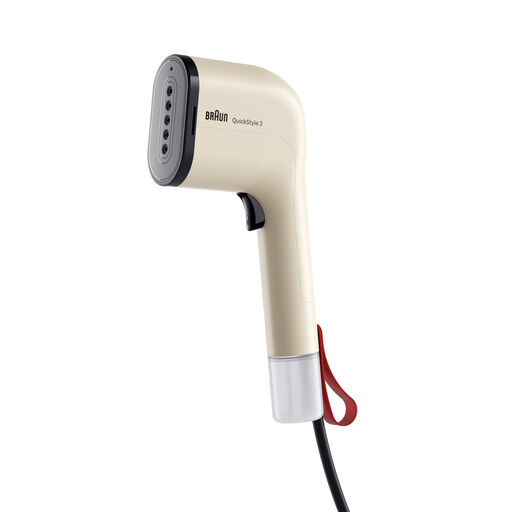
Why this choice suits this type of user : Its compact design and stated weight of 770 g make it easy to get started without an ironing board, whether you live in a small home or simply want to steam a few clothes in the morning.
The removable 70 ml tank keeps the appliance compact, while the stated 30-second heat-up time means you do not have to wait long.
Stated continuous output of 20 g/min, 2 m cord and heat-resistant bag included.
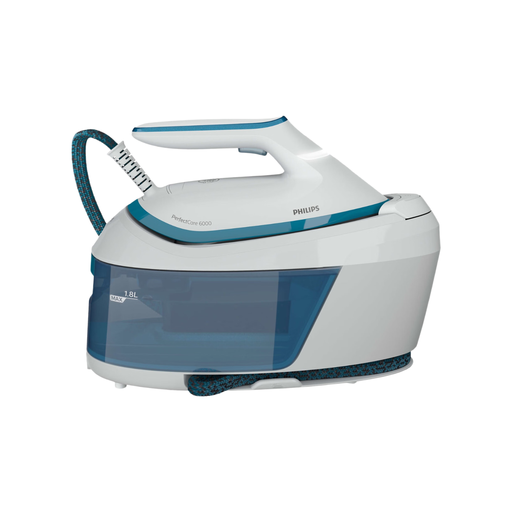
Why this choice suits this type of user : This steam generator is designed for households that iron regularly and want a large water reserve, with the flexibility to work horizontally or vertically.
Its removable 1.8 l tank reduces interruptions. The Smart Calc-Clean system also indicates when descaling is required.
Stated pressure of 6.5 bars, continuous output of up to 150 g/min and automatic shut-off.
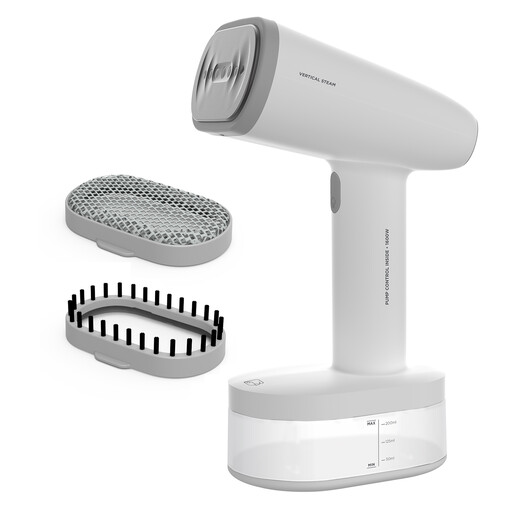
Why this choice suits this type of user : It is ideal for anyone working through several garments and wanting to steam suits, curtains or upholstery directly in a vertical position.
The removable 250 ml tank and steam lock address the usual limitations of smaller appliances.
Stated power of 1,600 W, output of 25 g/min, anti-drip system and self-cleaning function.
Not always. A vertical garment steamer is convenient for quickly freshening up a shirt, dress, jacket or curtain without getting out the ironing board. A steam iron or steam generator is generally more effective for creating sharp creases, tackling thick fabrics or ironing large amounts of laundry horizontally.
Use the type of water recommended in your appliance’s instructions. Many models accept tap water, but very hard water may require more frequent maintenance. Do not add perfume, essential oils or chemicals to the tank unless the manufacturer explicitly allows it. After each use, empty any remaining water and allow the appliance to cool down before storing it.
Its lifespan depends on how frequently it is used, the quality of the water and whether maintenance procedures are followed. An anti-scale collector, self-cleaning function or descaling carried out in accordance with the instructions can help preserve the steam output. Before buying, also check the availability of accessories, the warranty terms and the safety instructions applicable in France.