
Livraison le jour même ou le lendemain

Qualité garantie

Débloquez vos offres de bienvenue: Livraison GRATUITE | Jusqu'à -80 % | 30 jours d'essai gratuits à JoyPlus
Téléchargez l'application
A creased outfit just before an appointment, a shirt that is difficult to fit into a suitcase or curtains that could use a quick refresh: a garment steamer can simplify many everyday situations. The key is choosing a device suited to your needs. A compact model is ideal for travel, while a steam generator iron is better suited to a household that tackles several baskets of laundry each week.
Before reaching for your bank card, it is therefore worth looking beyond the marketing claims. Steam output, genuine operating time and safety features often matter more than the wattage printed on the box.
A high wattage does not guarantee faster crease removal. It mainly indicates power consumption and the appliance’s heating capacity. When comparing two models, also examine the steam output in grams per minute, the pressure for steam generator irons and the heat-up time.
A powerful garment steamer must deliver sufficiently consistent steam to relax the fibres. On thick or heavily creased fabric, a handheld device with limited steam output may require several passes.
A small tank keeps the appliance lighter, but it also means refilling it more frequently. That is perfectly acceptable for a jacket or one or two shirts, but far less convenient when treating a pile of clothes, curtains or the whole family’s laundry.
Conversely, a large tank increases the appliance’s overall size. The aim is therefore to find the right balance between capacity in millilitres, hand-held weight and stated operating time. Models with removable tanks are generally easier to fill and clean.
Steam can be used on many textiles, but the care label remains the definitive guide. Silk, wool, polyester and coated fabrics do not all react in the same way. Always test the appliance on an inconspicuous area and follow the manufacturer’s recommendations.
An anti-crease garment steamer will not necessarily replace a steam iron when you need to create sharp creases in trousers or a collar. It performs best on hanging garments, jackets, dresses and textiles that are difficult to position on an ironing board.
For a vertical garment steamer, continuous steam output is a useful indicator. The handheld appliances featured here deliver 18, 20 or 25 g/min, depending on the model. This level is suitable for quick touch-ups and routine garment care, although results will also depend on the fabric and how the appliance is handled.
A steam generator iron works differently. Its pressure, measured in bars, makes it easier to treat several layers of fabric and iron horizontally. The H.Koenig V7, for example, offers 8 bars and 120 g/min, while the Philips PSG6022/20 reaches 6.5 bars and up to 150 g/min continuously.
A heat-up time of between 30 and 45 seconds is generally sufficient for a last-minute touch-up before leaving for work. For a travel model, weight and ease of storage are just as important as speed. Check the cord length, whether a storage pouch is included and whether the appliance can be folded.
For extended use, it is preferable to choose a handheld model with a tank of at least 150 to 250 ml. A steam generator with a 1.5- to 1.8-litre tank will be more comfortable for working through multiple garments, provided you have a stable, heat-resistant surface.
Both steam and the soleplate can reach very high temperatures. Depending on your needs, look for an automatic shut-off function, an anti-drip system, a steam lock or an anti-scale collector. After each use, empty the tank and allow the appliance to cool completely before storing it.
In France, also check that the product listing specifies the conditions for use with a plug compatible with the domestic electrical network, along with all necessary warnings and compliance information. Whatever the model, never leave it plugged in unattended.
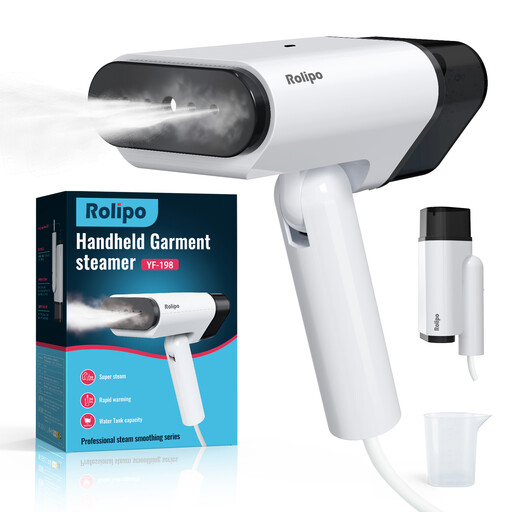
Why it is a good fit: its foldable design makes it well suited to first-time use at home or in the office, while allowing it to slip easily into a suitcase.
Its tank is designed to minimise leaks, addressing one of the most common shortcomings of handheld appliances. The one-button control is also remarkably easy to use.
Foldable design, easy to transport and vertical operation for last-minute touch-ups.
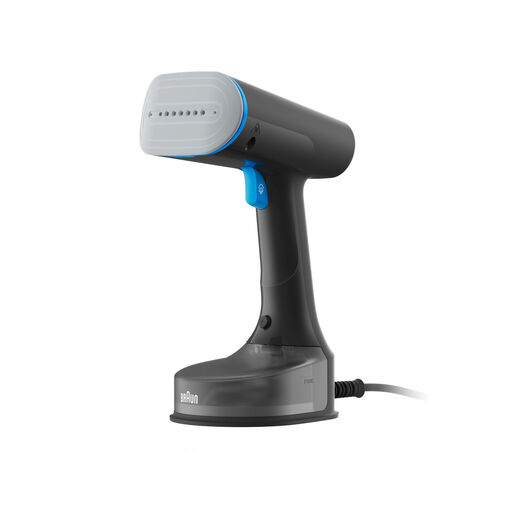
Why it is a good fit: its compact dimensions and removable 150 ml tank are ideal for business travel.
The anti-drip system helps prevent water marks, while automatic shut-off provides welcome peace of mind if the appliance is accidentally left on.
25 g/min continuous steam, 45-second heat-up time, 2.5 m cord and included brush.
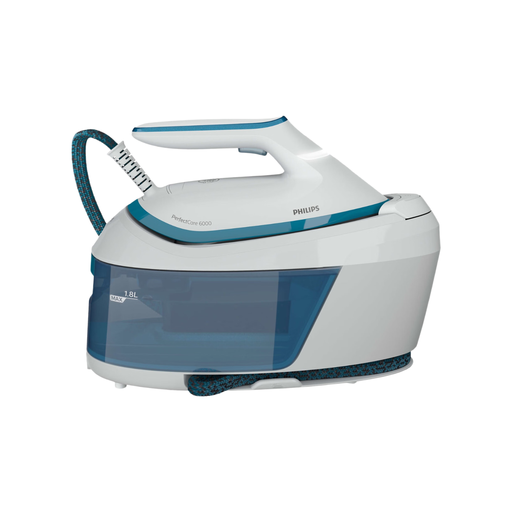
Why it is a good fit: its 1.8-litre tank and steam-generator design are built for long ironing sessions.
The Smart Calc-Clean system indicates when descaling is required. Automatic shut-off also reduces risks if the appliance is left powered on.
6.5 bars, up to 150 g/min continuous steam, removable 1.8-litre tank and vertical steaming function.
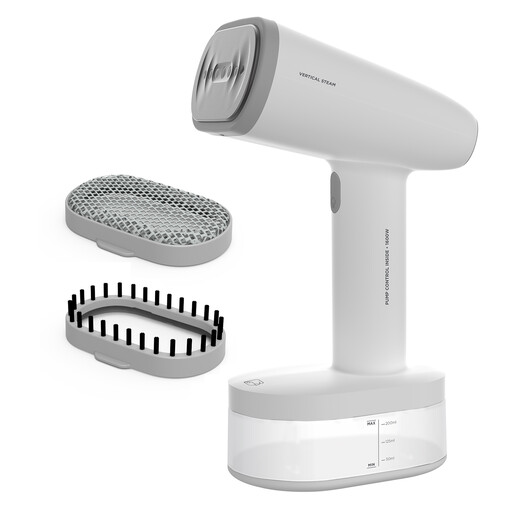
Why it is a good fit: it works equally well on hanging garments, suits, dresses, curtains and certain upholstery fabrics.
Its 250 ml tank helps minimise interruptions, while the anti-drip system reduces the risk of damp marks on clothing.
25 g/min, steam lock, ceramic soleplate and self-cleaning function according to the supplied specifications.
Hang the garment on a stable hanger and gently stretch the fabric with your free hand, keeping your fingers away from the steam outlet. Move the appliance from top to bottom rather than holding it in one place. For curtains, work directly on the curtain rod while protecting nearby surfaces from moisture.
A garment steamer that requires no ironing board is highly practical for touch-ups, but always place the appliance on a heat-resistant surface when pausing your session. To tackle the most pronounced creases, a steam iron or a steam generator with a soleplate will provide greater precision.
It depends on its power rating and how long it is used. A 1,100- to 1,600-watt appliance used for a few minutes on a shirt will generally consume less electricity than a long session with a steam generator. To estimate the cost, multiply the power in kilowatts by the usage time in hours, then multiply the result by your electricity tariff.
This depends on the manufacturer’s recommendations and the hardness of the water in your area. Some appliances accept tap water, while others recommend using a specific type of water or carrying out descaling more frequently. Consult the user manual and empty the tank after each use. Never add perfume, oil or household cleaning products to the appliance.
It varies according to how frequently the appliance is used, storage conditions and the quality of its maintenance. Descaling as instructed in the manual, emptying the tank after every session and allowing the appliance to cool completely before storage all help preserve steam output. Models with an anti-scale collector or self-cleaning function make maintenance easier, but they do not eliminate the need for regular checks.